
Watering
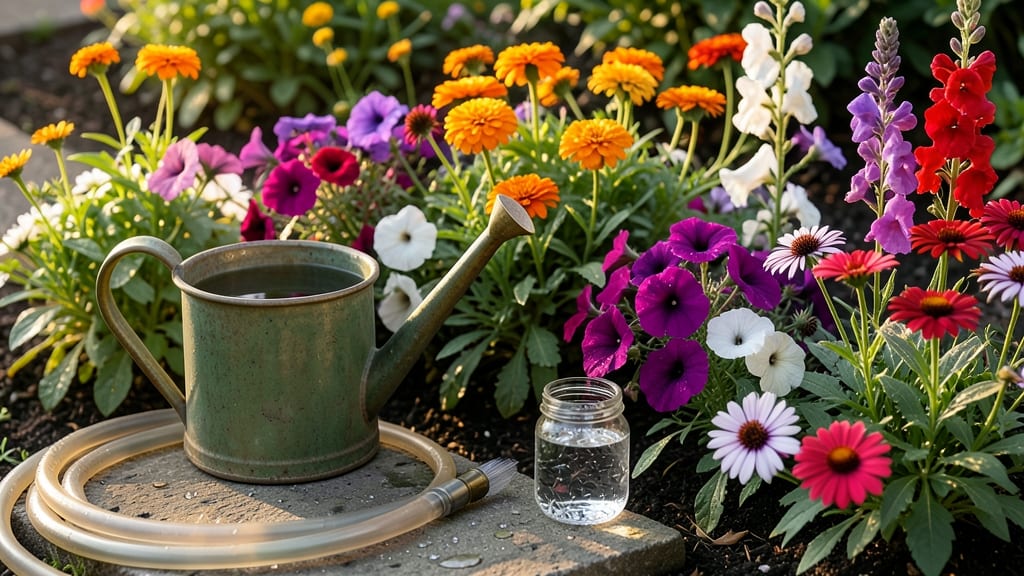
To water your flower garden properly, you’ll need a schedule that matches your plants’ needs, your local climate, and the season—because what works for roses in summer won’t cut it for succulents in winter.
Overwatering or underwatering your flower garden can mean the difference between vibrant blooms and wilted disappointment—so why guess when you can follow a science-backed schedule?
Most flower gardens thrive with 1-2 inches of water per week, but that changes when the sun beats down or the rain keeps falling. Below, I break down the exact intervals for annuals, perennials, and drought-tolerant varieties, plus how to adjust for heatwaves, droughts, and even your soil type.
You’ll also learn the telltale signs of thirsty (or drowning) plants—drooping petals, yellowing leaves, and crispy edges—and how to fix them before it’s too late.
Watering frequency by flower type: a plant-specific schedule
Not all flowers have the same thirst—some love frequent drinks while others prefer to sip slowly. Understanding your plants' watering needs prevents wilting, root rot, and wasted effort. The key is balancing soil moisture, plant type, and climate conditions to keep every bloom happy.
Let’s dive into a schedule tailored to your garden’s star players.
Annuals like petunias and marigolds need consistent moisture, while succulents and lavender thrive on neglect. Even perennials like roses and daylilies have different preferences. Below, I’ve broken down watering intervals for common flower types, plus how to test soil moisture like a pro to avoid guesswork.
| Flower Type | Watering Frequency | Soil Moisture Test | Notes |
|---|---|---|---|
| Annuals (e.g., petunias, impatiens) | Every 2-3 days in summer; weekly in cooler months | Top 1 inch dry? Water deeply. | Fast-growing; needs consistent moisture. |
| Perennials (e.g., roses, daylilies) | 1-2 inches weekly; bi-weekly in winter | Top 2 inches dry? Water thoroughly. | Established roots need deep watering. |
| Bulbs (e.g., tulips, daffodils) | Weekly during growth; none after foliage dies | Soil damp but not soggy. | Overwatering rots bulbs; let soil dry between waterings. |
| Drought-Tolerant (e.g., lavender, succulents) | Every 2-3 weeks; monthly in winter | Top 3 inches bone-dry? Water lightly. | Well-draining soil is a must. |
| Tropicals (e.g., hibiscus, canas) | Daily in hot weather; every 2 days otherwise | Top ½ inch dry? Water immediately. | Mimic their humid native climates. |
To test soil moisture, stick your finger 1-2 inches deep. If it feels dry, it’s time to water. For container plants, check the weight—lift the pot. If it’s light, water until it drains from the bottom. Mulch helps retain moisture, reducing how often you need to water.
Adjust your schedule based on weather patterns. For example, during heatwaves, water early morning to prevent evaporation. In rainy seasons, reduce frequency to avoid waterlogged roots. A simple trick: place a rain gauge near your garden to track natural water input.
Overwatering is just as harmful as underwatering. Look for yellowing leaves or mushy stems—signs your flowers are drowning. Conversely, crispy edges or drooping petals mean they’re parched. Balance is key, and this schedule keeps your garden thriving without the guesswork.
Pro tip: Group plants with similar water needs together. This zone-based watering saves time and ensures no plant feels left out. Start with this guide, then tweak as you observe your garden’s unique rhythm.
🌱 Remember, every garden is different—your local climate and soil type play huge roles. Use this as your starting point, then adjust based on what you see in your own backyard.
Climate and seasonal adjustments: when to water more (or less)
Your flower garden's watering needs aren't static—they shift dramatically with seasonal changes and local climate conditions. In summer heat, even drought-tolerant plants may need daily watering, while winter dormancy can reduce needs to every 2-3 weeks.
Understanding these shifts helps you avoid both water waste and root rot from overwatering.
Humidity plays a surprising role too. In high-humidity regions, soil stays moist longer, so you might water 30% less than in dry climates. Meanwhile, rainfall patterns can completely override your schedule—always check soil moisture before watering.
Let's break down how to adjust your routine for each season and climate type.
🌡️ Seasonal Watering Adjustments
- Spring: Increase watering as temperatures rise—aim for 1-1.5 inches weekly for most flowers. Focus on new growth stages.
- Summer: Water early morning (before 8 AM) to reduce evaporation. Drought-prone areas may need daily watering for annuals.
- Fall: Reduce to weekly watering as growth slows. Focus on established perennials and bulbs preparing for winter.
- Winter: Water only when soil is bone-dry (every 2-3 weeks). Mulch heavily to retain moisture.
- Drought Conditions: Group plants by water needs and use drip irrigation to conserve. Avoid watering afternoon to prevent fungal growth.
- Rainy Seasons: Skip watering if 1 inch of rain has fallen. Check for root rot signs (yellowing leaves, mold) and improve drainage if needed.
For hot, dry climates, consider mulching with straw or gravel to lock in moisture. In cooler coastal areas, morning fog often provides enough moisture—test soil with your finger before watering. Even native plants need adjustments during extreme weather, like unusually hot winters or prolonged droughts.
Pro tip: Use a moisture meter ($15 at garden centers) to avoid guesswork. Insert it 2 inches deep—if it reads dry, water; if moist, wait. This simple tool saves hundreds of gallons of water yearly while keeping roots happy.
Remember, overwatering kills more plants than underwatering. If your garden feels soggy after rain, add organic compost to improve drainage. For container gardens, check soil daily in summer—they dry out 3x faster than in-ground beds.
Adjust your watering like you'd adjust your wardrobe for the seasons—flexible and responsive. Your flowers will thank you with healthier blooms and longer seasons of color. 🌷