
Planting
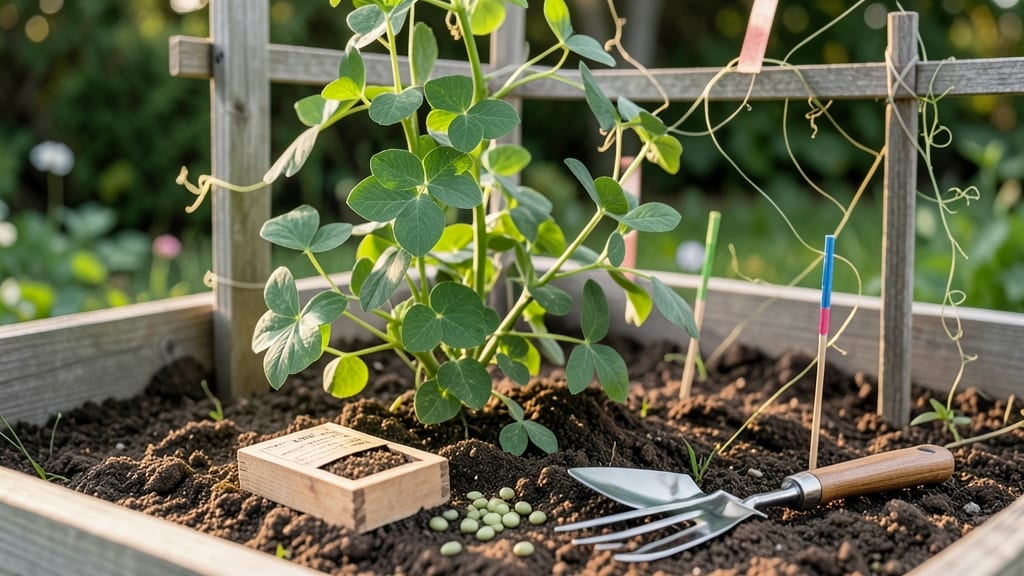
To plant garden peas at the perfect time means cool soil and crisp air — aim for 4-6 weeks before your last frost in spring or 6-8 weeks before the first frost in fall for the fastest germination.
You’ve probably heard that peas love cold weather, but planting them too early in chilly, soggy soil can leave seeds sitting there for weeks, if they sprout at all.
Too late, and the heat arrives before you even see flowers. The 50-70°F soil sweet spot is where the magic happens, and it’s easier to hit than you think.
In USDA Zone 6a, that window opens in early March for spring plantings, while fall varieties can go in as late as September. The key is watching for those consistent 50°F nights — a simple soil thermometer tells you everything you need to know.
Below, I’ll break down the exact planting dates by region, how to prep your soil for fast germination, and the best companion plants to keep pests away while you wait for those first sweet pods to form.
Best planting times for garden peas by climate Zone
Garden peas (Pisum sativum) are cool-season champions that despise heat—plant them too early, and frost will kill tender sprouts; too late, and summer’s sweltering temps send them bolting. The sweet spot? Soil temps between 50°F and 70°F, where seeds germinate reliably in 7-14 days.
Your USDA zone dictates the exact window, but most gardeners aim for 4-6 weeks before last frost in spring or 6-8 weeks before first frost in fall.
Peas thrive in USDA zones 3-10, but their ideal planting windows shrink dramatically in warmer climates. For example, in Zone 10, you’ll only get one fall planting window, while Zone 4 gardeners can squeeze in both spring and fall crops.
The key? Soil temperature trumps calendar dates—never plant when soil is below 40°F or above 80°F, or germination will fail.
🌱 Pro Tip: Use a soil thermometer to confirm readiness. Peas need consistent moisture during germination, so water gently 1 inch deep every 2-3 days until sprouts emerge.
| USDA Zone | Spring Planting Window | Fall Planting Window | Soil Temp (°F) | Frost Threshold |
|---|---|---|---|---|
| Zones 3-4 | Mid-April to early May | Late July to mid-August | 50-65°F | Last frost: May 10; First frost: Oct 5 |
| Zones 5-6 | Early April to mid-April | Mid-August to early Sept | 50-68°F | Last frost: April 15; First frost: Oct 10 |
| Zones 7-8 | Late Feb to early March | Late Sept to early Oct | 55-70°F | Last frost: March 1; First frost: Nov 15 |
| Zones 9-10 | Late Oct to early Nov (fall only) | N/A (spring only) | 60-70°F | Last frost: Dec 1; First frost: Jan 10 |
| 🌱 Pea Variety Notes: Early varieties (e.g., Sugar Snap) tolerate cooler temps; heat-tolerant types (e.g., Oregon Sugar Pod) suit Zones 9-10. | ||||
In Zones 3-4, where winters are brutal, focus on early spring plantings (mid-April) and late summer/fall (July-August) for a second crop. These regions benefit from cold-hardy varieties like Green Arrow or Little Marvel, which survive light frosts (28°F) without damage.
Use row covers if nights dip below 25°F to protect tender shoots.
For Zones 5-6, split your planting into two waves: the first 4-6 weeks before last frost (early April) and a second 6-8 weeks before first frost (mid-August).
This double strategy ensures a continuous harvest from late May through October. Soil temperature is critical—wait until it warms to at least 50°F before sowing, even if calendar dates suggest readiness.
Gardeners in Zones 7-8 have the most flexibility, with both spring and fall windows.
Plant late February to early March for spring peas, then repeat late September to early October for a fall harvest. Heat-tolerant varieties like Wando or Tom Thumb perform best in these zones, enduring brief summer heat spikes (up to 85°F) without bolting.
In Zones 9-10, summer’s relentless heat makes spring planting risky, so focus on fall (late October to early November). These regions often experience no true winter, so peas thrive in cool, dry seasons.
Choose heat-resistant varieties like Oregon Sugar Pod II and provide afternoon shade during peak heat to prevent flower drop.
Regardless of zone, succession planting every 2 weeks extends harvests. For example, in Zone 6, sow seeds April 1, April 15, and May 1 for staggered maturity. Pair peas with radishes or lettuce to maximize space—these shallow-rooted companions won’t compete for nutrients.
Signs your soil is ready for pea planting (and how to Fix common mistakes)
Pea seeds need cool soil temperatures between 50-70°F to germinate properly. If your soil is too warm, seeds may rot before sprouting, while cold, hard ground can delay growth. The key is finding that sweet spot where moisture and temperature align for fast, even germination.
Start by checking your soil’s moisture level—it should feel like a damp sponge, not soggy or bone-dry. Stick your finger about 1 inch deep; if it’s dry, water thoroughly before planting.
Overly dry soil can cause seeds to dry out, while waterlogged soil suffocates them. Aim for consistent dampness without puddles.
Next, test the soil temperature with a soil thermometer. Peas thrive when the ground is 55-65°F at planting depth. If your soil is colder than 45°F, wait a few weeks or use black plastic mulch to warm it up faster. Warmer than 75°F, and germination slows dramatically.
⚠️ callout-warning ⚠️
🌱 Common Mistakes & Fixes
❌ Planting in cold, hard soil: Seeds won’t sprout. ✅ Fix: Wait until soil reaches 50°F or use straw mulch to insulate.
❌ Waterlogged soil: Causes rot. ✅ Fix: Improve drainage with compost or sand before planting.
❌ Overly dry soil: Seeds dry out. ✅ Fix: Water deeply 24 hours before planting and keep moist.
❌ Compacted soil: Roots struggle. ✅ Fix: Loosen soil 6-8 inches deep with a garden fork.
Don’t overlook soil texture—peas prefer loose, well-aerated soil. If your garden bed feels dense or clay-heavy, amend it with 2-3 inches of compost or well-rotted manure. This improves drainage and root penetration, helping seedlings establish quickly. Avoid fresh manure, which can burn tender pea roots.
For compacted soil, try a simple test: Dig a small hole and fill it with water. If it drains in 30 minutes, your soil is fine.
If it pools, add organic matter like leaf mold or coconut coir to break up clay particles. Peas hate soggy roots, so prioritize drainage over all else.
Finally, observe the weather forecast for the next 10 days. If frost is predicted, delay planting until temperatures stabilize. Peas can tolerate light frosts, but hard freezes will kill seedlings. Use row covers if needed to protect young plants from late-spring chills.