
Watering
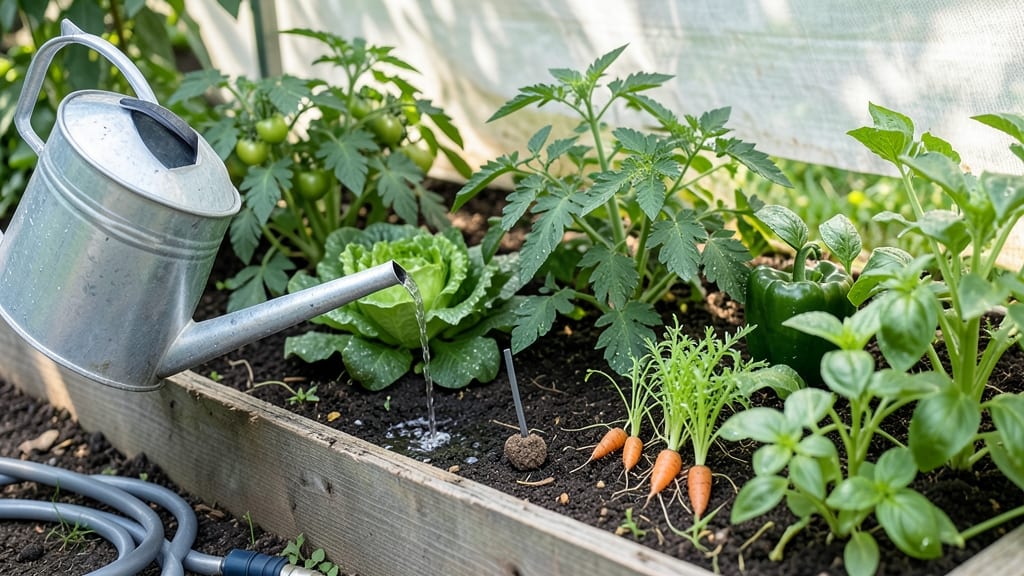
Watering your vegetable garden the right way keeps it thriving 🥬—and the secret is knowing how often, not just how much.
Too much or too little water, and you’ll end up with limp lettuce or bitter tomatoes. I’ve seen both firsthand, and the difference comes down to a schedule that matches your soil, season, and the plants themselves.
Below, I break down the exact watering frequency for leafy greens, root crops, and fruiting plants, plus how to tweak it for clay, sandy, or loamy soil. You’ll also learn the best times of day to water and how mulch can cut your effort in half.
No more guessing—just a science-backed routine that saves time and grows bigger harvests.
The perfect watering frequency for vegetable gardens by plant type
Watering your vegetable garden isn’t a one-size-fits-all task—each plant type has unique needs. Leafy greens like lettuce and spinach crave consistent moisture, while root vegetables such as carrots and potatoes prefer deep, infrequent watering. Even fruiting plants like tomatoes and peppers have their own rhythms.
Understanding these differences is the key to avoiding wilted leaves or stunted growth. The science behind soil moisture retention and plant physiology ensures your veggies thrive, not just survive.
Soil type plays a massive role in how often you need to water. Sandy soil drains quickly, demanding frequent watering, while clay soil holds moisture for days, reducing your watering frequency. Loamy soil, the gardener’s gold standard, strikes a balance.
If you’re unsure about your soil type, a simple jar test can reveal its composition in minutes. Knowing your soil’s behavior lets you tailor your watering schedule to match your garden’s specific needs, saving time and water.
Let’s break down the watering frequency by plant category, so you can give each veggie exactly what it needs to flourish. Whether you’re growing herbs like basil or heavy feeders like corn, this guide ensures your garden stays hydrated without drowning.
For leafy greens, shallow and frequent watering keeps their tender leaves crisp. Think of it like misting a salad—just enough to keep the surface moist without drowning the roots. Root vegetables, on the other hand, need deep watering to encourage root growth downward.
Avoid shallow puddles, which can lead to forked carrots or misshapen potatoes. A simple trick? Use a soaker hose to deliver water directly to the root zone without disturbing the soil.
When it comes to fruiting plants, consistency is key. Tomatoes, for example, hate moisture fluctuations—they’ll crack if watered inconsistently. Aim for 1-2 inches of water per week, delivered deeply rather than superficially. Herbs like basil and parsley prefer moderate watering, but they despise soggy soil.
Let the top inch of soil dry out between waterings to prevent root rot. If your herbs start wilting, it’s often a sign of underwatering, not overwatering.
Heavy feeders like corn and squash demand the most attention. These plants have hearty appetites and need daily watering during hot, dry spells. Mulching around these plants can help retain moisture and reduce the frequency of watering. A 2-3 inch layer of straw or wood chips works wonders in conserving water and keeping roots cool. This is especially critical in sandy soil, where water drains away like a sieve.
If you’re still unsure about your soil type, grab a jar, fill it with soil and water, and shake it up. Let it settle overnight—what you see (layers of sand, silt, and clay) will tell you whether you’ve got loamy soil (ideal), sandy soil (fast-draining), or clay soil (slow-draining).
Adjust your watering schedule accordingly, and watch your garden transform from struggling to thriving. The right watering routine isn’t just about survival; it’s about unlocking the full potential of your veggies.
Remember, the best time to water is early morning when evaporation is low and plants can absorb moisture efficiently. Avoid evening watering, as damp foliage invites fungal diseases like powdery mildew. With this science-backed approach, your vegetable garden will be the envy of the neighborhood—no guesswork required.
How to adjust your watering schedule for seasonal changes
Seasonal shifts dramatically change your vegetable garden's water needs. In spring, cooler temperatures and frequent rains mean your plants often need less frequent watering—every 2-3 days is usually enough.
I’ve found that leafy greens like spinach and lettuce thrive with morning moisture, while root crops like carrots prefer deeper, less frequent soaks to prevent splitting.
As summer arrives, the game changes completely. Heat waves can dry out soil in just 24 hours, so I switch to daily watering in the early morning to reduce evaporation and fungal risks.
Fruiting plants like tomatoes and peppers demand consistent moisture—about 1-2 inches per week—but mulch helps retain water and cuts back on my effort.
Fall brings a welcome reprieve. With cooler air and shorter days, I reduce watering to every 3-5 days, focusing on deep soaks to encourage root growth before dormancy.
Drought-tolerant kale and swiss chard handle these conditions better than thirsty cucumbers, which still need regular attention until the first frost.
🌱 Seasonal Watering Rules of Thumb
| Season | Frequency | Key Adjustments |
|---|---|---|
| Spring | Every 2-3 days | Light rains may reduce needs; focus on morning watering. |
| Summer | Daily or every other day | Deep watering (1-2 inches) + mulch to retain moisture. |
| Fall | Every 3-5 days | Reduce as temps drop; prioritize root crops. |
Spotting the difference between underwatering and overwatering saves your garden from disaster. Yellowing leaves often signal underwatering, especially if the soil feels dry 1 inch below the surface. In contrast, mushy stems or wilting despite moist soil are red flags for overwatering—root rot is lurking.
I’ve learned to check soil moisture with my finger before watering; if it’s damp, hold off!
Drought-tolerant varieties like zucchini and green beans can handle brief dry spells, but most vegetables need consistent moisture to produce. During heatwaves, I group plants with similar needs together—like peppers and eggplants—and water them as a block to save time and ensure even hydration.
Adjusting your watering schedule isn’t just about frequency—it’s about listening to your plants. Observe their growth patterns, soil conditions, and weather forecasts. With practice, you’ll develop a rhythm that keeps your vegetable garden thriving through every season. 🌿