
Tools
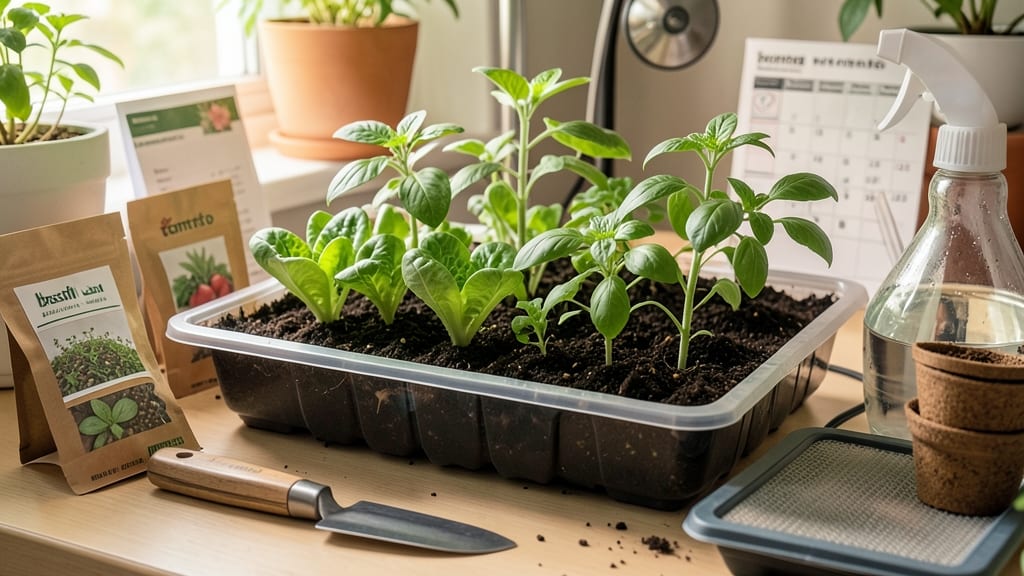
Starting garden seeds at the right time means the difference between a bumper crop and a sad, leggy plant staring at your kitchen window 🌱—and it’s all about knowing when to begin indoors.
Picture this: You’ve got your seed trays ready, the soil is fluffy, and you’re eager to grow. But if you start too early, your seedlings will be cramped and weak by transplant time.
Too late, and your tomatoes won’t ripen before the frost hits. The key? A plant-specific schedule that accounts for your last frost date and the days each crop needs to mature.
This guide breaks down the exact indoor starting times for everything from frost-hardy greens to heat-loving peppers, adjusted for your climate zone. Whether you’re in a cold Zone 3 or a mild Zone 10, you’ll learn how to calculate your personal timeline—and avoid the most common seed-starting blunders.
Ready to stop guessing and start growing? Below, you’ll find a month-by-month chart, climate adjustments, and pro tips to keep your seedlings on track for a harvest that’ll make your neighbors jealous.
Indoor seed starting timeline by plant type (frost dates included)
Mastering the indoor seed starting timeline ensures your cool-season greens and warm-season favorites mature just in time for harvest. The key? Calculating your last frost date and adjusting for your USDA zone.
For example, tomatoes and peppers need 6-8 weeks indoors before transplanting, while kale and spinach can handle cooler temps and shorter growing windows.
This guide breaks down seed starting schedules by plant type, using average frost dates for Zones 5-8 (adjust ±2 weeks for earlier/late zones).
Pro tip: Use a seed-starting journal to track progress and note your local microclimate quirks—like urban heat islands or sheltered valleys—that can shift your transplant dates by 1-2 weeks.
🌱
For Zone 3 gardeners, add 2-4 weeks to indoor start dates to account for earlier frosts. In Zone 10, where frost is rare, start warm-season crops like eggplants in late winter (February) for summer harvests.
Always check seed packets for specific variety notes—some heirloom tomatoes need 10+ weeks indoors!
Use this seed-starting formula to adjust for your area: (Your last frost date - days to maturity - weeks indoors).
For example, if your last frost is May 10 and you’re growing bush beans (50 days to maturity, 2-3 wks indoors), aim to start seeds by March 20-April 1. Pro move: Label trays with start dates and transplant dates to avoid confusion.
🌿
Don’t overlook light requirements—seedlings need 14-16 hours of light daily. Supplement with grow lights if your windowsill can’t deliver. And watch for overwatering, the #1 killer of young seedlings.
Bottom-water trays to encourage deep root growth and prevent damping-off disease. For slow germinators like parsley or carrots, soak seeds overnight or use a heat mat to speed up sprouting.
💧
Plan for succession planting with quick growers like radishes (30 days) or lettuce (45 days). Start a new batch every 2 weeks to ensure a <
How to adjust seed starting times for your climate Zone
Your climate zone determines everything about seed starting—from indoor timing to outdoor transplant dates. Gardeners in Zone 3 (like Minnesota or Montana) face a shorter growing season than those in Zone 10 (like Southern California), so adjustments are key.
The first step? Calculate your last frost date—not the average, but the real date from your local weather records. This ensures your warm-season crops like tomatoes and peppers mature before autumn frost hits.
For example, if your last frost is May 15 (common in Zone 5), you’ll start tomato seeds indoors 6-8 weeks before—around March 20-April 1. But in Zone 10, where frost is rare, you might start seeds as late as February for an outdoor transplant in March.
The trick is matching your plant’s days to maturity with your local frost-free window.
🌱 Numbered Highlights: Adjusting Seed Starting Times
- 1 Calculate your last frost date by averaging the last 5 years’ records (not the USDA average). Use local weather stations or ask nearby gardeners for their observations.
- 2 For Zone 3, add 2-4 extra weeks to standard seed-starting charts to account for slower soil warming. Start cool-season crops like kale or spinach 4-6 weeks before your last frost.
- 3 In Zone 10, subtract 1-2 weeks from charts since the ground warms faster. Transplant warm-season crops like basil or okra 2-3 weeks earlier than Zone 7 guidelines.
- 4 Extend your growing season with row covers or cold frames. These let you start seeds 2-3 weeks earlier in spring or 1-2 weeks later in fall without frost risk.
- 5 Troubleshoot delays: If seedlings develop damping-off (black stems), reduce watering and improve airflow. For slow germination, use a heat mat (70–75°F soil temp) for seeds like peppers or eggplants.
If you’re unsure about your local microclimate, test it yourself! Plant fast-growing radishes or bush beans outdoors in early spring—they’ll tell you when the soil is truly warm enough for tomatoes or peppers.
For Zone 3 gardeners, I recommend starting pepper seeds indoors in late March and using a grow light to compensate for limited sunlight. In Zone 10, you can often sow seeds directly outdoors in January for crops like lettuce or carrots.
Don’t forget to account for seedling legginess—a common issue in low-light conditions. If your seedlings stretch toward the window, move them closer to a south-facing window or supplement with a LED grow light (12–16 hours/day).
For Zone 3 gardeners, this is especially critical in March and April when daylight is still short. In Zone 10, natural light may be abundant year-round, but heat stress can become an issue—keep seedlings in a shady spot until hardened off.
Finally, keep a seed-starting journal to track your adjustments. Note which plants thrive with early starts and which struggle in your climate. For example, cucumbers may need 10 weeks indoors in Zone 3 but only 6 weeks in Zone 10.
Over time, you’ll refine your schedule to match your unique growing conditions—whether that’s a cool mountain valley or a hot desert oasis.
With these adjustments, you’ll avoid the heartbreak of frost-nipped seedlings or overcrowded trays. Happy planting—your garden’s success starts with the right timing! 🌱