
Tools
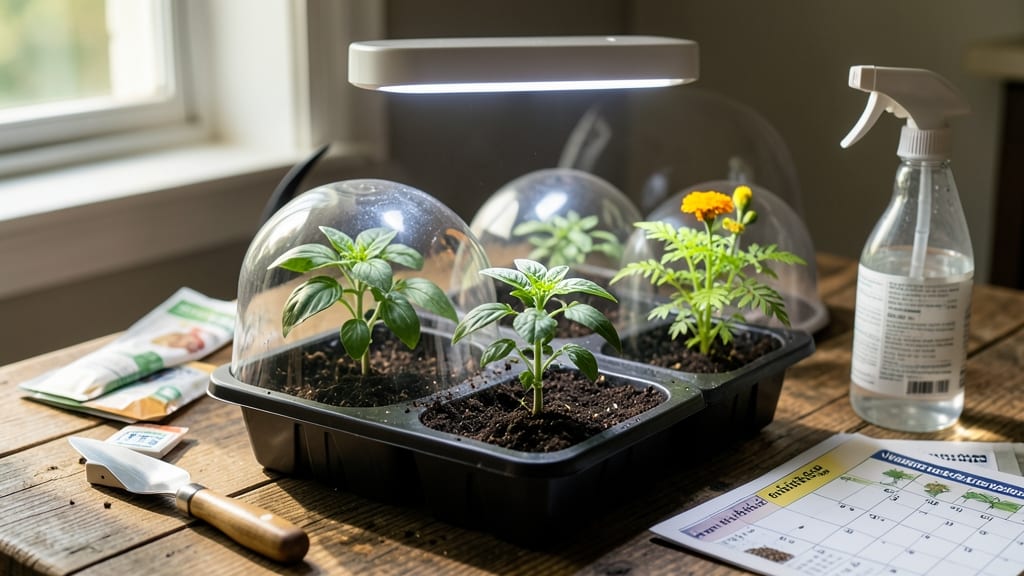
Starting garden seeds indoors at the right time means the difference between a bountiful harvest and a season of disappointment — and it all comes down to counting backward from your last frost date.
Picture this: you’ve got a tray of leggy, weak seedlings staring at you from a dim windowsill, while your neighbors are already harvesting their tomatoes. Or worse, you’re rushing to transplant oversized plants when the soil is still too cold.
The good news? A simple zone-specific schedule can turn your indoor space into a seedling powerhouse months before your first frost.
Most gardeners wait until March to start seeds, but that’s a one-size-fits-all mistake. In Zone 5, you’ll start tomatoes in early April, while in Zone 10, you might begin as early as February.
The key is knowing your frost date, adjusting for fast- vs. slow-growing plants, and giving seedlings the light and warmth they need to thrive.
Below, I’ll break down the exact weeks before last frost to start your seeds, how to adjust for your region, and the common pitfalls that even experienced gardeners fall into. Ready to set your seedlings up for success?
Zone-by-Zone indoor seed starting schedule (weeks before last frost)
Starting seeds indoors is like giving your garden a head start—but timing is everything. Plant too early, and you’ll end up with overgrown, leggy seedlings that struggle outdoors. Too late, and your harvest arrives when summer’s already fading.
Your USDA zone dictates the perfect window, balancing cold-hardy crops (like broccoli and peas) with warm-season favorites (tomatoes and peppers). Let’s break it down by zone so you can start with confidence.
Cold-hardy vegetables—think kale, lettuce, and spinach—can handle cooler soil temps, while tomatoes, peppers, and basil need warmth to thrive. The key? Start 6-8 weeks before your last frost date for most veggies, but adjust based on your zone’s climate quirks.
Below, I’ve mapped out the ideal weeks before last frost for each zone, so you can plan like a pro.
For Zone 3 and 4, where winters are harsh, prioritize cold-hardy crops like peas and spinach, which can handle cooler temps. Use grow lights or a sunny windowsill to prevent leggy seedlings, especially for warm-season crops like tomatoes.
In Zones 5-7, you’ve got more flexibility—start broccoli and cabbage early, but hold off on peppers until closer to frost.
In warmer Zones 8-10, you can afford to start seeds later, even just 1-3
How to calculate your exact seed starting date (beyond the chart)
Seed packets offer general guidelines, but your exact seed starting date depends on three critical factors: your last frost date, the days to maturity listed on the packet, and your local growing conditions.
While charts provide a starting point, fine-tuning ensures your seedlings hit the ground running when transplant time arrives—no leggy misfits or late bloomers here!
First, locate your average last frost date using the USDA Plant Hardiness Zone Map or a local frost calculator. For example, if you’re in Zone 6 with a May 10 last frost date, you’ll need to work backward from that milestone.
This foundational step ensures your seedlings mature just as the soil warms and dangers of frost fade away.
Next, grab your seed packets—they list days to maturity, which is the time from seed to harvest. For tomatoes, this might be 70-85 days, while basil matures in just 30-45 days.
Subtract these days from your last frost date to find your ideal transplant window. But don’t stop there—this is where the magic happens!
Use the USDA Zone Map or a local frost calculator (like Old Farmer’s Almanac) to pinpoint your average last frost date. For example, Zone 7 typically sees frost end around April 15.
Most seedlings need 4-8 weeks indoors before transplanting. Subtract this from your last frost date. For peppers, which need 6-8 weeks, a Zone 7 gardener would start seeds by March 1-15.
Subtract the days to maturity from your last frost date, then subtract the indoor seedling days. For tomatoes (85 days to maturity + 6 weeks indoors), a Zone 5 gardener (last frost May 15) should start seeds by February 15.
Slow growers? Use a seedling heat mat to speed up germination. Need extra light? Add a grow light to extend daylight to 14-16 hours. These tools shave 1-2 weeks off your timeline for finicky plants like cucumbers or eggplants.
Before transplanting, harden off seedlings by gradually exposing them to outdoor conditions for 7-10 days. This toughens them up for the real world. Also, test your garden soil—amending with compost ensures your seedlings thrive post-transplant.
Pro tip: Succession planting lets you stagger starts for crops like lettuce or bush beans. For example, if your last frost is May 1 and lettuce matures in 45 days, start a new batch every 2 weeks until June 15 to enjoy a continuous harvest.
This method maximizes your garden’s potential and minimizes wasted space.
Remember, local microclimates matter! A south-facing window might add warmth, while a shady balcony could delay your start by a week. Trust your instincts—if your seedlings look leggy or etiolated, they’ve outgrown their indoor home. Adjust your timeline next year by starting 2 weeks earlier for faster, healthier growth.
With this method, you’ll outpace the seed packet averages and grow plants that are transplant-ready at the perfect moment—no guesswork, just garden glory. Happy growing!