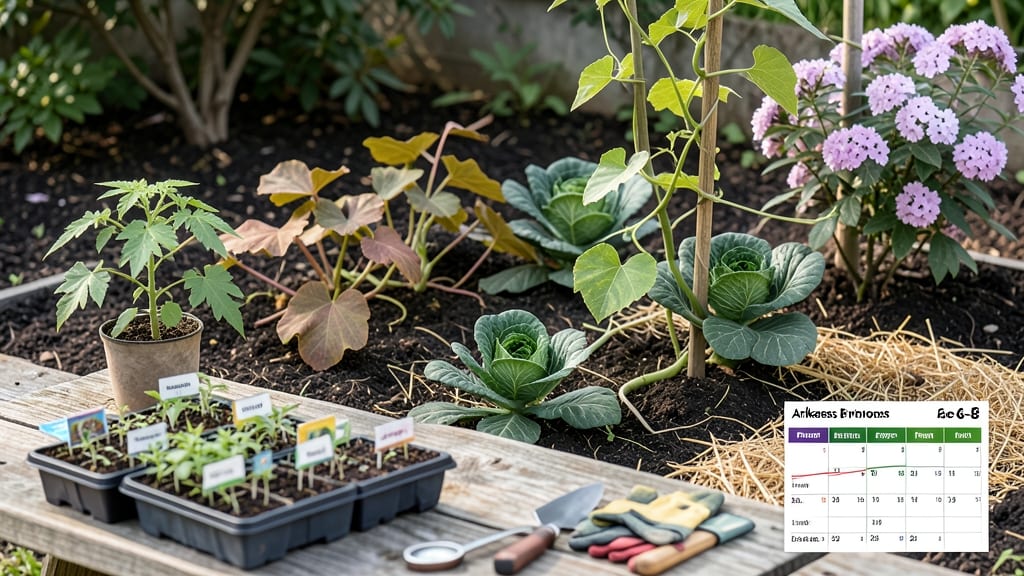
Planting a garden in Arkansas at the right time ensures lush growth and bountiful harvests—whether you're in the cooler Ozarks or the warmer Delta.
Arkansas gardeners know timing is everything—plant too early and risk frost damage, too late and miss peak harvests. But with Arkansas' diverse hardiness zones (6b–8a), knowing the exact months to plant each crop can mean the difference between a thriving garden and a struggling one.
Cool-season crops like spinach and broccoli thrive when planted in early spring, while warm-season favorites such as tomatoes and peppers need to wait until soil temperatures rise in late April or May.
The key is understanding your local frost dates and microclimates—whether you're in Little Rock, the Delta, or the Ozarks.
In this guide, I’ll break down the best planting windows for vegetables, herbs, and flowers, plus how to adjust for Arkansas’ unique growing conditions so you can enjoy a garden that flourishes all season long.
🌱When to Plant Garden
Jan❄️
Feb❄️
Mar🌱
Apr🌱
May🌱
Jun🌱
Jul☀️
Aug☀️
Sep🍂
Oct🍂
Nov🍂
Dec❄️
Ideal Time
Also Good
Arkansas planting calendar by crop type: exact months for vegetables, herbs & flowers
Arkansas gardeners face unique challenges thanks to its three distinct hardiness zones—6a in the north, 7a in central regions, and 8a in the south. These zones create varying frost dates and growing seasons, meaning your neighbor's planting schedule might not work for your yard.
Let's break down the exact months to plant cool-season crops, warm-season staples, and perennials for each zone.
For North Arkansas (Zone 6a), last spring frosts typically arrive between March 15-30, while first fall frosts hit October 15-30. Central Arkansas (Zone 7a) enjoys earlier springs (frosts end by March 1-15) and later falls (frosts arrive November 1-15).
In South Arkansas (Zone 8a), you can plant warm-season crops as early as February and extend cool-season harvests until December.
Here's your zone-specific planting calendar for Arkansas' most popular crops, organized by crop type for easy reference:
Crop Type
North Arkansas (6a)
Central Arkansas (7a)
South Arkansas (8a)
Key Notes
Cool-Season Vegetables
Spinach, Lettuce, Broccoli: March 15-April 15 (direct sow) August 1-15 (fall crop)
Spinach, Lettuce, Broccoli: February 15-March 15 (direct sow) July 15-August 15 (fall crop)
Spinach, Lettuce, Broccoli: January 15-February 15 (direct sow) June 15-July 15 (fall crop)
Use row covers for early plantings. Harvest before bolting.
Warm-Season Vegetables
Tomatoes, Peppers, Cucumbers: April 15-May 15 (after last frost) July 1-15 (fall transplant)
Tomatoes, Peppers, Cucumbers: March 15-April 15 (after last frost) June 15-July 15 (fall transplant)
Tomatoes, Peppers, Cucumbers: February 15-March 15 (after last frost) May 15-June 15 (fall transplant)
Use black plastic mulch to warm soil faster.
Herbs
Basil, Cilantro, Parsley: April 1-May 15 August 1-15 (fall)
Basil, Cilantro, Parsley: March 15-April 15 July 15-August 15 (fall)
Basil, Cilantro, Parsley: February 15-March 15 June 15-July 15 (fall)
Basil hates frost—wait until soil is warm.
Flowers
Marigolds, Zinnias, Sunflowers: April 15-May 15 July 1-15 (fall)
Marigolds, Zinnias, Sunflowers: March 15-April 15 June 15-July 15 (fall)
Marigolds, Zinnias, Sunflowers: February 15-March 15 May 15-June 15 (fall)
Annuals thrive with 6+ hours sun daily.
Perennials
Strawberries, Asparagus: March 1-April 15 (bare root) September 1-15 (fall)
Strawberries, Asparagus: February 15-March 15 (bare root) August
How Arkansas microclimates affect planting times: urban vs. rural vs. Delta regions
Arkansas' diverse geography creates three distinct planting zones—urban heat islands, rural river valleys, and the extended Delta growing season. Your Little Rock garden may need 2-3 weeks earlier planting than a Delta farm just 200 miles away.
Understanding these microclimates helps you avoid frost damage or heat stress in your crops.
Urban areas like Little Rock and Fayetteville experience heat islands where pavement and buildings trap warmth, delaying last frost dates by 1-2 weeks compared to rural areas. Meanwhile, the Delta region enjoys longer frost-free seasons (up to 240 days in Zone 8a), allowing double-cropping of warm-season vegetables.
Rural areas in the Ozark Mountains face cooler microclimates near river valleys, where first frost can arrive 3 weeks earlier than surrounding hills. These variations mean a one-size-fits-all planting calendar won't work—you need localized adjustments based on your specific conditions.
Here’s how to adjust your planting schedule based on Arkansas’ three key regions:
Region
Avg. Last Frost
Warm-Season Planting Window
Cool-Season Planting Window
Key Adjustments
Urban (Little Rock, Fayetteville)
April 15–May 1
April 20–May 10
August 15–September 15
Plant heat-tolerant varieties; use mulch to retain moisture.
Rural (Ozarks, Northwest AR)
March 20–April 5
April 15–May 1
July 15–August 10
Wait for soil warmth (60°F+); protect with row covers.
Delta (Stuttgart, Helena)
March 1–March 15
March 15–April 10
September 1–October 1
Extend season with black plastic mulch; plant fall greens early.
To fine-tune your schedule, check local frost date maps from the Arkansas Climate Office or use home weather stations to track soil temperatures. For example, tomatoes need 60°F soil to germinate—planting too early in cooler zones can stall growth for weeks.
Pro tip: Use floating row covers in rural areas to push planting dates 2-3 weeks earlier for cool-season crops like lettuce. In the Delta, succession planting every 2 weeks maximizes harvests from March through November.
Remember, even within regions, elevation changes matter. A garden at 1,000 feet in the Ozarks may have cooler microclimates than one at 300 feet in the Arkansas River Valley. Always adjust by 1 week per 500 feet elevation.