
Planting
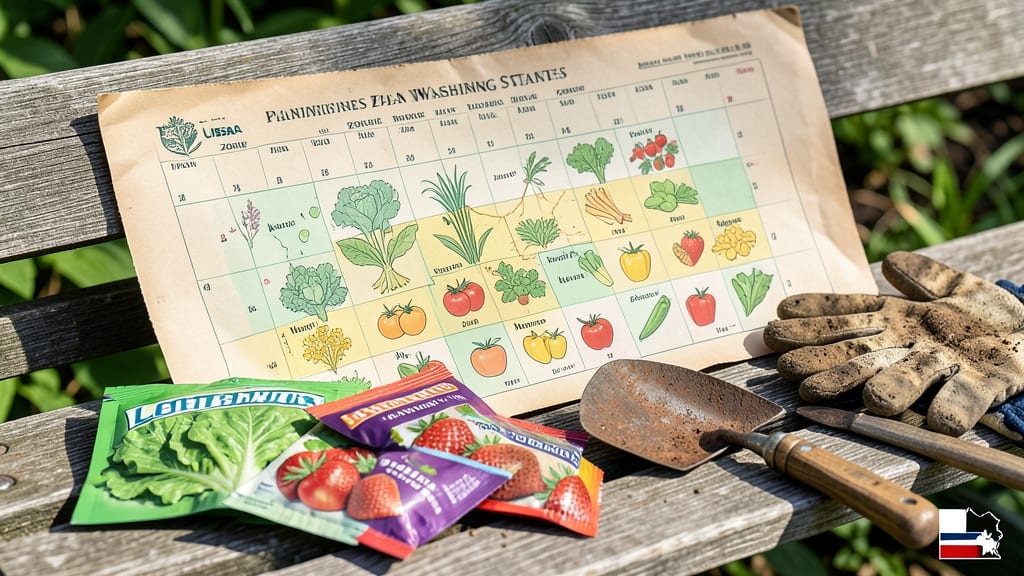
To plant a garden in Washington State at the right time means avoiding the frost traps that turn your seedlings into confetti—whether you're in Seattle’s damp coastal zone or Yakima’s sunbaked valleys.
Washington State’s climate is a study in contrasts: one week could bring unexpected freezes while the next drowns your soil in record rainfall.
That’s why timing isn’t just about the calendar—it’s about knowing your USDA zone, your microclimate, and the last frost date for your specific corner of the state.
Cool-season crops like peas and spinach thrive when planted 4–6 weeks before your last frost, while tomatoes and cucumbers need the soil to warm up 2–3 weeks after. Get it wrong, and you’re either waiting months for harvests or watching your plants bolt in the heat.
Here’s how to nail your planting window—down to the week—so you can enjoy a bountiful harvest instead of a lesson in what not to do. We’ll break it down by zone, crop, and even those sneaky microclimates that make Washington gardening an art, not a guess.
Washington State frost-free dates by USDA Zone: when to plant cool vs warm-season crops
Washington State spans USDA Zones 5b through 9a, creating a patchwork of microclimates that demand precise planting timing. The Pacific Northwest’s coastal regions (like Seattle) enjoy milder winters, while inland areas (like Yakima) experience colder snaps and earlier frosts.
Understanding your last average frost date is critical—plant too early, and frost will kill tender seedlings; too late, and your summer crops won’t mature in time.
For example, Seattle (Zone 8a) typically sees its last frost around March 15, while Spokane (Zone 6b) waits until May 1. Meanwhile, Yakima (Zone 7b) falls somewhere in between, with frost-free dates around April 15.
These differences shape which cool-season crops (like kale and peas) thrive in early spring and which warm-season crops (like tomatoes and peppers) need to wait for summer’s warmth.
Cool-season crops—those that tolerate or prefer cooler temperatures—should be sown 4–6 weeks before your last frost date.
This gives them time to establish roots before summer heat arrives. Warm-season crops, however, need to wait until 2–3 weeks after the last frost when soil temperatures consistently stay above 50°F (10°C).
Soil thermometers are your best friend here; cool soil can stunt seed germination even if air temps are warm.
In Zone 5b (Mount Rainier), where frosts linger later, focus on hardy cool-season crops like spinach, peas, and broccoli in early spring. By contrast, Zone 9a (Vancouver) allows for year-round gardening of mild-climate crops like kale, carrots, and lettuce.
Even within cities, microclimates vary—urban heat islands in Seattle can push last frost dates 1–2 weeks earlier than rural areas.
For warm-season crops, timing is equally critical. Tomatoes, peppers, and cucumbers need consistent warmth to thrive, so planting them too early—even if frost isn’t a threat—can lead to poor germination or stunted growth.
Use row covers or cold frames to jumpstart warm-season planting in cooler zones like Spokane, where soil may still be chilly in early May.
Conversely, in milder zones like Seattle, you can start tomatoes in containers as early as April if you’re willing to move them outdoors after the last frost.
Fall planting is another opportunity to maximize your harvest. Many cool-season crops (such as kale, radishes, and spinach) can be sown 8–10 weeks before your first frost for a late-season bounty.
In Zone 7b (Yakima), this might mean planting by August 15, while Zone 9a (Vancouver) gardeners can extend their season until October 1. Always check seed packets for days to maturity—this tells you whether a crop will be ready to harvest before winter sets in.
Pro tip: Use succession planting to stretch your growing season. For example, sow bush beans every 2 weeks from May through July in Zone 8a (Seattle) to ensure a continuous harvest.
Similarly, lettuce and radishes can be direct-sown every 3 weeks for a steady supply. This technique works especially well in shorter-season zones like Spokane, where summer is brief.
Don’t forget to account for elevation changes. Areas like Leavenworth (Zone
Best crops to plant in Washington by season: a month-by-month guide for maximum yield
Washington’s varied microclimates mean your garden timing should shift dramatically between Western WA’s coastal fog and Eastern WA’s dry heat.
In the Puget Sound region, mild winters let you start cool-season crops like spinach and peas as early as February, while Spokane gardeners wait until April to avoid late frosts.
High-altitude areas like Mount Rainier need even later plantings—sometimes June for tomatoes—to escape chilly mountain nights.
To simplify, focus on three key windows: early spring (March–April), late spring/summer (May–July), and fall (August–September). Each offers unique high-yield crops that thrive in Washington’s 60–240 frost-free days.
For example, Seattle’s 180-day growing season lets you grow two full harvests of lettuce, while Yakima’s 120 days demands fast-maturing varieties like bush beans.
🌱 Washington’s Seasonal Planting Calendar
- 📅 March–April (Early Spring): Peas, spinach, kale, radishes—plant 4–6 weeks before last frost (Seattle: March 15; Spokane: April 15).
- 🌿 May–June (Late Spring): Tomatoes, cucumbers, basil, zucchini—wait 2–3 weeks after last frost (Seattle: May 1; Yakima: May 15).
- ☀️ July–August (Summer): Beans, squash, corn, peppers—thrive in hot, dry conditions (irrigate deeply 2x/week).
- 🍂 September (Fall): Kale, carrots, broccoli, garlic—sow 8–10 weeks before first frost (Seattle: September 15; Eastern WA: August 15).
- ⛰️ High-Altitude Adjustments: Delay tomatoes by 2–4 weeks above 2,000 ft; choose early-maturing varieties like ‘Mountain Merit’ tomatoes.
For maximum yield, prioritize succession planting—especially for leafy greens and radishes. In Western WA, sow spinach every 2 weeks from March to October to avoid bolting (going to seed).
Meanwhile, Eastern WA’s shorter season rewards fast growers like bush beans (50 days) and ‘Early Wonder’ zucchini (45 days).
Don’t overlook fall crops—they often outperform summer harvests. Carrots and beets sown in late August develop sweeter roots in cool weather, while garlic planted in October matures by July. In cooler zones (USDA 7–8), overwintering onions or cabbage can survive mild winters for spring harvests.
Pro tip: Use row covers to extend spring/fall seasons by 3–4 weeks. For example, protect lettuce in March or spinach in September to double your harvest. Pair heat-loving crops like peppers with shade-tolerant herbs (e.g., cilantro) to optimize space in small urban gardens.
Remember, soil prep is just as critical as timing. Amend clay soils (common in Western WA) with compost in fall, while sandy soils (like in Eastern WA) benefit from organic matter added in early spring.
Test your pH—most vegetables thrive at 6.0–7.0, but blueberries (if you’re ambitious!) need acidic soil (4.5–5.5).