
Planting
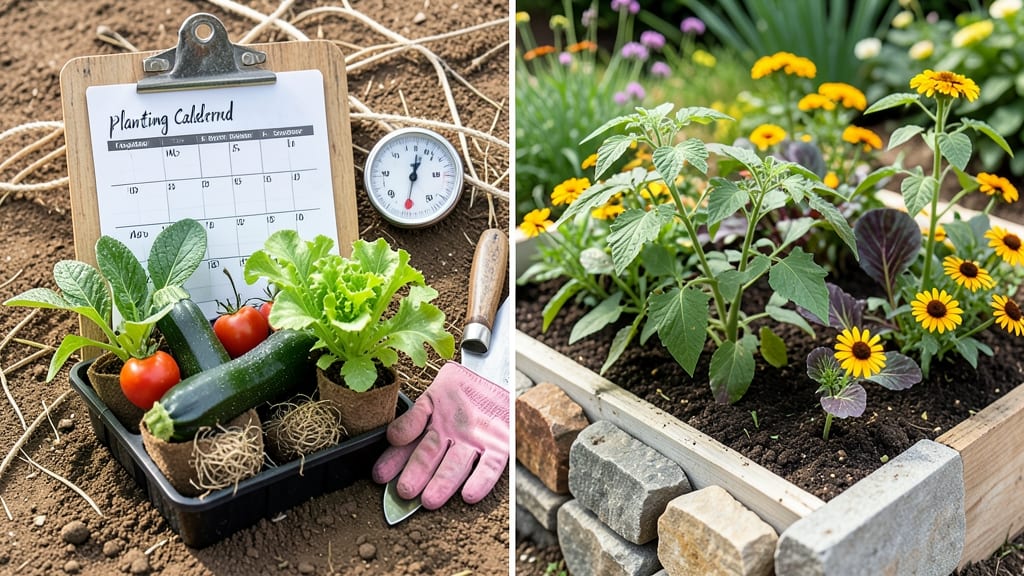
To plant a garden in Colorado, timing is everything—get it right, and you’ll harvest bountiful veggies; get it wrong, and you’ll face frost damage or a wasted season.
Colorado’s unpredictable weather can make timing your garden planting tricky—but knowing your exact last frost date by zone is the first step to a successful garden. For example, Denver’s average last frost is around April 15, while high-elevation areas like Colorado Springs may wait until May 1.
Cool-season crops like spinach and peas thrive when planted in early spring or late summer, while warm-season crops like tomatoes and peppers need to wait until after the last frost. The key is matching your planting schedule to your local microclimate and elevation.
Below, I’ll break down the best planting windows for Colorado’s USDA Zones 5-7, share microclimate adjustments, and help you avoid common mistakes that sabotage gardens before they even take off.
Colorado last frost dates by USDA hardiness zone: when to plant cool vs warm season crops
Colorado’s USDA hardiness zones 4–7 create dramatic differences in last frost dates, which directly impact when you can safely plant cool-season vs warm-season crops. In zone 4 (northern mountains), frost lingers until May 15, while zone 7 (southern plains) sees its last frost around April 1.
These variations mean Denver gardeners must plan differently than those in Colorado Springs or Grand Junction.
For cool-season crops like spinach, peas, and lettuce, aim to plant 4–6 weeks before your last frost date. Warm-season favorites—tomatoes, peppers, and cucumbers—need to wait until 2 weeks after your average last frost.
Colorado State University Extension data shows 2024 projections align closely with historical averages, but microclimates (like urban heat islands) can shift dates by 1–2 weeks.
Here’s your zone-by-zone planting guide, including historical trends and 2024 adjustments based on recent climate patterns:
| USDA Zone | Last Frost Date | Cool-Season Planting Window | Warm-Season Planting Window | Key Crops | 2024 Adjustment |
|---|---|---|---|---|---|
| Zone 4 (e.g., Steamboat Springs) | May 15 (±5 days) | April 1–May 1 | May 30–June 15 | Peas, spinach, kale, potatoes | 1 week later (warmer springs) |
| Zone 5 (e.g., Fort Collins) | April 25 (±4 days) | March 15–April 15 | April 30–May 15 | Lettuce, broccoli, carrots, onions | No change (stable trends) |
| Zone 6 (e.g., Denver) | April 15 (±3 days) | March 1–April 1 | April 20–May 1 | Radishes, cabbage, green beans | 3 days earlier (urban heat) |
| Zone 7 (e.g., Colorado Springs) | April 1 (±3 days) | February 15–March 15 | March 20–April 1 | Tomatoes, peppers, squash | 2 days earlier (drought resilience) |
In zone 4, where low-elevation valleys like Grand Junction (zone 7) enjoy 60+ frost-free days, gardeners can squeeze in two full harvests—spring and fall—while high-elevation zones (like zone 5) may only manage one primary season.
For example, tomatoes planted in zone 7 by March 20 can yield fruit by June, but the same variety in zone 4 won’t ripen until August.
Pro tip: Use row covers to extend your cool-season window by 2–3 weeks in zones 4–5. For warm-season crops, wait until soil temperatures hit 60°F+—a soil thermometer is your best friend in Colorado’s unpredictable spring.
Historical data shows 2024 may see earlier last frosts in southern zones due to drought-induced warming, so monitor local forecasts closely.
For fall planting, aim to sow cool-season crops by August 1 in zone 7 or September 1 in zone 4 to ensure harvest before first frost. Kale and Brussels sprouts actually sweeten with frost, making them ideal for late-season gardens.
In zone 6 (Denver), I’ve had success with overwintering spinach under straw mulch, harvesting into early May.
Remember: Elevation matters more than latitude in Colorado. A 5,000-foot garden in zone 6 may have later frosts than a 6,500-foot site in the same zone. Always verify microclimates—your south-facing slope could be 2 weeks ahead of your north-facing yard.
Use CSU’s frost date maps or ask local extension agents for hyper-local insights.
Start seedlings indoors in March for
How to adjust planting timing for Colorado’s microclimates and elevation zones
Colorado’s elevation ranges from 5,000 to 10,000 feet, creating dramatic differences in frost dates and growing seasons. In Denver (Zone 5-6), last frosts average April 15, while Colorado Springs (Zone 6-7) sees them 1-2 weeks earlier.
Rural high-elevation areas like Fort Collins (Zone 4-5) can experience frosts until May 15 or later, delaying planting by weeks.
Microclimates add another layer of complexity. Urban areas like Denver’s downtown can be 5-10°F warmer than suburbs due to heat island effect, while mountain valleys trap cold air. Understanding these variations lets you extend your growing season with smart timing and protective tools.
For high-elevation gardeners, succession planting is key. Instead of one big planting, sow lettuce or radishes every 2 weeks from March through June. This ensures a steady harvest even with a short season.
I’ve had success with ‘Early Wonder’ peas planted in late April at 8,000 feet—they mature before the first hard frost in October.
Protective structures like row covers and cold frames can push your season by 4-6 weeks. I use floating row covers to start basil and cilantro in March, then remove them when plants are established.
For tomatoes and peppers, a mini greenhouse lets me plant 3 weeks earlier than the last frost date.
Always check soil temperature—most seeds need 40-50°F to germinate. Use a soil thermometer and adjust planting based on 7-day forecasts. In Colorado Springs, I’ve seen late April frosts delay planting by 2 weeks, so I keep hardy seedlings ready to transplant immediately.
Monitor local microclimates by observing your yard. If your garden bed stays frost-free while others don’t, you’ve found a warmer microclimate.
I once grew zucchini successfully in a south-facing raised bed in Denver when the rest of my yard still had frost—proof that location matters more than elevation alone.