
Picking
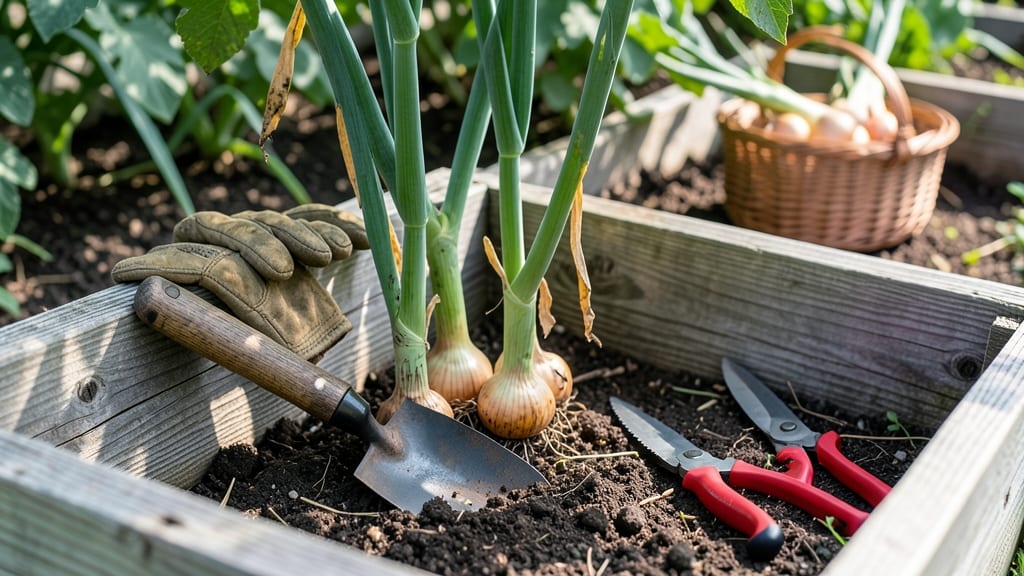
To pick onions from your garden at the perfect moment means the difference between sweet, flavorful bulbs and tough, pungent ones — and the key is knowing exactly when to pull them.
You’ve spent weeks nurturing your 🧅 plants, watching them grow from tiny seedlings into sturdy stalks, but how do you know when those bulbs are truly ready?
Waiting too long can turn your harvest into bitter, stringy disappointments, while picking too early means missing out on full flavor and storage potential.
Most gardeners in zone 6a can expect their spring-planted onions to reach harvest time between June and July, but the real test isn’t the calendar—it’s the plant itself.
Look for three clear signs: when the tops flatten and yellow, when the bulbs feel firm to the touch, and when the neck starts to dry out.
In this guide, I’ll walk you through those 3 foolproof indicators, plus how to handle late-season onions and store your harvest for months. No guesswork, just delicious, long-lasting results.


3 Clear visual signs your onions are ready for harvesting
Harvesting onions at the right time ensures maximum flavor and long-term storage. Unlike many vegetables, onions don’t ripen after picking, so timing is everything. If you harvest too early, you’ll get small, pungent bulbs, while waiting too long can lead to bolting or splitting.
The key is watching for these three clear visual cues that signal your onions are ready.
First, pay attention to the top growth. When about 60-70% of the tops turn yellow-brown and flop over, it’s a strong sign maturity is near. This natural leaf senescence means the plant is redirecting nutrients to the bulb.
I always check my onions in late June or July for spring-planted varieties, as this aligns with their natural growth cycle.
Next, examine the bulb size and firmness. Mature onions typically reach 1-2 inches in diameter and feel firm to the touch. If you gently squeeze a bulb and it gives slightly but doesn’t feel mushy, it’s ready.
I like to dig up a test onion every few days in late summer to check progress—this prevents over-maturity.
Finally, inspect the neck of the onion. The area where the bulb meets the stem should feel dry and papery. If you can easily peel back the outer layers without resistance, your onions are at peak harvest time.
This dryness is crucial for proper curing later, which extends storage life.
🌱 3 Visual Signs Your Onions Are Ready
-
1. Yellowing, Flopped Tops
About 60-70% of tops turn yellow-brown and fall over naturally. -
2. Firm, Round Bulbs
Bulbs reach 1-2 inches in diameter and feel solid when squeezed. -
3. Dry, Papery Neck
The stem base feels dry and peels easily—key for curing.
Pro Tip: Harvest on a dry, sunny day to speed curing.
Regional timing matters too. In cooler climates (USDA Zones 3-5), onions often mature earlier, while warmer zones (6-10) may see harvests stretch into late summer or early fall.
I’ve found that short-day onions (like Texas Early White) mature faster in hot climates, while long-day varieties (like Yellow Sweet Spanish) take longer in cooler areas.
One common mistake is waiting until the entire tops turn brown. By then, the bulbs may split or rot. I learned this the hard way—my first harvest had some lovely onions, but others were overripe and unusable.
The trick is to watch daily in the final 2-3 weeks of growth and harvest when most tops flop, not all.
For green onions or scallions, the rules differ slightly. These are harvested when the leaves reach 6-8 inches tall but before the bulb forms. Snip the outer leaves, leaving the center to regrow—this gives you multiple harvests over the season.
But for storage onions, those three visual cues are your golden ticket to success.
After harvest, let onions cure in the sun for 3-5 days to toughen the skins. Store them in a cool, dry place with good airflow—this preserves flavor and prevents spoilage. When done right, your onions can last 6-8 months, making the effort totally worth it.
Now that you know the signs, grab your gardening gloves and check your onions today! The right harvest timing transforms good bulbs into great ones—and that’s a reward every gardener deserves. 🧅
How to test onion bulbs for perfect harvest timing
Testing onion bulbs for harvest readiness is simpler than you might think. The key lies in a gentle squeeze test combined with visual cues. Short-day varieties (like Texas Early White) mature faster in warm climates, while long-day varieties (such as Yellow Sweet Spanish) need cooler temperatures to bulk up.
I’ve found that timing this test in the late morning gives the most accurate results.
Start by selecting a few healthy-looking onions from your garden bed. Look for bulbs that are 1-2 inches in diameter—this is the ideal size for most varieties.
The tops should also be yellowing and flopping over, signaling the bulb has stopped growing upward and is focusing energy on the root.
⚠️ callout warning
If you harvest too late, bulbs may split or rot in storage. Long-day varieties left past maturity can become hollow and pungent. Test bulbs 2-3 weeks before your expected harvest date to avoid this. For short-day onions, time your test 10-14 days earlier since they mature faster in heat.
Gently squeeze each bulb between your thumb and forefinger. A mature onion will feel firm yet slightly yielding, like a ripe avocado. If it’s soft and squishy, it needs more time—underripe onions store poorly and may spoil quickly.
Conversely, if the bulb feels rock-hard, it’s likely overripe and past its prime.
For long-day varieties, pay extra attention to the neck of the bulb. When it starts to dry out and flatten, that’s your cue to harvest soon. In my Zone 6a garden, I’ve noticed these varieties often need 10-14 extra days of growth compared to short-day types.
Adjust your timing based on your local climate—cooler regions may need longer maturation periods.
Pro tip: Dig up one test bulb and check the root plate. If it’s white and firm, the bulb is ready. Brown or shriveled roots mean it’s past its peak.
For storage onions, harvest when the tops are completely brown and dry—this ensures long-term freshness. For green onions, you can harvest anytime by cutting the greens just above the bulb.
Remember, the squeeze test is your best friend for harvest timing. Combine it with visual cues, and you’ll consistently pull onions at their peak flavor and storage potential. Whether you’re growing short-day or long-day varieties, this method works every time in my garden. Happy harvesting! 🧅