
Picking
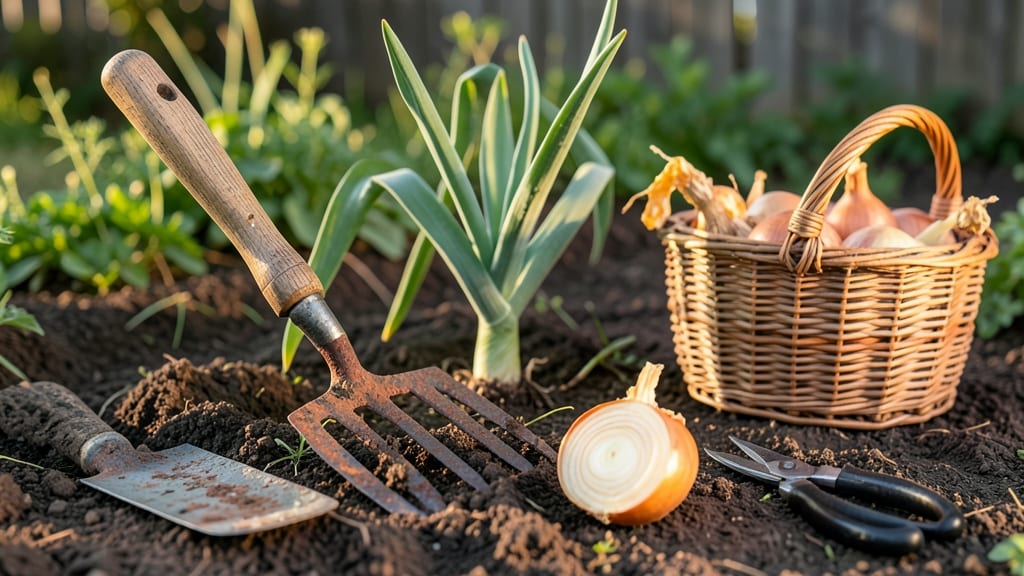
Harvesting onions from the garden at the right time ensures sweet, flavorful bulbs that store well all winter.
Picture this: you’ve nurtured your 🧅 plants all season, and now the tops are turning yellow and flopping over. That’s your cue to act—because waiting too long turns your prize into a tough, bitter mess.
Or worse, you pull them too soon and end up with tiny, underdeveloped bulbs that spoil faster than a forgotten sandwich.
Timing matters more than you might think. In USDA Zone 6a, where spring planting kicks off in March and April, onions typically reach harvest readiness between July and August.
But don’t just go by the calendar—watch for those 5 key signs (like bulb size and leaf color) to lock in the perfect moment. Get it wrong, and you’ll miss out on the best flavor and storage life.
In this guide, I’ll walk you through exactly when to harvest for peak quality, how to tell storage onions apart from fresh green ones, and the 3 biggest mistakes that ruin a crop. No guesswork—just actionable tips to turn your garden into a pantry staple.


5 Unmistakable signs your onions are ready for harvest
Knowing exactly when to harvest onions transforms your garden from a guessing game to a rewarding, flavorful success. Picking too early means small, pungent bulbs, while waiting too long risks soft, sprouted onions that won’t store.
The key? Watching for these five visual and physical cues that signal peak ripeness for either fresh use or long-term storage.
Onions mature at different rates depending on your climate zone and variety—short-day onions (like Texas Early White) need 12-14 hours of daylight to bulb properly, while long-day onions (like Yellow Sweet Spanish) thrive in cooler northern regions.
Regardless of type, these universal signs apply to all onions, ensuring you harvest at the perfect moment for maximum flavor and storage potential.
Here’s what to look for in your garden—each sign builds on the last, confirming your onions are ready to pull:
The most obvious sign! When 50-70% of tops yellow and flop over, bulbs are nearing maturity. This happens naturally as the plant redirects energy to the underground bulb. Wait 1-2 weeks after this for full ripeness.
Gently dig around the base to check size. Storage onions should be golf-ball sized (1.5-2 inches), while fresh green onions can be harvested smaller (pea-sized bulbs). Use a trowel to expose the bulb without damaging it.
The stem connecting the bulb to the leaves (the "neck") will shrink and feel papery. This indicates the bulb has stopped growing upward and is fully mature. Press gently—it should feel firm, not spongy.
Squeeze the bulb gently. Ready onions feel solid and dry on the outside, with a papery skin. If it’s still damp or soft, wait 7-10 days. Overly dry bulbs may have shriveled interiors, so harvest when the skin is dry but the bulb stays firm.
Harvest onions on a dry, sunny day with temperatures between 60-75°F (15-24°C). Avoid harvesting after rain or in high humidity, which can cause rot during curing. Morning harvests give bulbs time to dry naturally before storage.
Pro tip: For long-day onions in cooler climates (Zones 3-5), watch for these signs in late July to early August. In warmer regions (Zones 6-10), onions may mature earlier—sometimes as early as June—so stay vigilant.
If you’re unsure, dig up one onion to test: a firm, dry bulb with a tight neck means the rest are ready.
Harvesting at the right time isn’t just about avoiding bitter flavors—it’s also about preserving sweetness and storage life. Onions harvested too early won’t develop their full sweet, mellow taste, while those left too long become pungent and prone to sprouting.
By mastering these signs, you’ll ensure every onion you pull is perfect for fresh eating, braiding, or long-term storage.
Once you’ve confirmed all five signs, it’s time to harvest! Use a sharp garden fork to loosen the soil around the bulb, then gently lift. Shake off excess dirt and let onions cure in the sun for 3-5 days before storing.
This drying process prevents rot and extends shelf life to 6-8 months in a cool, dark place.
🌱 Remember: The earlier you harvest green onions (before bulbs form), the more regrowth you’ll get—simply cut 2-3 inches above the base and they’ll sprout again in 2-3 weeks.
But for storage onions, wait for those yellow tops and firm bulbs—your patience will pay off with a pantry full of homegrown flavor!
Harvest timing differences: storage onions vs. fresh green onions
Timing your onion harvest correctly determines whether you end up with storage-friendly bulbs or fresh green onions for immediate use. Storage onions need full maturity, while green onions thrive when harvested young.
Understanding these differences saves time and effort—and your harvest! The key lies in leaf color, bulb size, and seasonal timing.
For storage onions, wait until the tops yellow and flop over naturally. This signals the bulb has reached its peak sugar content and is ready for long-term storage.
Green onions, however, should be harvested when the bulb is small (about ½-inch diameter) and the green tops are 6-8 inches tall. Cutting them early encourages regrowth for multiple harvests.
| Harvest Type | Best Time | Key Indicators | Storage Life | Seasonal Window |
|---|---|---|---|---|
| Storage Onions | Late summer to early fall | Tops yellow and flop, bulb 2-3 inches | 6-8 months | July-August (USDA Zone 6a) |
| Green Onions | Spring to early summer | Bulb ½-inch, tops 6-8 inches | 1-2 weeks (fridge) | April-June (regrowth possible) |
Regional climates shift harvest windows slightly. In cooler zones (Zones 3-5), storage onions mature 2-3 weeks later than in warmer zones (Zones 7-9). For example, in Zone 5, aim for late August harvests, while Zone 8 gardeners can pull storage onions as early as mid-July.
Always monitor soil moisture—dry spells accelerate maturity.
Pro tip: Test a few bulbs before full harvest. Dig up one onion and check the neck tightness. If it’s papery and dry, the rest are ready. For green onions, cut tops 1-2 inches above soil—they’ll regrow in 10-14 days, giving you multiple harvests per plant.
Storage onions need proper curing post-harvest: lay them in a shady, dry spot for 2-3 weeks to toughen skins. Green onions, however, stay crisp in the fridge for 1-2 weeks when stored in a perforated bag. Knowing these differences ensures you maximize yield and flavor year-round.
Don’t let onions go to waste! If you harvest storage onions too early, they’ll sprout in storage. For green onions, over-harvesting weakens regrowth. Balance is key—adjust timing based on your goals: long-term storage or fresh greens. 🧅