
How To
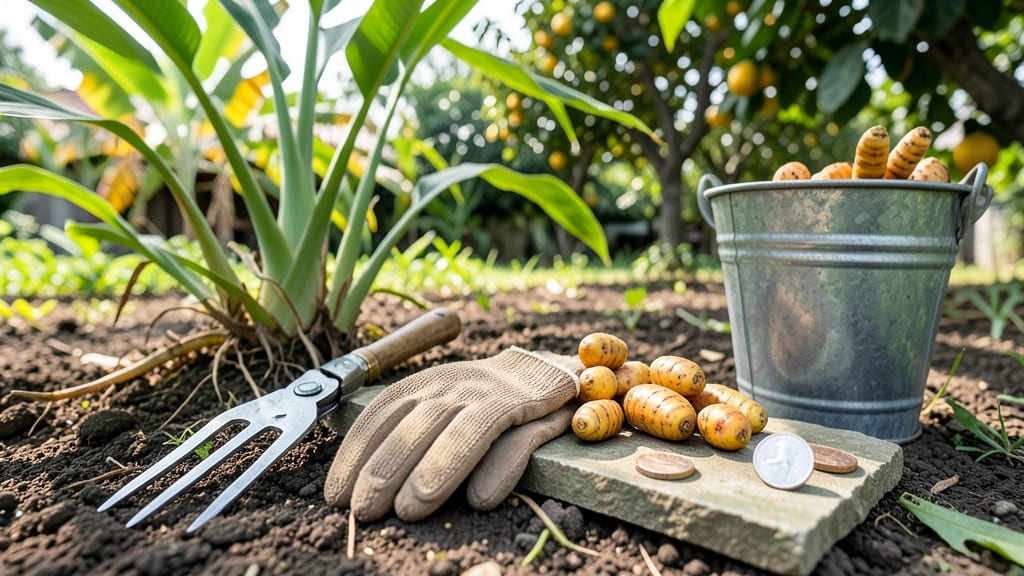
Harvesting turmeric at the right time means waiting until the rhizomes are 1-2 inches thick and the leaves begin turning yellow 🌿 — a window that’s easy to miss if you’re not watching for the key signs.
Too early, and your roots will be small, green, and bitter. Too late, and you risk losing potency or even the plant itself. The difference between a flavorful harvest and wasted effort often comes down to knowing when those underground rhizomes are ready.
In USDA Zone 6a, that usually lands in late fall, around October-November, when the foliage yellows and the soil cools. But the real clues are in the root size, skin thickness, and how easily it separates from the stem.
Below, I’ll walk you through the exact visual cues to look for, how to harvest without harming future growth, and what to do with your turmeric once it’s out of the ground to keep it fresh and vibrant.


How to identify perfect turmeric root size for harvesting
Harvesting turmeric at the right time ensures you get the brightest orange color and maximum medicinal potency. The key lies in understanding rhizome size and underground development stages. Unlike many crops, turmeric's readiness isn't just about leaf color—its root diameter and firmness are critical indicators.
For home gardeners, knowing when to harvest can mean the difference between a mild, flavorful rhizome and a bitter, woody mess. Turmeric typically matures between 8-10 months after planting, but exact timing depends on your climate zone and variety.
In warmer regions like USDA Zone 9-11, you might harvest as early as September, while cooler zones may wait until November.
Here's what you need to look for in the rhizome itself—not just the leaves. The ideal harvest size is a 1-2 inch diameter with a thick, papery skin. If you dig up a rhizome that's smaller than a quarter and still green inside, it's not ready.
Waiting too long can make the roots fibrous and tough, ruining their culinary and medicinal value.
🌱
When checking your turmeric rhizomes, use your fingernail test—if the skin doesn't dent easily, it's ready. For first-time growers, I recommend harvesting a few rhizomes early to test flavor and potency.
This way, you can adjust your timing for next year's crop. Remember, perennial turmeric can regrow from smaller roots left in the ground, but harvesting the largest ones ensures you get the best yield.
Another key factor is the length of the rhizome. While diameter is critical, you also want roots that are at least 3-4 inches long. Shorter rhizomes may not have fully developed their curcumin content, which is the compound responsible for turmeric's anti-inflammatory benefits.
If you're growing turmeric for medicinal purposes, prioritize both size and color—deeper orange roots contain higher concentrations.
Don't forget to consider the seasonal timing of your harvest. In tropical climates, turmeric can be harvested year-round, but in cooler regions, aim for late fall before the first frost.
If you're in USDA Zone 7 or below, you may need to harvest earlier or use row covers to extend the growing season. The goal is to harvest when the plant's energy shifts from growth to root storage, typically signaled by yellowing leaves.
For container-grown turmeric, the same size rules apply, but you'll need to monitor roots more closely since space is limited. If your pot is less than 12 inches deep, rhizomes may not reach their full potential.
In this case, harvest when they reach 1 inch in diameter—they'll be smaller but still flavorful. Always water deeply the day before harvesting to make the rhizomes easier to dig up without breaking.
One common mistake is waiting until the leaves are completely dead before harvesting.
Color cues: when turmeric leaves change signals harvest readiness
Your turmeric plant’s leaves send clear visual signals about when to harvest for maximum flavor and potency. Unlike many herbs, turmeric’s foliage transformation directly correlates with root maturity. Ignoring these cues can result in bitter rhizomes or wasted effort.
The key is understanding how leaf color shifts from vibrant green to subtle yellows and browns—and what each stage reveals about your roots.
Timing matters because turmeric rhizomes continue developing even after the plant stops producing new leaves. By the time your leaves show harvest-ready colors, the underground rhizomes should be 1-2 inches thick with vibrant orange-yellow flesh.
Missing these visual cues means you might harvest too early (underdeveloped roots) or too late (woody, less flavorful rhizomes). Let’s break down the leaf color timeline and what each phase means for your harvest.
🌿 Numbered Highlights: Turmeric Leaf Color Cues for Harvest
- 1
- 2
- 3
- 4
- 5
🌡️ Pro Tip: In warmer climates (Zones 9-11), leaf yellowing may start as early as August. In cooler zones (6-8), wait until first frost or October-November.
Seasonal timing plays a critical role in interpreting these color cues. In USDA Zones 6-8, where frost arrives by late October, your turmeric’s leaves will naturally yellow and die back as temperatures drop.
This is your harvest window—dig before the first frost to preserve rhizome quality. Meanwhile, in warmer southern regions, leaves may yellow earlier, but rhizomes still need 8-10 months to mature fully.
Pay attention to the pattern of yellowing, not just the color. Healthy yellowing starts at the base of the plant and moves upward. If yellowing appears randomly or with brown spots, it could signal nutrient deficiency or pest stress, which may delay harvest readiness.
In these cases, add a balanced fertilizer (like 5-10-10) and monitor for 2-3 weeks before proceeding.
Once your leaves reach the full yellow stage, act quickly. The rhizomes are at their peak potency but will start converting starches to sugars if left in the ground too long. Use a fork or spade to gently loosen soil around the plant, then lift the rhizomes carefully.
Rinse off dirt and let them cure in shade for 3-5 days before storing or processing. This drying step enhances flavor and extends shelf life.
Remember, leaf color is nature’s harvest timer—don’t rush it. Patience here means the difference between bright orange, aromatic rhizomes and dull, fibrous roots. Keep an eye on your plants, and you’ll never miss the perfect moment to harvest again. 🍂