
Picking
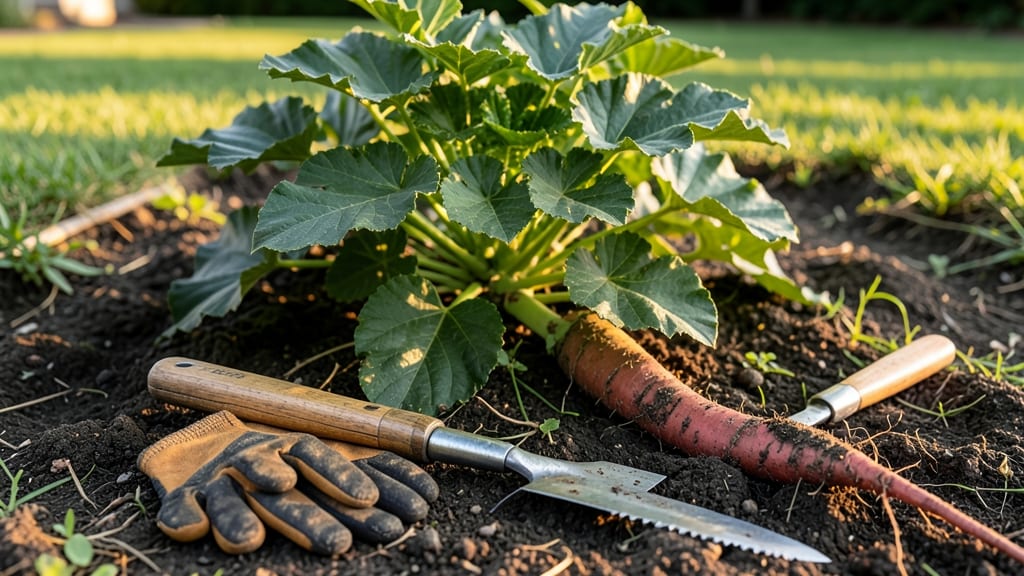
Harvesting horseradish at the right time ensures a bold, spicy root that’s perfect for your favorite dishes — and missing the window means a milder, less potent harvest.
Too early, and you’re left with small, underdeveloped roots that lack the signature kick 🌿. Too late, and the flavor fades, leaving you with a bitter disappointment. The secret? Watching for the right root size, leaf color, and that unmistakable aroma.
In Zone 6a, the best time to dig is in the fall or winter of the second year, when roots reach 1-2 inches in diameter and leaves start yellowing.
But how do you know for sure? I’ll walk you through the visual cues and a simple test to confirm peak pungency before you pull it from the ground.
From storing your harvest to avoiding common mistakes, this guide covers everything you need to know to get the most flavor-packed horseradish possible.


Optimal horseradish root size for harvesting and when to dig
Horseradish thrives on patience—it takes 2-3 years to reach its full fiery potential. The key to harvesting lies in understanding root size and seasonal timing. Too early, and you’ll get a weak, underdeveloped root.
Too late, and the flavor may dull. Let’s break down the perfect harvest window for maximum pungency and yield.
For most gardeners, the ideal harvest time falls in late fall or early winter, when soil temps drop below 50°F (10°C). This cool-season crop actually benefits from frost, which concentrates its spicy compounds.
If you planted in spring, aim for harvest in year 2 or 3—never sooner, as roots need time to bulk up.
Here’s the golden rule: Harvest when roots reach 1-2 inches in diameter and 6-12 inches long. Smaller roots (<1 inch) will be woody and lack the signature kick. Larger roots (>2 inches) may become fibrous and lose flavor intensity. Think of it like timing a tomato harvest—precision matters!
| Growth Stage | Root Size | Season | Harvest Readiness | Action |
|---|---|---|---|---|
| Year 1 | <0.5" diameter | Spring-Summer | Not ready | Let roots develop |
| Year 2 (Fall) | 1-2" diameter | October-November | Prime harvest | Dig when leaves yellow |
| Year 3+ | 2"+ diameter | Winter (if needed) | Risk of woody texture | Harvest selectively |
Spring-planted horseradish often hits peak harvest in late October or November, while fall-planted varieties may be ready by next year’s winter. Pay attention to leaf color: When foliage turns yellow-brown and dies back, it’s a clear signal that roots are maturing.
This die-off typically occurs when daytime temps drop below 55°F (13°C).
Don’t wait until deep winter to harvest, though. Prolonged cold snaps can cause roots to split or rot in the ground. If frost threatens before you’re ready, mulch heavily with straw or leaves to protect roots while allowing them to finish maturing.
I’ve learned this the hard way—lost crops to forgotten mulch!
For extra-hot varieties, like ‘Red Sun’ or ‘French Breakfast,’ aim for harvest in year 2 when roots are 1.5-2 inches thick. These cultivars build higher sinigrin levels (the compound that creates heat) with cooler temps.
If you’re growing milder types, like ‘Common White,’ you can harvest slightly earlier—around 1 inch diameter—but flavor will peak later in the season.
One pro tip I swear by: Dig a test root in early fall to check size. If it’s smaller than a golf ball, wait another 4-6 weeks. If it’s larger than a baseball, harvest immediately to avoid fiber buildup. This simple trick saves hours of guessing—and frustration!
After harvest, trim roots immediately to remove woody sections and side shoots. Store in moist sand or peat moss in a cool (32-40°F / 0-4°C) place. Properly stored horseradish can last up to 6 months, though flavor degrades over time.
For best results, replant root cuttings in spring to ensure next year’s crop starts fresh.
Remember: Patience is key with horseradish. Rushing the harvest means sacrificing flavor and potency. When in doubt, wait until roots are firm, aromatic, and the right size. Your taste buds—and future meals—will thank you! 🌱
How to test horseradish pungency before harvesting (simple grate-and-sniff method)
Horseradish's signature heat comes from sinigrin, a compound that builds over time. But how do you know when your roots are ready? A simple grate-and-sniff test reveals the truth—no lab needed. This method lets you taste-test your harvest before digging, ensuring peak flavor and spiciness.
Start by selecting a healthy-looking root near the plant's base. Use a fine grater or peeler to shave off a thin strip of skin. The moment you scrape the surface, your nose will tell you everything. Strong aroma means it's ready; weak smell means wait a few weeks.
This test works for both mild and extra-hot varieties.
Harvest in fall or early winter when roots reach 1-2 inches in diameter and leaves yellow. For strongest pungency, wait 2-3 years after planting. Test roots in cool soil (50-60°F) for best flavor—warm soil dulls the heat.
For extra-hot horseradish, grow in cooler climates (USDA Zones 3-6) and harvest after first frost. The cold triggers sinigrin production, intensifying the burn.
In warmer zones, plant in late summer for a winter harvest. Mild varieties can be harvested earlier, but they'll never match the fire of fully mature roots.
Adjust growing conditions to boost pungency: Reduce nitrogen (avoid over-fertilizing) and water deeply but infrequently to stress roots slightly. Stress = more heat! Also, mulch heavily in fall to protect roots from freezing, which can reduce potency if too severe.
Pro tip: Harvest on a dry day when soil is firm. Use a garden fork to loosen roots, then pull gently. Rinse off dirt immediately—don't store dirty roots, as moisture causes rot.
For long-term storage, trim leaves and store in cool, dark, humid conditions (like a root cellar).
Remember, patience pays off. Horseradish roots keep growing for years, but their flavor peaks at 2-3 years. If you harvest too soon, you'll miss the full-bodied heat that makes horseradish unforgettable. Test, taste, and time your harvest for maximum spice! 🌱