
Container Gardens
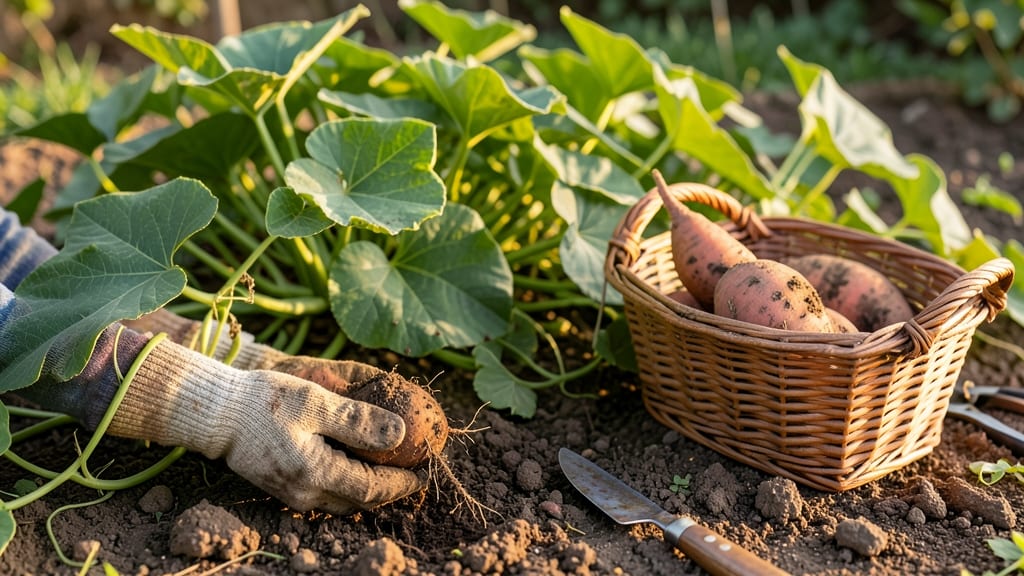
Harvesting sweet potatoes in containers at the right time means the difference between tender, sweet tubers and tough, bitter ones 🍠—and the key is knowing when those vines are ready.
Sweet potatoes grown in containers can be a game-changer for small-space gardeners—but timing their harvest wrong means bitter tubers or wasted effort. Master the fingerwidth and skin slip test to ensure you harvest at peak sweetness, every time.
Unlike traditional garden beds, containers dry out faster and can stress plants if left too long. The ideal harvest window in USDA Zone 6a falls between late summer and early fall, but container-specific cues—like leaf color shifts and tuber firmness—are the real tell.
In this guide, I’ll break down how to read your plants for perfect timing, adjust for container size, and avoid the three biggest harvest mistakes that ruin your crop before it even leaves the pot.


How to use the fingerwidth & skin slip test for container-grown sweet potatoes
Growing sweet potatoes in containers is a fantastic way to enjoy homegrown tubers without a traditional garden. But unlike in-ground sweet potatoes, container-grown ones need extra attention to timing. The fingerwidth and skin slip test are my go-to methods for determining when these tubers are ready to harvest.
These simple techniques help you avoid the common mistakes of harvesting too early (small, bitter tubers) or too late (overgrown, woody roots).
Containers can actually speed up maturity because they warm faster in sunlight, but they also dry out quicker. This means your sweet potatoes might reach harvest readiness 10–14 days earlier than in-ground plants.
Paying attention to these visual and tactile cues ensures you get the sweetest, most flavorful tubers possible. Let’s break down how to use these tests correctly for container-grown sweet potatoes.
Step-by-Step Fingerwidth & Skin Slip Test
- 1 Check Vine Health: Look for yellowing or browning leaves that signal the plant is shifting energy to tuber development. In containers, this often happens 2–3 weeks earlier than in-ground plants.
- 2 Fingerwidth Test: Gently brush away soil near the base of the plant. If the largest tubers are 1–2 inches in diameter (about the width of your thumb and forefinger), they’re nearing readiness. In containers, aim for slightly smaller tubers (3/4–1.5 inches) since space is limited.
- 3 Skin Slip Test: Pick a medium-sized tuber and gently press your thumbnail into the skin. If it resists pressure and doesn’t puncture easily, the skin is toughening—a sign of maturity. In containers, this test is especially critical because tubers can overcrowd and become woody if left too long.
- 4 Color Check: Healthy sweet potato skins should develop a consistent color (orange, red, or purple, depending on the variety). In containers, avoid tubers with uneven coloring or green patches, which can indicate stress or uneven growth.
- 5 Final Confirmation: If 70–80% of tubers pass the fingerwidth and skin slip tests, it’s time to harvest. In containers, I recommend harvesting before the vines completely die back to prevent soil compaction and root damage.
One of the biggest mistakes I see with container-grown sweet potatoes is waiting until the vines are completely dead. In containers, this can lead to soil compaction and root damage when you finally dig them up.
Instead, harvest when you see 50–70% of the vines yellowing, especially if your container is small (under 10 gallons). This gives you a head start on curing and storing your tubers.
Container size also plays a role in these tests. In 5-gallon containers, tubers mature faster, so you’ll need to check the fingerwidth and skin slip tests every 5–7 days starting at 90 days after planting.
Larger containers (15+ gallons) give you a little more room to wait, but don’t exceed 120 days unless you’re in a very warm climate. Overcrowding in containers leads to smaller, tougher tubers that lack sweetness.
Another pro tip: Avoid harvesting in extreme heat or cold. Sweet potatoes are sensitive to temperature fluctuations, and harvesting them when the soil is too hot or too cold can cause bruising.
Aim for mild morning temperatures (60–75°F) and harvest before the first frost in your area. In containers, frost can cause the soil to compact quickly, making it harder to extract tubers cleanly.
If you’re growing sweet potatoes in containers for the first time, I recommend keeping a harvest journal. Note the day you planted, when you first noticed yellowing vines, and when you performed the fingerwidth and skin slip tests.
Over time, you’ll start to recognize the unique signs of maturity for your specific container setup and climate. This helps you refine your timing for future harvests.
Once you’ve confirmed your sweet potatoes are ready, handle them with care. Gently brush away the soil and avoid dropping or bruising the tubers. Container-grown sweet potatoes are often more delicate than their in-ground counterparts, so treat them like you would a batch of fresh eggs—gentle and slow.
After harvesting, let them cure in a warm (80–85°F), humid (80–90%) environment for 5–10 days to develop their full sweetness.
Mastering the fingerwidth and skin slip test takes practice, but it’s worth the effort. Once you get the hang of it, you’ll never again wonder if your sweet potatoes are ready to harvest.
Instead, you’ll confidently pull them from the container at the perfect moment—when they’re sweet, firm, and ready to enjoy. Happy harvesting!
Best container types and harvesting tips for sweet potatoes
Choosing the right container for sweet potatoes is half the battle—because unlike in-ground gardens, containers restrict root growth and demand better drainage and warmer soil. Aim for containers that are at least 5 gallons per plant, with drainage holes to prevent waterlogging.
Fabric grow bags (like 5-gallon fabric pots) are my top pick—they allow roots to breathe and reduce soil compaction, which is critical for large tuber development.
Plastic or ceramic containers work too, but avoid glossy finishes—they can overheat soil. If using recycled containers (like buckets or whiskey barrels), drill drainage holes yourself. Line the bottom with landscape fabric to prevent soil from washing out while still allowing excess water to escape.
Pro tip: Place containers on elevated stands to improve airflow and prevent rot from sitting water.
✅ When to Harvest Sweet Potatoes in Containers
✅ DO
- Wait for vines to yellow and die back
- Check skin slip test: Gently press a tuber—if it slips free, it’s ready
- Harvest when tubers are 3–6 inches long and firm
- Use a fork or hands to avoid damaging tubers
❌ DON’T
- Harvest too early—tubers will be small and bitter
- Wait until after first frost in cold climates
- Dig with sharp tools that puncture tubers
- Store harvested tubers in the fridge (they’ll spoil faster)
Timing your harvest right in containers means watching for three key signs: leaf color change (from green to yellow), tuber size (at least 3 inches), and the skin slip test. Unlike in-ground sweet potatoes, container-grown tubers mature faster due to warmer soil temperatures.
If your container is in full sun, you might harvest 2–4 weeks earlier than traditional gardens. But don’t rush—premature digging leads to small, woody tubers with poor flavor.
Overcrowding is another container-specific pitfall. If you’re growing more than one plant per 5-gallon container, tubers will compete for space and stay stunted. Thin plants early to leave at least 12 inches of space between slips.
Mulch with straw or shredded leaves to retain moisture and insulate roots—critical in containers where soil cools faster. And always harvest on a dry, sunny day to let tubers dry slightly before curing.
After harvesting, let tubers air-cure for 10 days in a warm (80–85°F), humid space. This step boosts sweetness and storage life. Store cured tubers in a cool (55–60°F), dark place with high humidity, like a root cellar or basement.
If you’re in a warm climate, a ventilated cardboard box in a garage works too. Avoid plastic bags—they trap moisture and cause rot.
Containers let you grow sweet potatoes almost anywhere, but they demand attention to drainage, warmth, and timing. With the right setup, you’ll enjoy homegrown tubers that rival (or even beat) store-bought sweetness—no backyard required! 🌱