
Light Requirements
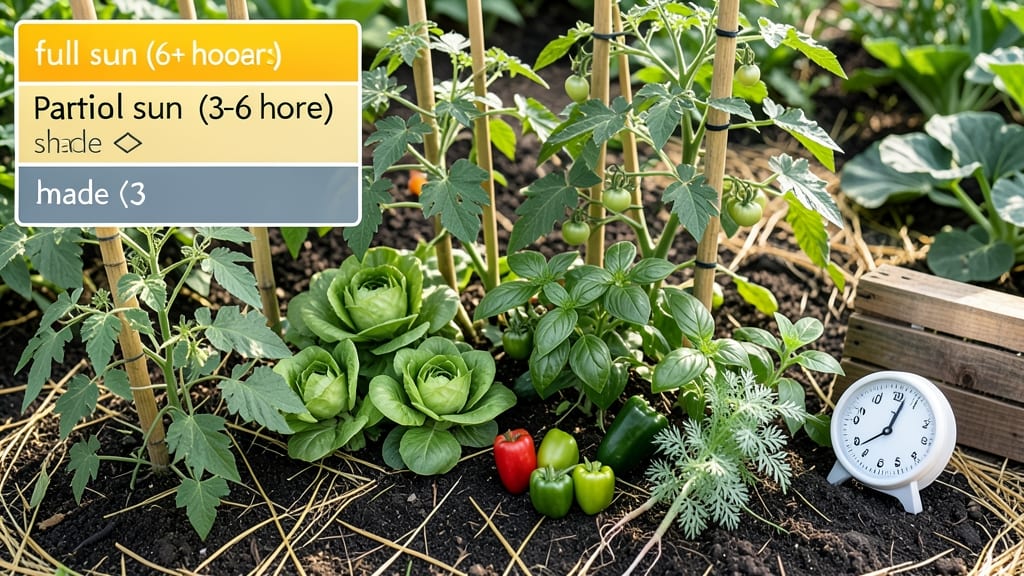
A vegetable garden needs between 6 and 8 hours of sunlight daily to thrive, though some crops—like tomatoes and peppers—demand even more while leafy greens can handle partial shade.
Wondering why your tomatoes aren’t ripening or your lettuce tastes bitter? Sunlight exposure could be the missing piece—yet many gardeners overlook how exact sunlight needs vary by plant.
Most vegetables crave direct light, but too much can scorch delicate leaves. The key is matching your garden layout to each crop’s tolerance, whether you’re working with 6a zone conditions or a sun-drenched patio.
Below, I break down the science-backed ranges your veggies need, seasonal tweaks, and how to fix common mistakes—so you can grow a lush, productive 🥬 vegetable garden without guesswork.


Sunlight requirements by vegetable type: full sun vs. partial shade breakdown
Not all vegetables thrive under the same sunlight conditions—some crave 8+ hours of direct sun while others bolt or wilt in too much heat. The key is understanding your local microclimate and matching crops to their ideal light ranges.
For example, tomatoes need 6–10 hours of sun to ripen properly, while lettuce will turn bitter with just 3–4 hours of afternoon shade. Let’s break down the sunlight spectrum for your garden’s most popular veggies and how to adjust for your USDA zone.
Sunlight needs aren’t just about hours—they’re about intensity and timing. Morning sun is gentler than afternoon heat, and partial shade (3–6 hours) often works better for leafy greens in hot climates.
I’ve grown peppers that struggled in full sun during summer but thrived with morning sun + afternoon shade. Your goal? Balance photosynthesis with heat tolerance to avoid stressed plants.
Here’s how to interpret sunlight labels on seed packets:
- Full sun = 6–8+ hours/day (e.g., tomatoes, peppers, corn)
- Partial sun = 3–6 hours/day (e.g., bush beans, carrots, kale)
- Partial shade = <3 hours/day (e.g., spinach, lettuce, radishes)
Always check your local shade patterns—a north-facing bed may only get 4 hours of sun even if it’s labeled "full sun."
| Vegetable | Sunlight Needs | Ideal Hours/Day | Notes |
|---|---|---|---|
| Tomatoes | Full Sun | 6–10 | Afternoon shade helps in hot zones |
| Peppers | Full Sun | 6–8 | Prune for airflow; avoid wet leaves |
| Spinach | Partial Shade | 3–4 | Bolts in heat; harvest young |
| Broccoli | Partial Sun | 4–6 | Cool-season crop; avoid summer heat |
| Cucumbers | Full Sun | 6–8 | Use trellis to save space |
| Lettuce | Partial Shade | 3–5 | Bitter if overcooked; harvest leaves |
| Carrots | Partial Sun | 4–6 | Loose soil prevents forking |
| Green Beans | Partial Sun | 4–6 | Drought-tolerant once established |
Your USDA zone matters more than you think. In Zone 9 or 10, even full-sun plants like tomatoes may need afternoon shade to prevent sunscald. I’ve seen peppers in Phoenix struggle with 12+ hours of sun—their leaves curled, and yields dropped.
The fix? Use shade cloth (30–50%) during peak afternoon heat (12–4 PM). For cooler zones (5–7), extend the growing season by planting heat-tolerant varieties like ‘Solar Fire’ peppers or ‘Heatmaster’ tomatoes.
Microclimates create sunlight hotspots in your garden. A
How to measure and adjust sunlight for your garden layout
Sunlight isn’t one-size-fits-all in your garden—some crops thrive in full sun (6+ hours/day), while others bolt or struggle with too much heat. The key is mapping your space accurately and using companion planting to balance high- and low-light needs.
Start by observing how sunlight shifts across your yard at different times of day, especially if you have morning shade or afternoon sun.
Professional gardeners swear by tools like sunlight calculators (free apps like Gardenate or Sun Surveyor) to track exposure. These tools let you input your location and plot sunlight patterns for 3–6 months, revealing microclimates where plants might get overlooked.
For example, a north-facing bed might only get 4 hours of sun—perfect for leafy greens but deadly for tomatoes.
- 🌱 Full Sun Lovers (6–8+ hours): Tomatoes, peppers, cucumbers, eggplants, and squash crave unfiltered sunlight. Place these in south-facing beds or near reflective surfaces (like white fences) to boost intensity.
- 🌿 Partial Shade (3–6 hours): Lettuce, spinach, kale, and radishes tolerate morning sun + afternoon shade. Ideal for east-west oriented beds or under dappled tree cover.
- 🌳 Low-Light Tolerators (3+ hours): Green onions, arugula, and bush beans survive in deep shade (e.g., under fruit trees). Use these as understory crops to maximize space.
- ☀️ Adjust for Seasonality: Summer sun is intense—use shade cloth (30–50%) for heat-sensitive crops like peppers. Winter sun is weaker, so move low-light plants closer to sunny spots.
- ✂️ Companion Planting Hacks: Pair tomatoes (full sun) with basil (partial shade) to share roots. Place carrots (low-light) near corn (tall, provides shade) to protect them from wilting.
Once you’ve mapped your garden, group plants by sunlight needs to avoid overcrowding sun-hungry crops in limited space. For example, dedicate a south-facing raised bed to tomatoes and peppers, while a north-facing container can hold herbs like parsley or mesclun mixes.
Use vertical trellises for vining plants like cucumbers to free up ground space for shade-tolerant crops below.
Don’t forget to account for seasonal shade shifts. A deciduous tree might block 6 hours of sun in summer but let full light through in winter. Plan your layout so winter crops (like kale) can access the newly open spots.
If your garden is shade-dominated, opt for fast-maturing varieties (e.g., bush beans) or use reflective mulches to trick plants into thinking they’re getting more light.
Pro tip: Test your garden’s sunlight with a DIY sun print. Place a white paper plate in different spots for a week—mark the shaded areas with a pencil. This visual guide will help you redraw your layout to match plant needs.
Over time, you’ll spot patterns like “this corner gets scorched by noon” or “this bed stays damp and shady”, letting you fine-tune for optimal growth.
By combining sunlight mapping, smart companion planting, and seasonal adjustments, you’ll turn even tricky spaces into productive beds. Start small—measure one section this week, then expand your sun-smart garden over time. Your veggies will thank you with bigger yields and fewer surprises! 🌿