
How To
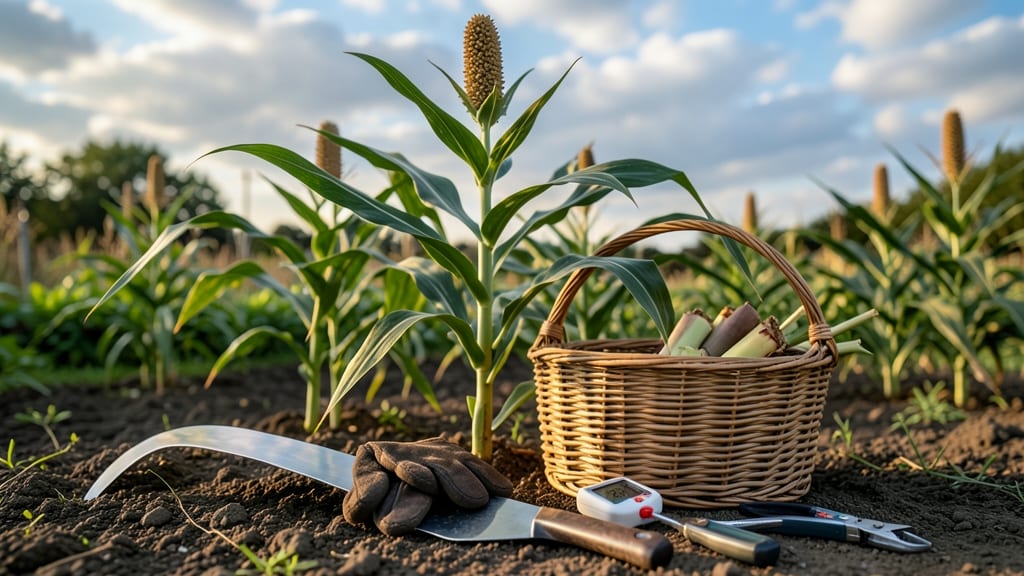
Harvesting sorghum at the right time means the difference between flavorful, dry grain and tough, useless kernels 🌾 — and missing the window can mean wasted effort.
You could spend weeks watching your sorghum mature, only to cut it too early and end up with green, unripe seed heads or wait too long and lose everything to birds or weather.
The key is knowing the exact visual cues and maturity tests that tell you it’s time to act.
In USDA Zone 6, sorghum planted in April–May typically reaches harvest readiness between September and October, but the real secret lies in the seed heads turning golden-brown and the kernels rattling like popcorn when shaken.
Below, I’ll walk you through the step-by-step signs to watch for—from color changes to the thumb-nail hardness test—and how to adjust for your local climate to lock in the perfect harvest window.


Visual signs your sorghum is ready for harvest: golden heads and kernel hardness
Harvesting sorghum at the perfect moment ensures you get flavorful, high-quality grain instead of tough or underdeveloped kernels. The key lies in observing three primary visual cues: seed head color, kernel hardness, and overall plant maturity.
When these signs align, you'll know your sorghum is ready for harvest—whether you're growing it for grain, forage, or sweet sorghum syrup.
First, focus on the seed head color. Mature sorghum develops golden-brown to deep amber seed heads, signaling that the kernels are fully developed. However, don't confuse this with the greenish-yellow stage, which indicates the plant is still filling out.
Pay close attention to the bottom third of the head, as this area often matures first and gives you the clearest indication of readiness.
Next, examine the kernel hardness using your thumb and forefinger. At the ideal harvest stage, the kernels should feel firm but not rock-hard. If they're too soft, the grain isn't fully mature; if they're too hard, they may have lost moisture and become unpalatable.
This simple test helps you avoid the two most common harvest mistakes: picking sorghum too early (resulting in low yield) or too late (leading to shattering and waste).
Now, let's compare the key indicators in this visual guide to help you determine when your sorghum is ready for harvest.
| Maturity Stage | Seed Head Color | Kernel Hardness | Plant Condition | Harvest Readiness |
|---|---|---|---|---|
| Early Maturity | Green to light green | Very soft, moist | Leaves fully green, stalks firm | Not ready |
| Mid Maturity | Greenish-yellow | Soft but drying | Leaves starting to yellow at base | Almost ready |
| Ideal Harvest | Golden-brown to deep amber | Firm but not hard | Leaves mostly yellow, stalks dry and brittle | Ready to harvest |
| Over-Mature | Dull brown to grayish | Very hard, may shatter | Leaves crispy, stalks hollow | Too late |
Another critical visual cue is the plant's overall condition. When your sorghum is ready for harvest, the lower leaves will turn yellow and crisp, while the upper leaves may still retain some green.
The stalks should feel dry and brittle—if you can easily snap them with your hands, it's a sign of maturity. However, avoid harvesting if the stalks are completely hollow, as this indicates the plant has dried out too much.
For grain sorghum varieties, listen for the rattle test: shake the seed head gently over a paper bag. If you hear a dry, papery sound, the kernels are mature and ready for harvest.
If the sound is muffled or the kernels fall out easily, the sorghum isn't fully mature yet. This test is especially useful for large-scale harvests where you can't examine every head individually.
Regional climate considerations also play a role in determining harvest time. In hot, dry climates like the Southwest U.S., sorghum may mature faster and require earlier harvesting. Conversely, in cooler, wetter regions like the Pacific Northwest, the growing season extends longer, and you may need to wait until late fall.
Always monitor your local frost dates to avoid losing your crop to early frosts.
If you're growing sweet sorghum for syrup, harvest when the stalks are fully mature but before the seed heads turn completely brown. The ideal stage is when the seed heads are halfway between green and brown, and the stalks are still slightly juicy.
Use a knife or pruners to cut the stalks about 6-12 inches from the ground, then process them within 24 hours for the best syrup yield.
Finally, remember that harvest timing varies by variety. Some grain sorghum varieties mature in as little as 60 days, while others take up to 120 days. Always check the seed packet or plant tag for specific recommendations.
For forage sorghum, harvest when the plant reaches 3-5 feet tall, regardless of seed head color, as the goal is to maximize leafy growth for livestock feed.
By mastering these visual and tactile cues, you'll consistently harvest sorghum at its peak—ensuring maximum yield, flavor, and storage quality.
Keep an eye on your plants daily during the final weeks of growth, and don't hesitate to test a few seed heads early to practice your harvest timing skills. Happy harvesting! 🌾
How to test sorghum kernel maturity: the moisture content and threshing method
Once your sorghum plants show visual maturity signs, like brown seed heads and dry stalks, you’ll need precise tests to confirm kernel readiness. Overlooking moisture content can lead to underripe grain that spoils quickly or overmature kernels that shatter during threshing.
These simple tests ensure you harvest at the perfect moment for storage and flavor.
Start with the thumb-nail test, the fastest way to check kernel hardness. Gently press a firm kernel between your thumb and nail—if it doesn’t dent, it’s ready.
Soft kernels mean more drying time is needed, while kernels that crush easily indicate overmaturity. This test works best on 3-5 kernels per head for accuracy.
⚠️ callout warning ⚠️
⚠️ Harvest Too Early = Spoilage Risk
Sorghum with moisture over 14% develops mold within 2 weeks of harvest. Test kernels by breaking one open—if the inside is damp, wait 3-5 more days for drying. Golden rule: Kernels should rattle when shaken, not feel sticky or plump.
For precise results, use a moisture meter to aim for 12-14% moisture—the ideal range for long-term storage. If you don’t have one, the float test works: Drop a handful of kernels in water. Floating kernels are underripe; sinking kernels are ready.
This method also reveals foreign material like chaff or weeds mixed in your harvest.
Threshing too soon causes kernel shattering, while waiting too long makes stalks brittle and prone to breaking. Cut heads when most kernels pass the thumb-nail test, then bundle and hang in a dry, shaded area for 7-10 days to finish drying.
Avoid direct sunlight to prevent kernel cracking, which reduces storage quality.
After drying, thresh by hand or with a flail thresher on a tarp. Winnowing (tossing grain in the air) separates kernels from chaff. Store in airtight containers with food-grade silica packets to maintain low moisture. Properly dried sorghum keeps for 6-12 months at room temperature.
Remember: Regional climates affect drying times. Humid areas may need extra ventilation, while dry climates can speed up the process. Always test a sample batch before committing to full harvest—this small step saves hours of post-harvest headaches. 🌾