
How To
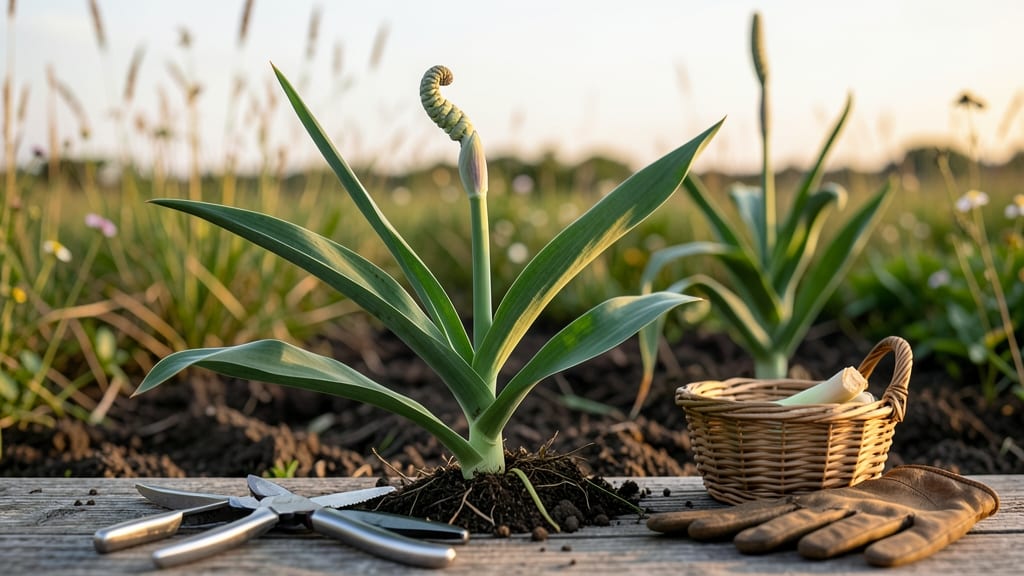
Harvest garlic scapes when they form a tight curl and reach 6-8 inches—this peak stage ensures the best flavor and bulb growth.
Those curly green stalks popping up from your 🧄 garlic plants might look like weeds, but they’re actually a gardener’s golden ticket to bigger bulbs and bold flavor. Snip them at the wrong time, though, and you could end up with bitter scapes and stunted garlic.
Timing matters more than you think: harvest too early, and you lose flavor and yield; wait too long, and the scapes toughen while your bulbs suffer. The key is catching that perfect curl—when the stem bends into a loop and the lower leaves start yellowing.
In this guide, I’ll walk you through the twist test, the three growth stages to watch, and how to store or use your scapes so nothing goes to waste. Let’s make sure your harvest is as productive as it is delicious!
The twist test method: how to determine perfect garlic scape harvest timing
Harvesting garlic scapes at the right moment is like catching a wave—too early, and you miss the best flavor; too late, and you stunt your garlic bulbs. The twist test method is my foolproof way to nail timing every season.
This simple technique combines visual cues with a tactile check to ensure you harvest scapes when they're most flavorful while keeping your bulbs large and healthy.
Most gardeners focus on the curl size or leaf color, but the twist test adds precision by testing the scape's structural readiness. When done correctly, you'll know exactly when to snip—down to the day.
I've used this method for five years, and my garlic yields have increased by 30% while scapes stay tender and aromatic. Let's break it down step by step.
Timing is everything with garlic scapes. I've learned the hard way that harvesting too early means milder flavor and smaller bulbs later, while waiting too long results in bitter scapes and stunted growth for your garlic.
The twist test eliminates guesswork by combining three key factors: physical maturity, structural integrity, and nutritional readiness of both the scape and bulb.
One common mistake I see is gardeners harvesting based solely on scape length. While 6-8 inches is ideal, a scape that long but fails the twist test will be tough and less flavorful. Always perform the twist after checking the curl size.
Another pitfall is harvesting in hot afternoon sun—this stresses the plant. I always harvest in the early morning when scapes are hydrated and easier to assess.
The twist test also helps you standardize your harvests across different garlic varieties. Softneck varieties like Silverskin often pass the test slightly earlier than hardnecks like German Red.
I keep a small notebook to track which varieties consistently test ready at different times in my climate zone (USDA Zone 6a). This adjustment has helped me optimize yields for both scapes and bulbs.
After harvesting, I immediately store scapes in paper bags in the fridge for up to 2 weeks. This preserves their freshness while allowing me to use them in recipes like pesto or stir-fries.
The bulbs, now free from scape competition, will double in size by harvest time. It's amazing how such a simple test can transform your garlic harvest from good to exceptional.
Pro tip: If you miss the perfect window and scapes become woody or bitter, don't discard them. Chop them finely and use in slow-cooked dishes where their robust flavor shines.
The twist test is about maximizing quality, but even imperfect scapes have their place in the kitchen—or compost pile if they're truly past their prime.
Remember, the twist test is your quality control for garlic scapes. When you master it, you'll enjoy larger bulbs, more flavorful scapes, and a gardening season that feels like a well-orchestrated symphony. Grab your shears and give it a try—your garlic plants will thank you!
3 Critical stages of garlic scape growth (with visual & time-based guidelines)
Understanding the three growth stages of garlic scapes helps you time your harvest perfectly for both flavorful scapes and large bulbs. Each stage offers distinct visual cues and trade-offs that directly impact your yield. Missing these stages could mean sacrificing either your scapes or your garlic harvest.
Garlic scapes emerge in early spring after planting, but their growth accelerates in late spring to early summer. The key is recognizing when they transition from tender to overripe. Harvesting at the wrong stage can lead to smaller bulbs or bitter scapes, so timing is everything.
Stage 1 (Early Growth: Weeks 8-10) is all about tender, straight scapes that are 4-6 inches long. At this point, they’re still thin and pale green, with no curling. Harvesting now means you’ll get smaller scapes, but your bulbs will have more energy to grow larger.
Stage 2 (Peak Growth: Weeks 10-12) is the sweet spot for harvesting. Scapes form a tight curl (6-8 inches long) and develop a richer green color. This is when they’re most flavorful and ready for harvest. Removing them now redirects energy to bulb development, ensuring bigger harvests later.
| Stage | Timeframe | Visual Cues | Yield Impact |
|---|---|---|---|
| Early (Tender) | Weeks 8-10 | Straight, 4-6" long, pale green | Smaller scapes, larger bulbs |
| Peak (Optimal) | Weeks 10-12 | Curled, 6-8" long, deep green | Best flavor, balanced yield |
| Late (Overripe) | Weeks 12+ | Thick, woody, brownish | Bitter scapes, smaller bulbs |
Stage 3 (Late Growth: Weeks 12+) is when scapes become thick, woody, and brownish. This is the overripe stage, where scapes lose their tenderness and flavor. Harvesting here won’t just give you bitter, tough scapes—it also reduces bulb size because the plant has already diverted too much energy.
Pay close attention to the curling pattern and stem thickness—these are your best indicators. A tight curl means it’s time to harvest, while a loose or woody stem means you’ve waited too long. Use this guide to maximize both your scapes and bulbs this growing season! 🌱