
Fertilization
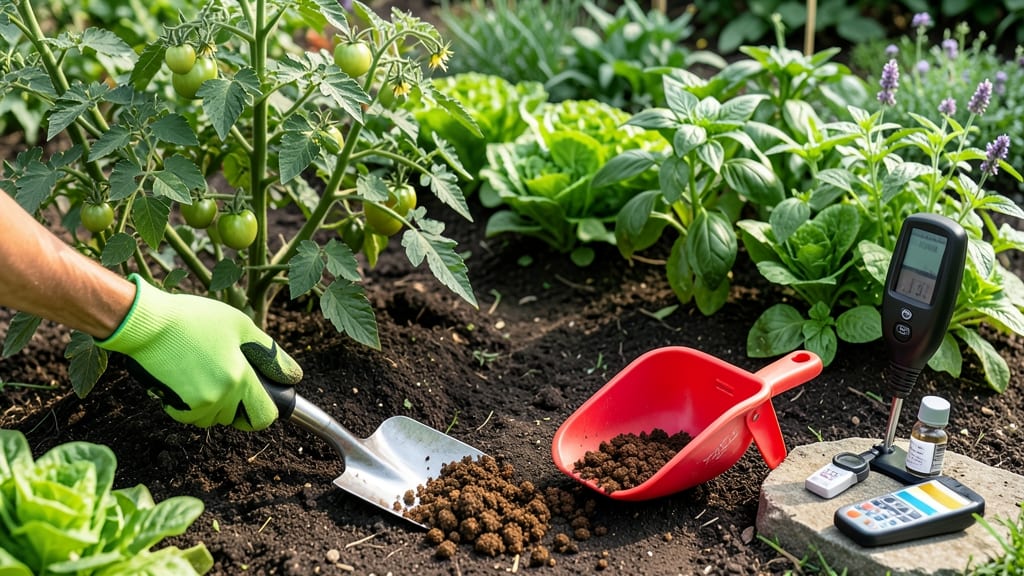
You should fertilize your garden at key growth stages—like 4-6 weeks before planting and again when flowers or fruit appear—to avoid wasting nutrients or burning roots.
Picture this: you’ve spent weeks prepping your soil, only to watch your 🌱 garden plants wilt because you fed them at the wrong time. Timing isn’t just about when—it’s about matching nutrients to your plants’ needs, whether they’re leafy greens, blooming flowers, or fruiting tomatoes.
In Zone 6a, spring feeding kickstarts growth, while summer applications support heavy producers. Fall is for light feeds to prep for dormancy, and winter? A complete break. Skip this, and you’ll end up with leggy stems or poor yields—neither of which you want after all that hard work.
Below, I’ll break down the exact schedule for your garden’s growth stages, how to read soil tests to fine-tune timing, and the 3 biggest mistakes that derail even the most careful gardeners.

Optimal fertilization timing by plant growth stage (with soil-tested rules)
Fertilizing your garden at the wrong time is like handing a toddler a sugar rush before bedtime—it just doesn’t end well. Plants need nutrients at specific growth stages, and timing directly impacts yield, health, and even flavor.
For example, feeding tomatoes too early wastes resources, while fertilizing roses during dormancy stresses them. Let’s break down the science-backed schedule by growth phase, so you never guess again.
Soil tests are your secret weapon. Before applying any fertilizer, test your soil’s NPK levels (nitrogen, phosphorus, potassium) and pH balance. A test reveals what your plants truly need—like knowing if your garden is starving for phosphorus or drowning in nitrogen.
For instance, if your soil tests high in nitrogen but low in phosphorus, prioritize a 5-10-10 blend during the flowering stage. Ignoring these results is like feeding someone pizza when they’re craving sushi—it won’t end well.
Let’s start with the pre-planting phase, the foundation of your garden’s success. This is when you prep the soil with a balanced fertilizer (like 10-10-10) or compost, ideally 4-6 weeks before planting. Think of it as laying the groundwork for a marathon—you wouldn’t sprint the first mile, right?
For vegetables like tomatoes or peppers, mix in 1-2 inches of compost to boost organic matter. If your soil test shows low phosphorus, add bone meal or a phosphorus-rich fertilizer now to support root development.
Once your plants sprout, shift to a high-nitrogen fertilizer (e.g., 20-5-10) during the early growth stage to fuel leafy expansion. This is critical for leafy greens like lettuce or spinach, which need rapid foliage growth.
But here’s the catch: avoid nitrogen-heavy feeds for flowering plants like roses or tomatoes in this phase—it’ll stunt their blooms. Instead, use a low-nitrogen, high-phosphorus blend (like 5-10-5) once buds appear.
During the flowering/fruiting stage, phosphorus and potassium become your best friends. Switch to a fertilizer with higher phosphorus (e.g., 5-10-5) to encourage blooms and fruit set. For tomatoes, this is when you’ll see the biggest payoff—bigger, juicier fruit.
But timing is everything: apply this feed when you spot the first flower buds, not after. Overdoing it now can lead to excessive foliage at the expense of fruit.
Pro tip: Pair this with a potassium-rich fertilizer (like 0-0-50) in the final weeks to toughen up plants against pests and disease.
Now, let’s talk about what not to do. Fertilizing during dormancy (fall/winter for most plants) is a common mistake. When plants are resting, they’re not absorbing nutrients—so you’re just wasting money and risking root burn. Skip fertilizing entirely for perennials, trees, and shrubs in winter.
Even lawns can wait until spring. The exception? Evergreens and cool-season grasses, which stay active year-round. For them, a light feeding in late winter (when growth resumes) is fine.
Regional climate plays a huge role. In cool climates (USDA Zones 3-6), fertilize in early spring as soon as the soil is workable—around April for most gardens. In warm climates (Zones 7-10), split your schedule: feed in
How to read soil test results to perfect your fertilizer schedule
Your soil test results are like a roadmap for your garden’s health, revealing exactly what nutrients your plants need—and when to feed them. The three key numbers—NPK ratios, pH levels, and micronutrient deficiencies—tell you whether to fertilize now, wait, or adjust your approach entirely.
Ignoring these details means wasting money on the wrong fertilizers or risking overfeeding, which can burn roots and harm your plants.
Let’s break down what each number means and how to translate those lab results into a fertilizer schedule that matches your garden’s unique needs.
For example, a low phosphorus reading (the "P" in NPK) signals it’s time to feed flowering plants, while a high pH (above 7.0) means your soil is locking out essential nutrients like iron and manganese.
Understanding these clues helps you avoid common mistakes, like fertilizing in winter or overdoing nitrogen for flowering plants.
🌱 When Should You Fertilize Your Garden?
💡 Pro Tip: Organic fertilizers (like compost or manure) release nutrients slowly, so you’ll need to reapply every 6-8 weeks. Synthetic fertilizers work faster but require 4-6 week intervals.
Start by examining the NPK ratios on your soil test. The numbers represent nitrogen (N), phosphorus (P), and potassium (K), and they dictate your fertilizer type. For instance, if your soil is low in phosphorus (P < 20 ppm), prioritize fertilizers with a higher middle number, like a 5-10-5 blend.
This is especially critical for plants like tomatoes and peppers, which need phosphorus to develop strong roots and fruit. Conversely, if your soil is high in nitrogen (N > 100 ppm), avoid high-nitrogen fertilizers to prevent leafy but fruitless plants.
Next, check your pH level. Most vegetables thrive in a slightly acidic to neutral range (6.0–7.0), while blueberries and azaleas need acidic soil (4.5–5.5). A pH outside this range can block nutrient uptake, even if your soil has plenty of fertilizers.
For example, if your pH is 7.5 or higher, iron deficiency (yellow leaves with green veins) is likely. In this case, apply chelated iron or sulfur to lower pH before fertilizing.
Don’t overlook micronutrient deficiencies, like zinc, manganese, or magnesium, which often show up as yellowing between leaf veins or stunted growth. These issues require targeted amendments, such as Epsom salt (for magnesium) or manganese sulfate, rather than a general fertilizer.
Address these first—your plants can’t absorb other nutrients if they’re starving for micronutrients. For example, if your soil test shows low manganese (Mn < 5 ppm), apply manganese sulfate in early spring to prevent leaf spots in tomatoes and peppers.
Finally, adjust your fertilizer schedule based on whether you’re using organic or synthetic products. Organic fertilizers, like compost or fish emulsion, release nutrients slowly, so you’ll need to reapply every 6–8 weeks during the growing season. Synthetic fertilizers, however, dissolve quickly, so they require 4–6 week intervals.
For instance, if you’re using compost tea, plan to feed your garden every 6 weeks starting in early spring, while a synthetic 10-10-10 should be applied every 4 weeks.