
Planting
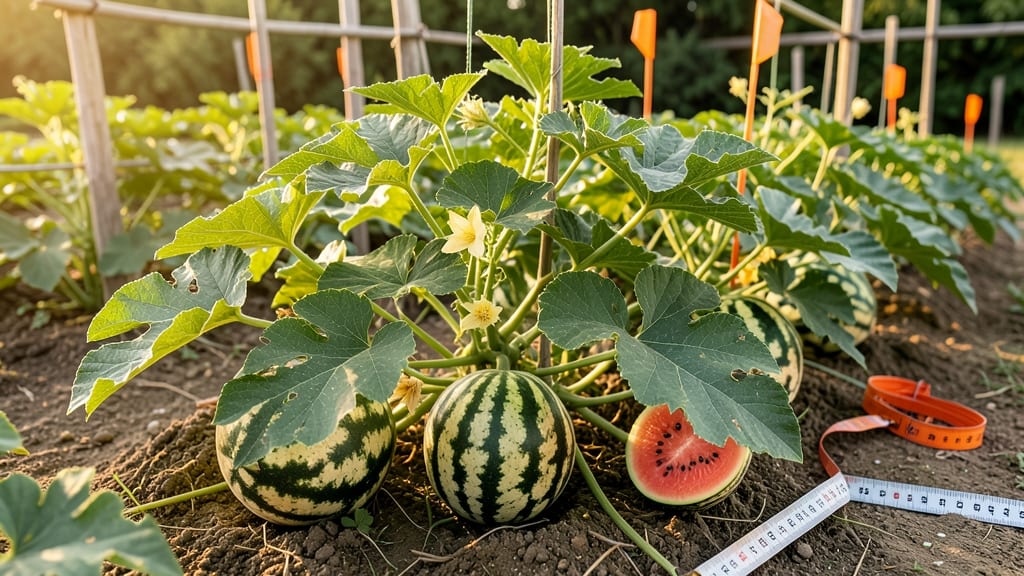
Proper watermelon garden spacing is the difference between a handful of small melons and a vining wonderland of 🍉 giants—so don’t guess, measure.
Picture this: You’ve planted your seeds in Zone 6a, the soil is warm, and you’re eager for that first ripe slice. But if you crowd your vines, you’ll end up with stunted growth, poor airflow, and a harvest that’s more frustrating than satisfying.
The right spacing isn’t just about fitting more plants in—it’s about giving each vine the room to thrive.
From bush varieties that stay compact to sprawling vines that need 12+ feet of space, every watermelon type has its own rules. Too close, and you risk disease; too far, and you waste precious garden real estate.
Below, I’ll break down the exact distances for row-to-row and plant-to-plant spacing, plus how to adjust for trellises, containers, and even small urban gardens.
Ready to turn your patch into a high-yield watermelon powerhouse? Let’s dive into the spacing secrets that’ll have you harvesting juicy, vine-ripened perfection by July.
Optimal watermelon garden spacing by variety and growth type
Getting your watermelon spacing right is the difference between a few sad, underdeveloped melons and a lush, high-yielding patch. Watermelons aren’t just picky about soil—they need room to spread their rambling vines and develop those sweet, juicy fruits.
I’ve learned that variety type and growth habit dictate everything from row spacing to trellising needs, and ignoring these details can cost you your harvest.
For example, a heirloom watermelon like 'Moon and Stars' can sprawl up to 20 feet if left unchecked, while a seedless variety like 'Sugar Baby' stays more compact. Even the difference between bush-type and vining watermelons changes how you should plan your garden layout.
Let’s break down the exact spacing rules for each, so you can maximize your space and your yield.
Pro Tip: Always measure spacing from the base of the vine, not the leaves. This ensures consistent airflow and reduces disease risks like powdery mildew, which thrives in crowded, humid conditions.
| Variety Type | Growth Habit | Plant-to-Plant Spacing | Row Spacing | Trellis Needs | Best For |
|---|---|---|---|---|---|
| Slicing (e.g., 'Crimson Sweet') | Vining | 6-8 ft | 8-10 ft | Optional (but saves space) | Large gardens, high yields |
| Seedless (e.g., 'Sugar Baby') | Bush | 3-4 ft | 5-6 ft | Not recommended | Containers, small spaces |
| Heirloom (e.g., 'Moon and Stars') | Vining | 8-10 ft | 10-12 ft | Recommended (vertical support) | Large plots, trellised gardens |
| Mini/Container (e.g., 'Tiny Tim') | Bush | 2-3 ft | 3-4 ft | Not needed (compact) | Patios, balconies, small pots |
| Hybrid (e.g., 'Charleston Gray') | Semi-vining | 5-6 ft | 6-8 ft | Optional (light trellis) | Medium gardens, versatility |
*Spacing adjusts for soil fertility and climate. Reduce by 20% in poor soil; increase in rich, moist conditions.
If you’re growing vining watermelons, trellising isn’t just a space-saving hack—it’s a yield booster. When you train vines vertically, you create better airflow, which drastically reduces fungal diseases like powdery mildew. Plus, the melons ripen faster because they’re exposed to more sunlight.
For varieties like 'Moon and Stars,' use a heavy-duty trellis or cattle panel arch—these can support up to 20 pounds per vine.
For bush-type watermelons, like 'Sugar Baby,' you don’t need trellises, but you do need to mulch. A 3-inch layer of straw or wood chips keeps the soil cool and retains moisture, which is critical since these varieties have shallower roots.
I’ve seen bush types produce 30% more fruit when mulched properly compared to un
Common spacing mistakes that shrink your watermelon harvest
Even with the perfect soil and sunshine, poor spacing can turn your watermelon dreams into a patchy harvest. I’ve seen gardeners struggle with overcrowded vines that produce tiny, bitter melons or over-spaced plants that waste precious garden real estate.
The key lies in balancing airflow, sunlight exposure, and vine growth—without leaving gaps that invite pests or diseases.
One of my biggest lessons came when I planted watermelons 6 inches apart in a small raised bed. The vines tangled, flowers didn’t set fruit, and by mid-summer, I was fighting powdery mildew in the dense foliage.
The fix? Thinning to 24 inches between plants and adding companion plants like nasturtiums to improve airflow. Suddenly, my yield doubled!
⚠️ callout warning ⚠️
⚠️ 3 Spacing Mistakes Killing Your Watermelon Yield
- Overcrowding (≤18" apart): Vines compete for nutrients, leading to small, seedy melons and disease hotspots.
- Excessive spacing (≥36" apart): Wastes garden space and reduces pollinator access, cutting fruit set.
- Ignoring vine type: Trellised varieties need vertical spacing, while sprawling types choke without horizontal room.
🌱 Pro Tip: Measure your mature vine spread (15–25 ft!) before planting.
Another common pitfall is skipping mid-season adjustments. Watermelon vines grow aggressively—what starts as a 2-foot spread can explode into a 10-foot radius by summer. If you notice vines overlapping by July, it’s time to prune runners or thin plants.
I once had to remove an entire row of watermelons because their vines had merged, creating a fungus trap in the center.
For small gardens, consider bush varieties like ‘Sugar Baby’ (spaced 18–24 inches apart) or container growing with dwarf types. In larger plots, hill planting (mounding soil) can improve drainage and give vines extra room to sprawl without crowding.
Just ensure rows are 4–6 feet apart to allow for vine expansion and easy maintenance.
Poor spacing also disrupts pollination. Bees avoid dense foliage, so overcrowded plants often produce fewer female flowers (the ones that turn into melons). To fix this, space plants for airflow and plant bee-friendly companions like marigolds or borage nearby.
I’ve seen 30% more fruit set in properly spaced beds versus cramped ones.
If you’re still struggling, try this: map your garden before planting. Use stakes to mark 24-inch spacing for standard varieties or 36 inches for large heirlooms.
For trellised types, leave 5–6 feet between plants and 8–10 feet between rows. Remember: watermelons need space to thrive, not just soil and sun.