
Planting
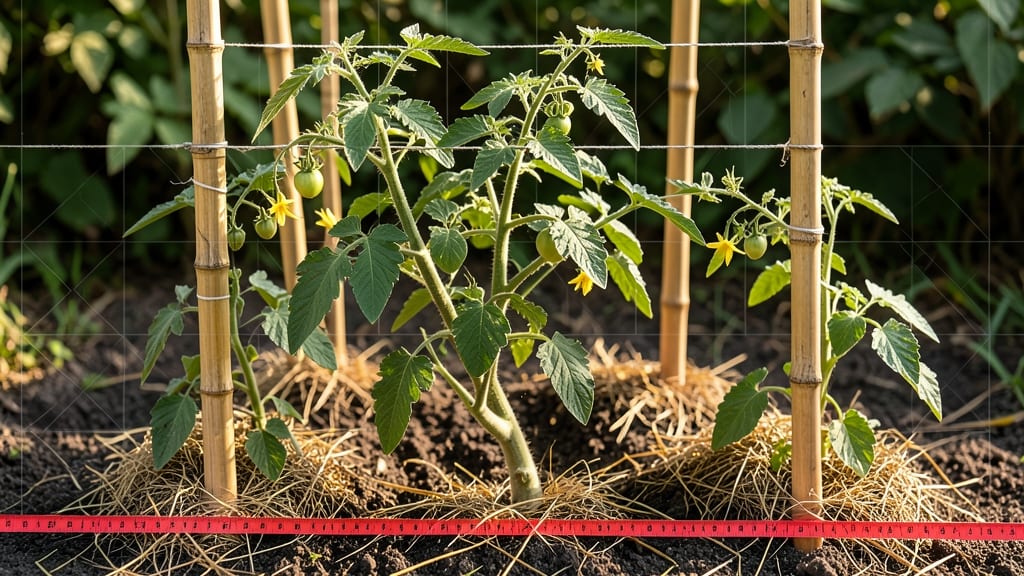
Proper tomato garden spacing is the foundation of a thriving 🍅 harvest—whether you're growing sprawling indeterminate varieties or compact determinate bushes.
Struggling with blight-prone tomato plants or stunted yields? The secret often lies in proper tomato garden spacing—too close, and airflow suffers; too far, and you waste precious garden real estate.
Most gardeners overlook how spacing directly impacts disease resistance, fruit size, and even flavor. A well-spaced tomato plant gets better airflow, reducing fungal risks like early blight, while giving roots room to establish strong.
In this guide, I’ll break down the exact spacing you need for every variety—from 18 inches for bush types to 36 inches for vining tomatoes—plus how to adjust for containers, trellises, and high-density layouts.
Optimal tomato plant spacing by variety type for healthy growth
Getting the right tomato plant spacing isn't just about fitting more plants in your garden—it's about creating the perfect environment for healthy growth and maximum yield. Too little space leads to poor airflow, inviting fungal diseases like early blight, while too much space wastes precious garden real estate.
The key lies in understanding your tomato varieties and their unique growth habits.
Tomatoes generally fall into two main categories: determinate (bush types) and indeterminate (vining types). Each requires different spacing to thrive. Determinate varieties grow to a set height and produce fruit all at once, while indeterminate varieties continue growing and producing fruit until frost.
This fundamental difference dictates how much room each plant needs to breathe and flourish.
For determinate tomatoes, proper spacing prevents overcrowding that can lead to blight-prone conditions. These compact plants benefit from 18-24 inches between each plant and 24-36 inches between rows.
This spacing allows sunlight to reach all parts of the plant, reducing humidity around the foliage—critical for preventing diseases like late blight and powdery mildew. Think of it as giving each plant its own personal bubble of fresh air.
On the other hand, indeterminate tomatoes need more room to sprawl vertically. These vining varieties can grow 6-10 feet tall and require 24-36 inches between plants and 36-48 inches between rows.
Without adequate space, their sprawling vines compete for sunlight and nutrients, leading to stunted growth and poor fruit production. Using sturdy trellises or cages can help maximize vertical space while maintaining proper airflow.
Here’s a quick comparison to help you visualize the ideal spacing for each variety type:
| Variety Type | Plant Spacing | Row Spacing | Growth Habit | Airflow Needs | Example Varieties |
|---|---|---|---|---|---|
| Determinate (Bush) | 18-24 inches | 24-36 inches | Compact, set height | Moderate (18-24") | Roma, Celebrity, Bush Early Girl |
| Indeterminate (Vining) | 24-36 inches | 36-48 inches | Tall, continuous growth | High (24-36") | Sungold, Cherokee Purple, Better Boy |
| Cherry Tomatoes (Indeterminate) | 12-18 inches | 24-36 inches | Compact vining | Moderate (12-18") | Sweet 100, Sun Gold, Super Sweet 100 |
| Heirloom Tomatoes | 24-36 inches | 36-48 inches | Varies (check variety) | High (24-36") | Brandywine, Black Krim, Cherokee Black |
Proper spacing isn’t just about preventing disease—it’s also about maximizing fruit production. When plants have enough room, they allocate more energy to growing larger, healthier fruits instead of competing for sunlight and nutrients.
For example, indeterminate varieties like Sungold cherry tomatoes can produce hundreds of fruits per plant when given the right space, while determinate types like Roma will yield a bumper crop of uniform, plump tomatoes.
If you're growing tomatoes in containers or raised beds, spacing becomes even more critical. In confined spaces, airflow is restricted, so you’ll need to adjust spacing slightly closer—around 12-18 inches apart for cherry tomatoes and 18-24 inches for larger varieties.
Just be prepared to prune more aggressively to maintain airflow and prevent disease. A good rule of thumb is to reduce spacing by 25% when growing in containers compared to in-ground planting.
Another factor to consider is your garden layout. If you're planting in rows, aim for 36-48 inches between rows to allow easy access for pruning, harvesting, and maintenance. This also helps reduce the spread of diseases like early blight, which thrives in humid, crowded conditions.
For square-foot gardening, you can fit 4 tomato plants per square foot if they’re small varieties, but this requires diligent pruning and monitoring for pests.
Remember, the goal is to create an environment where your tomatoes can thrive without competing for resources. By giving each plant the right amount of space, you’ll not only prevent diseases but also enjoy a bountiful harvest of flavorful, homegrown tomatoes all season long. Happy planting!
How to adjust tomato spacing for different garden layouts
Your garden layout dramatically impacts tomato plant health and yield. Container gardening, raised beds, and in-ground planting all require different spacing strategies to maximize airflow and sunlight exposure.
I’ve tested these methods in my own garden, and the right spacing can mean the difference between blight-ridden plants and a bumper crop. Let’s break down the best practices for each setup.
First, remember that tomato spacing isn’t one-size-fits-all. Determinate varieties (bush types) need less room than indeterminate vining types. For example, cherry tomatoes thrive in tight 18-inch spacing, while indeterminate slicers demand 24-36 inches. Your garden’s layout will further refine these numbers—let’s explore how.
🌱 Tomato Spacing by Garden Layout
- 🪴 Containers (5+ gallon pots): 12-18 inches apart (cherry tomatoes), 18-24 inches (larger varieties). Use 1 plant per 5-gallon container for indeterminate types to prevent root competition.
- 🌿 Raised Beds (8' wide): 18-24 inches between plants, 30-36 inches between rows. Stagger plants in a quincunx pattern (diagonal grid) to improve airflow and sunlight penetration.
- 🌳 Trellis Systems: 12-18 inches apart for cherry tomatoes, 24-36 inches for slicers. Train vines vertically to save space—indeterminate types can grow 6+ feet tall with proper support!
- 🌱 High-Density Planting: 12-18 inches apart in double rows (2 rows per bed, 24 inches between rows). Pair with companion plants like basil or marigolds to deter pests naturally.
Pro Tip: Use a stake or marker at planting time to track spacing—crowding sneaks up fast!
For raised beds, I swear by the 30-inch row spacing rule. This creates a microclimate where air circulates freely, reducing humidity and fungal diseases like early blight.
In my 4’x8’ raised bed, I plant 3 rows of indeterminate tomatoes with 24 inches between plants and 30 inches between rows. This setup maximizes yield while keeping leaves dry.
Companion planting is another game-changer for spacing. Pair tomatoes with basil (repels pests), onions (deters aphids), or marigolds (natural fungicide). These plants fit neatly between tomato stems without competing for space. Just avoid planting with fennel or brassicas—they stunt tomato growth.
If you’re short on space, trellis systems are your best friend. Indeterminate tomatoes can grow 8+ feet tall when trellised, but they need strong support (like a tomato cage or wooden trellis).
I use 12-inch spacing for cherry tomatoes on a trellis, which lets me fit twice as many plants in the same footprint as ground planting.
Finally, row direction matters. Plant tomatoes in a north-south orientation to minimize shading. In my northern climate garden, this trick adds 2 extra hours of sunlight to the plants on the north side of the row.
Pair this with mulch (straw or shredded leaves) to retain moisture and suppress weeds—your tomatoes will thank you with bigger, healthier fruit.