
Planting
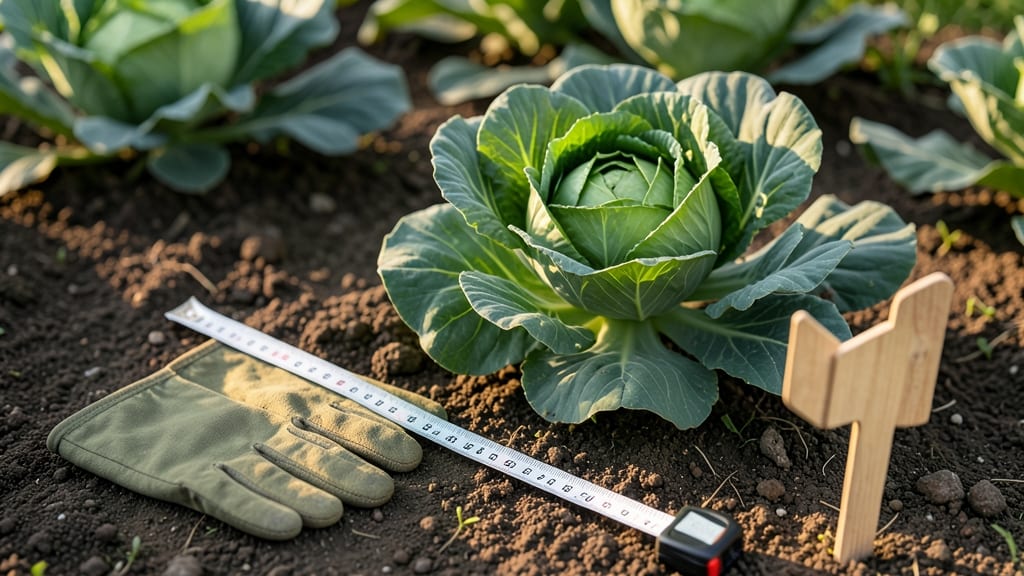
Getting your cabbage garden spacing right is the difference between plump, market-ready heads and sad, stunted greens that barely fill a salad bowl.
If you’ve ever watched your 🥬 plants twist toward the sky like they’re begging for more room—or worse, seen them bolt before they even form a proper head—you know spacing makes or breaks the harvest.
Too close, and your cabbage fights for sunlight, leaving you with small, misshapen heads and a higher risk of disease. Too far apart, and you waste precious garden real estate.
The good news? With the right layout, you can pack your plot efficiently while giving each plant the elbow room it needs to thrive.
Below, I’ll break down the ideal spacing for every cabbage variety, how to adjust for containers or small spaces, and the simple tricks that prevent common mistakes—so you end up with a garden that looks like a pro’s, not a beginner’s.
Optimal cabbage spacing by variety: head size matters
Cabbage plants may look similar, but their head sizes and growth habits vary dramatically between varieties. Proper spacing ensures each plant develops a full-sized head without competing for nutrients or sunlight.
For example, a bok choy needs far less room than a savoy cabbage—get this wrong, and you’ll end up with small, misshapen heads or disease-prone plants. Let’s break down the ideal spacing for each type to maximize your harvest.
Most gardeners overlook how row spacing affects airflow and sunlight penetration. Tight rows (less than 18 inches apart) create humidity traps, inviting fungal diseases like downy mildew. Meanwhile, plants spaced too far apart (24+ inches) waste garden space.
The key is balancing plant maturity, head size, and your garden’s layout. Below, we’ll cover everything from in-ground beds to container gardens, so you can tailor spacing to your setup.
| Variety | Mature Head Size | Plant Spacing (in) | Row Spacing (in) | Notes |
|---|---|---|---|---|
| Green Cabbage (e.g., Golden Acre) | 6–8 inches | 18–24 | 24–36 | Standard size; great for rows. |
| Red Cabbage (e.g., Ruby Perfection) | 6–10 inches | 20–24 | 24–36 | Slightly wider for dense heads. |
| Savoy Cabbage (e.g., Savoy King) | 8–12 inches | 24–30 | 30–36 | Loose leaves need extra room. |
| Bok Choy (e.g., Toy Choy) | 4–6 inches | 6–12 | 12–18 | Compact; ideal for containers. |
| Container Cabbage (All Types) | Varies | 12–18 | N/A (use 1 plant per 5-gallon pot) | Dwarf varieties like ‘Miniature Peanut’ work best. |
For green cabbage, stick to 18–24 inches apart in rows spaced 24–36 inches. This gives smaller varieties like ‘Golden Acre’ enough room to bulk up without overcrowding.
If you’re growing red cabbage, like ‘Ruby Perfection’, increase spacing to 20–24 inches—their heads are denser and need extra elbow room. Savoy cabbage, with its wrinkled leaves, demands the most space: 24–30 inches apart in rows 30–36 inches apart to prevent leaf rot.
Bok choy is the exception—its baby heads mature quickly and thrive in tight quarters. Space them 6–12 inches apart in rows 12–18 inches apart. This high-density planting works for container gardens too, where you might fit 4–6 plants in a 5-gallon pot.
Just ensure each pot has drainage holes to avoid root rot. For container cabbage, choose dwarf varieties like ‘Miniature Peanut’ to save space.
Adjust spacing based on your garden’s sun exposure. In partial shade, plants need slightly more room (2–4 inches extra) to stretch toward light. Conversely, in full sun, you can tighten spacing by 2–3 inches since growth is faster.
Always thin seedlings to the recommended spacing once they’re 4–6 inches tall. Use sharp scissors to avoid damaging roots, and compost the thinnings for a nutrient boost.
In raised beds, stagger plants in a checkerboard pattern to maximize space. For example, place green cabbage on a 24-inch grid (every other row offset by 12 inches).
This trick lets you fit 20% more plants in the same area while maintaining airflow. If you’re succession planting, leave gaps of 12–1
Common cabbage spacing mistakes that shrink your harvest
If your cabbage heads are smaller than expected, poor spacing might be the culprit. Overcrowded plants compete for sunlight, nutrients, and airflow, leading to stunted growth and disease.
I’ve seen gardens where cabbages were planted too close, resulting in pests like cabbage moths thriving in dense foliage. The fix? Start with the right spacing and adjust mid-season if needed.
Many gardeners make the mistake of treating all cabbage varieties the same. Green cabbage and savoy cabbage need more room than bok choy or miniature varieties. For example, standard green cabbage requires 18-24 inches between plants, while bok choy can thrive with just 6-12 inches.
Ignoring these differences often leads to underdeveloped heads.
Another common error is planting in tight rows. Rows spaced less than 24 inches apart create a shaded canopy, where the outer plants get minimal sunlight. This forces the center plants to stretch upward, weakening their structure and making them prone to bolting or splitting.
I’ve seen entire rows of cabbage fail because of this simple oversight.
🚨
⚠️ Overcrowding = Smaller Harvests
Poor cabbage spacing causes:
- ↓ Smaller heads (plants compete for nutrients)
- ↑ Pest infestations (dense foliage hides cabbage worms)
- ↑ Disease risk (poor airflow traps moisture)
- ↓ Sunlight exposure (shaded plants bolt prematurely)
Fix it: Thin seedlings to 12-18 inches apart and space rows 24-36 inches apart for airflow.
Even if you start with proper spacing, mid-season adjustments are key. As cabbage plants mature, their leaves spread wider, blocking sunlight from neighbors. If you notice yellowing leaves or stunted growth in the center of your bed, it’s time to thin.
Gently remove the smallest or weakest plants, leaving the strongest 12-18 inches apart. This might seem harsh, but it ensures the remaining plants have room to develop full-size heads.
Container gardens present unique challenges. Dwarf varieties like ‘Miniature Peanut’ can handle 8-12 inches of spacing, but even then, overcrowding leads to poor head formation. In pots, limit yourself to 1-2 plants per 12-inch container—any more, and you’ll end up with baby cabbages instead of harvest-worthy heads.
Remember, airflow is just as critical in containers as it is in garden beds.
Don’t overlook the role of succession planting in spacing. If you’re planting new cabbage every 2-3 weeks, stagger your rows to avoid overcrowding. For example, plant one row in early spring, another in late spring, and a final row in early summer.
This way, each batch gets the space and sunlight it needs without competing with older plants. Proper timing and spacing together can double your harvest in the same garden area.