
Picking
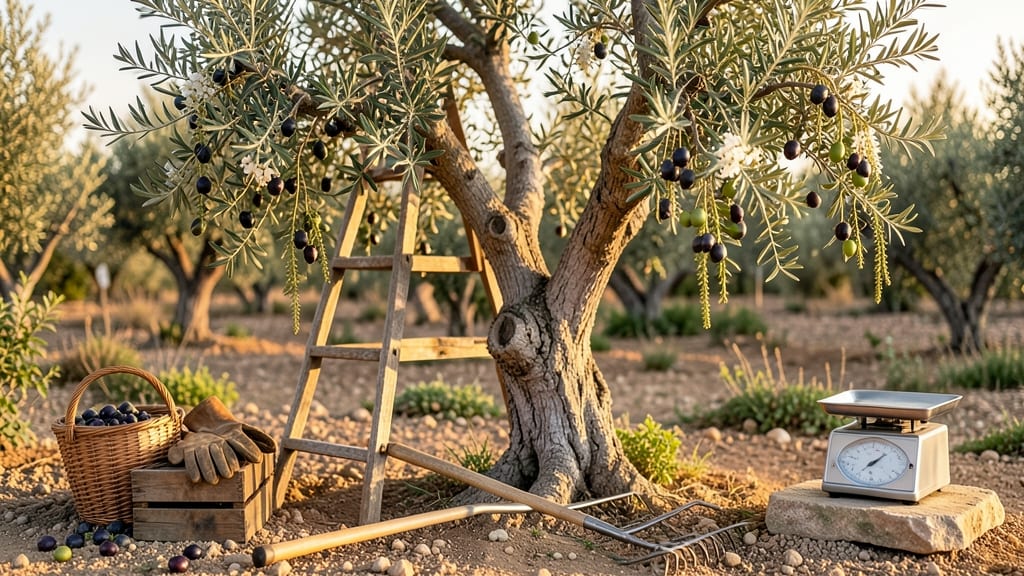
The olive harvest season determines whether you end up with bitter olives or golden oil—getting it right means the difference between a mediocre crop and a prize-winning one.
Picture this: you’ve spent years nurturing your 🫒 olive tree, and now the moment of truth arrives. One wrong move, and your harvest could be ruined—too early, and the olives are hard and unripe; too late, and they turn mushy or fall to the ground.
In Mediterranean climates (and zones 8a-11 like California, Arizona, or Florida), timing is everything. Most olives ripen between October and January, but the exact window depends on your variety and local weather.
The key? Watching for color shifts from green to deep purple or black, a slight softening when squeezed, and natural fruit drop.
Below, I’ll walk you through the exact signs of ripeness, regional harvest calendars, and pro tips to maximize flavor and oil yield—so you never miss the perfect moment again.


Understanding olive harvest season: key timing factors for flavor and oil
Timing your olive harvest is an art that balances biological ripeness with environmental conditions. Olives ripen gradually, and harvesting too early means bitter, low-oil fruit, while waiting too long risks fruit drop and spoilage.
The ideal window depends on your olive variety and climate zone, but understanding the key triggers helps you nail the perfect moment.
Olive ripening is triggered by day length and temperature shifts as summer fades. In Mediterranean climates, olives typically ripen between September and November, while in warmer regions like California, harvest may stretch into December or January.
The transition from green to purple or black signals maturity, but oil content and flavor balance are equally critical.
Here’s how to align your harvest with peak quality using science-backed cues:
The color shift from green to purple or black is your first visual cue, but don’t rely on it alone. For oil production, harvest when olives reach 15-25% oil content, typically at the intermediate purple stage.
Varieties like Arbequina ripen earlier (September-October), while Kalamata may wait until November. Always taste-test: ripe olives should be slightly sweet with minimal bitterness.
Temperature drops below 70°F (21°C) accelerate ripening, so monitor nighttime lows. In Mediterranean climates, harvest aligns with autumn rains, which signal the tree to prepare for dormancy. In drier regions like California, irrigation schedules can delay or hasten ripening—reduce watering 4-6 weeks before harvest to concentrate flavors and oils.
Watch for natural fruit drop, a sign the tree is ready to release olives. If you see olives falling onto the ground, it’s time to act—though you’ll want to harvest 2-3 days before full drop to avoid spoilage.
For mechanical harvesting, this window is critical; shake the tree gently to test readiness. If olives detach easily, they’re perfect for picking.
Regional climate variations drastically alter harvest timing. Coastal areas with mild winters (like California) may harvest into December, while inland Mediterranean zones finish by November. Even within a region, microclimates matter: slopes facing south ripen faster than shaded valleys. Always scout your orchard for consistent color changes across the tree.
Post-harvest, olives for oil production should be processed within 48 hours to prevent fermentation. For table olives, you can store them longer, but monitor for mold.
Sort olives by maturity: purple ones for oil, green or partially ripe for curing. This separation ensures you maximize both flavor profiles and yield efficiency.
Pro tip: Keep a harvest journal to track ripening patterns in your specific climate. Note the first frost date, temperature trends, and olive color shifts each year. Over time, you’ll predict your ideal harvest window with precision, turning guesswork into a reliable, high-quality routine. 🫒
Regional olive harvest seasons: month-by-month guide for U.s. and Mediterranean growers
Timing your olive harvest is everything—miss the window, and you’ll end up with bitter olives or poor oil yields. The Mediterranean and U.S. regions like California and Texas offer distinct harvest seasons, each influenced by temperature thresholds and traditional practices.
Understanding these regional differences ensures you pick olives at peak maturity for the best flavor and oil quality.
In the Mediterranean, harvests typically occur between October and January, while U.S. regions like Coastal California may start as early as September for early varieties. The key is monitoring fruit color, oil content, and temperature drops—signs that olives are ready for harvest.
Let’s break down the month-by-month guide for each region to help you plan your harvest perfectly.
| Region | Harvest Months | Key Temperature Threshold | Traditional Technique | Modern Technique |
|---|---|---|---|---|
| Spain (Andalusia) | October - December | 50-60°F (10-15°C) | Hand-picking with ladders | Mechanical shakers + nets |
| Italy (Tuscany) | November - January | 45-55°F (7-13°C) | Basket harvesting | Vibratory harvesters |
| Greece (Peloponnese) | October - December | 55-65°F (13-18°C) | Hand-picking with nets | Combined mechanical + manual |
| California (Coastal) | September - November | 60-70°F (15-21°C) | Hand-picking (small farms) | Tractor-mounted harvesters |
| Texas (Rio Grande Valley) | October - December | 50-65°F (10-18°C) | Hand-picking (traditional) | Mechanical beaters |
In Spain, the harvest peaks in October-December when temperatures drop to 50-60°F (10-15°C), signaling peak oil content. Traditional methods like hand-picking with ladders are still common, but modern mechanical shakers dominate large farms.
Meanwhile, Italy’s Tuscany harvests later, from November to January, when cooler 45-55°F (7-13°C) temperatures enhance flavor complexity.
For U.S. growers, Coastal California offers an earlier window from September to November, ideal for varieties like Manzanillo and Arbequina. The 60-70°F (15-21°C) range triggers ripening, and modern tractor-mounted harvesters are widely used.
In Texas, the Rio Grande Valley harvests from October to December, blending traditional hand-picking with mechanical beaters for efficiency.
Regardless of region, always monitor fruit color and oil content—these are the ultimate indicators of harvest readiness. Early varieties may ripen sooner, while late varieties could extend into January in cooler climates. Plan accordingly to avoid missing the sweet spot between flavor and yield.
Pro tip: If you’re unsure, conduct a taste test—ripe olives for oil should be mild and buttery, while table olives should retain a slight bitterness. Adjust your harvest timing based on your end goal to maximize quality.