
Trees
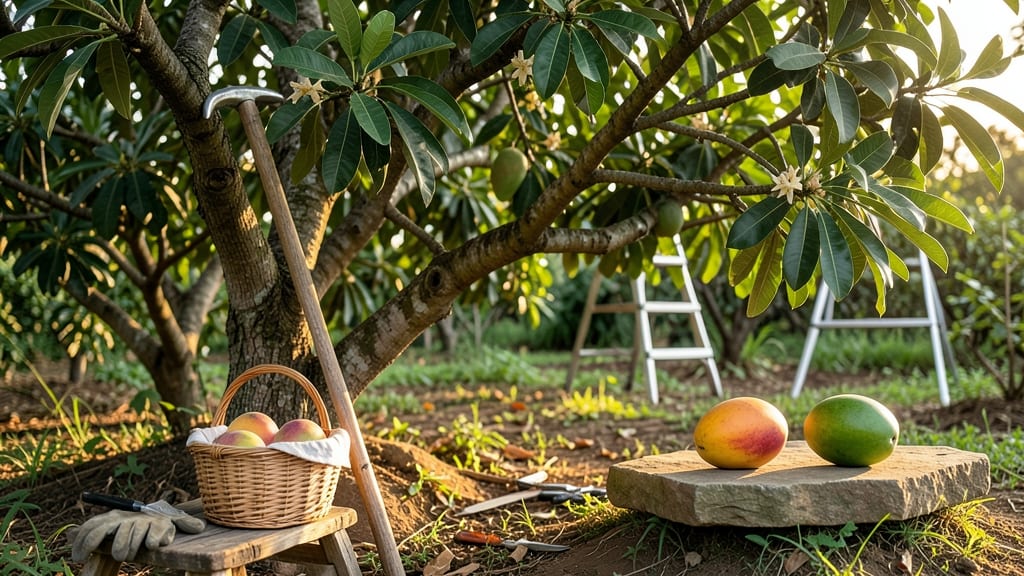
Knowing the exact mango tree harvest time can turn a good crop into an amazing one—because picking too soon means mealy, bland fruit, while waiting too long risks dropping or spoiling it.
Picture this: you’ve nurtured your 🥭 for years, and now the branches sag under the weight of fruit. But how do you know when to pick? One wrong move, and you’re left with a pile of underripe or overripe mangoes.
The good news? A few simple cues—color, scent, and the gentle give of the fruit—will tell you the perfect moment to harvest.
Timing matters even more if you’re in a cooler zone like 9b, where harvests shift to winter, or in frost-free regions where fruit ripens year-round.
Below, I’ll break down the signs of ripeness, how long your mangoes will last after picking, and the best ways to store them so they stay sweet and juicy for as long as possible.
Ready to avoid the common mistakes that ruin harvests? You’ll learn how to test for ripeness, recognize when fruit is past its prime, and even troubleshoot if your mangoes never seem to soften—no guesswork required.


How to determine the perfect mango tree harvest time by color, smell & texture
Picking mangoes at the right moment transforms your harvest from bland to breathtakingly sweet. The key lies in combining three simple tests: visual cues, tactile feedback, and aromatic signals.
Each mango variety has unique ripening traits, but these universal methods work for Alphonso, Keitt, or Kent varieties alike. Climate also plays a role—humid tropical regions speed up ripening, while drier areas may extend the process by weeks.
Start by examining the skin color, which is your first clue. Most mangoes transition from hard green to a variety-specific hue like golden yellow, deep red, or blush orange. For example, Alphonso mangoes develop a vibrant yellow-green blush, while Keitt varieties turn rich red.
However, color alone isn’t enough—some mangoes never fully ripen on the tree, so you’ll need to combine this with other signs.
Next, perform the gentle squeeze test—press your thumb lightly against the fruit. A ripe mango will yield slightly, like a ripe avocado, but won’t feel mushy. If it’s rock-hard, it needs more time; if it’s too soft, it’s overripe.
This tactile check is especially critical in hot climates, where mangoes can overripen quickly on the tree. Pair this with the stem twist test: grasp the fruit’s stem and twist gently. If it separates cleanly from the branch, it’s ready to pick.
Finally, trust your nose—the most reliable indicator of ripeness is a sweet, tropical aroma near the stem. A ripe mango emits a fragrant, almost floral scent, while unripe fruit smells bland or slightly bitter.
Pro tip: check for aroma in the morning when temperatures are cooler, as heat can mask the scent. If your mango passes all three tests, it’s harvest-ready!
Regional climate drastically affects harvest timing. In tropical zones like Florida or Hawaii, mangoes ripen faster due to year-round warmth, often peaking in late spring to early summer.
Meanwhile, in cooler subtropical areas like Southern California or Arizona, harvests may stretch from June to August, with some varieties like Cogshall ripening as late as September.
Even within the same region, elevation matters—trees at higher altitudes (e.g., 500+ feet) may take 2-3 weeks longer to ripen than those at sea level.
Don’t rely solely on calendar dates—some mango varieties, like the early-bearing Julie, ripen in just 12 months, while others, such as the Osteen, take up to 24 months.
To account for this, track your tree’s first flowering and estimate harvest time based on your variety’s known maturity window. For example, if your Keitt tree blooms in March, expect fruit to ripen around March of the following year (12 months later).
Once you’ve identified ripe mangoes, harvest them carefully to avoid bruising. Use clean, sharp pruning shears to cut the fruit, leaving a small stem attached. Avoid pulling or twisting, which can damage the tree.
After picking, place mangoes in a cool, shaded area (not refrigerated yet) to ripen fully over 2-5 days, depending on how close they were to readiness. Pro tip: group mangoes with bananas or apples to speed ripening—these fruits release ethylene gas, a natural ripening hormone.
If you miss the perfect harvest window, don’t despair—unripe mangoes can ripen off the tree, but they’ll never reach their peak sweetness. Place them in a paper bag with an apple and check daily. Overripe mangoes, on the other hand, develop a fermented smell and soft, mushy
Mango ripening stages after harvest: how long do they last & how to store them
Once you've harvested your mangoes at peak ripeness, understanding their post-harvest stages ensures you enjoy them at their best. Freshly picked mangoes continue ripening off the tree, but the process varies based on storage conditions and ethylene exposure.
Room temperature speeds up ripening, while refrigeration slows it down—knowing these differences helps you control sweetness and texture.
Mangoes ripen through three key stages after harvest: firm, ripe, and overripe. The transition from firm to ripe can take 2-7 days at room temperature, depending on the variety.
For example, Alphonso mangoes ripen faster than Kent mangoes, which stay firm longer. Recognizing these stages helps you store them properly and avoid waste.
Ripe: Soft, deep color, sweet aroma
Overripe: Mushy, fermented smell, brown spots
At room temperature, mangoes release ethylene gas, a natural ripening hormone that accelerates softening and sweetness. Place them in a paper bag with a banana or apple to boost ethylene exposure and ripen them in 24-48 hours.
Avoid sealing them in airtight containers, as this traps moisture and encourages mold. For slower ripening, store mangoes in the crisper drawer of your fridge, where they’ll last 10-21 days.
Watch for signs of overripeness, like a fermented smell, dark spots, or a mushy texture. Overripe mangoes are best used for smoothies or baking, but they won’t improve further. To extend shelf life, wrap individual mangoes in plastic wrap before refrigerating, which reduces moisture loss.
If storing long-term, freeze ripe mangoes in slices or puree for up to 6 months—just thaw overnight in the fridge to preserve texture.
Humidity plays a critical role in storage. Mangoes thrive in 85-90% humidity, so place a damp towel in the storage container to mimic tropical conditions.
In dry climates, use a humidifier near your fruit bowl or store mangoes in a ventilated plastic container with a few ice cubes to maintain moisture. Avoid washing mangoes until ready to eat, as excess moisture speeds up spoilage.
For long-distance shipping or delayed consumption, harvest mangoes slightly firm but ripe (just before they turn fully colored) and store them at 50-55°F with high humidity. This method keeps them fresh for up to 3 weeks without losing quality.
Always let mangoes ripen at room temperature for the last 24 hours before eating to enhance flavor and aroma.
By mastering these storage techniques, you’ll enjoy perfectly ripe mangoes for weeks—whether you’re snacking on fresh slices or using them in recipes. Experiment with different methods to find what works best for your climate and variety. Happy mango storing! 🥭