
Watering
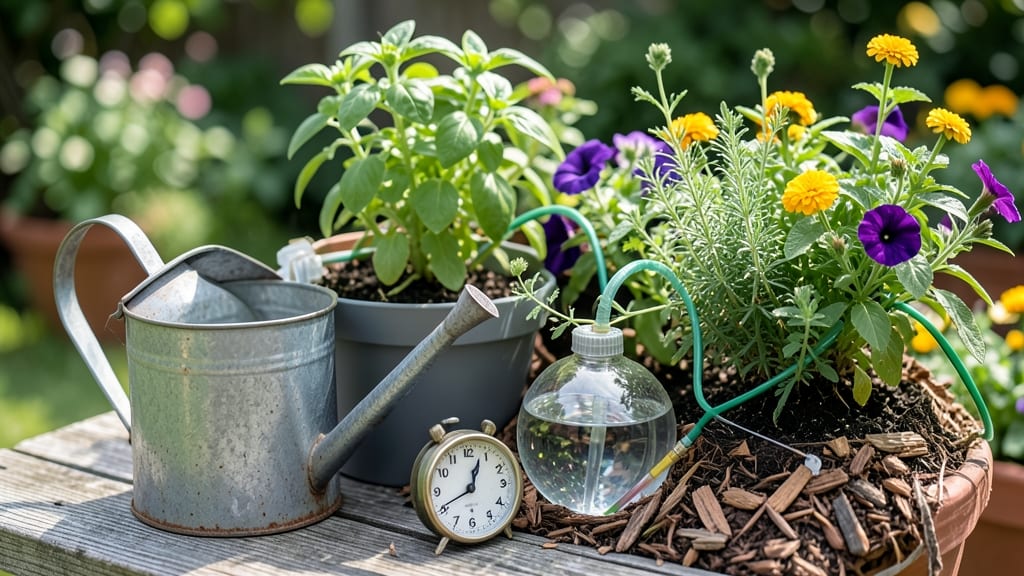
To water your garden while away, you’ll need a mix of smart systems and simple prep to keep your 🌱 thriving without daily checks.
Picture this: You return from vacation to find your tomato plants drooping or your herbs crispy from thirst. It’s a nightmare, but it doesn’t have to be. The right setup—whether automated or DIY—can save your plants while you’re gone, even if you’re only away for a weekend.
Automated solutions like drip irrigation or smart timers handle the heavy lifting, while manual prep like deep watering and mulching buys extra time. I’ll walk you through the best options for your budget, from high-tech systems to low-cost hacks, so you can relax knowing your garden is in good hands.
You’ll also learn how to adjust for your climate—drought-prone areas need different care than humid regions—and spot potential problems before they turn into disasters. Let’s make sure your garden stays happy, no matter where you are.
Best automated watering systems for long-term garden care
When you're planning a trip, the last thing you want to worry about is whether your tomatoes or petunias will survive without your daily watering routine. Automated watering systems solve this problem by delivering consistent moisture while you're away, but not all systems work the same way.
Some are perfect for vegetable gardens, while others excel with potted plants or flower beds. Let’s break down the top options to find the best fit for your garden.
From budget-friendly drip irrigation kits to high-tech smart timers and eco-friendly solar-powered systems, each solution offers unique benefits. I’ll cover setup difficulty, cost, and ideal use cases so you can make an informed decision without overcomplicating your garden routine.
Whether you’re away for a weekend or a month, these systems will keep your plants thriving.
Drip irrigation is one of the most popular choices for gardeners because it delivers water directly to the root zone, reducing waste and preventing fungal diseases. It’s especially effective for vegetable gardens and flower beds, where precise watering matters. Smart timers, on the other hand, offer flexibility and can be controlled remotely via apps, making them ideal for those who love tech integration. Meanwhile, self-watering containers are a game-changer for potted plants and herbs on balconies or patios.
If you’re working with a vegetable garden, a drip irrigation kit is often the best choice because it allows you to create custom zones for different plants. For example, tomatoes and peppers need deeper watering than lettuce or radishes, so adjustable emitters give you full control.
These kits typically include everything you need, like tubing, connectors, and timers, making setup straightforward for most gardeners.
For those who love technology, a smart timer is a game-changer. These systems connect to your Wi-Fi, letting you adjust watering schedules from anywhere using a smartphone app. Some even sync with weather forecasts to skip watering if rain is expected.
This level of control is perfect if you’re managing a mixed garden with diverse water needs, like succulents alongside hydrangeas. Just be mindful of electrical safety, especially in outdoor settings.
Self-watering containers are ideal for potted plants, herbs, or small gardens where space is limited. These containers have built-in reservoirs that slowly release water to the roots as needed, eliminating the guesswork. They’re especially useful for travelers because they require no electricity or complex setup. Simply fill the reservoir before you leave, and your plants will stay hydrated for up to two weeks, depending on the size and plant type.
If sustainability is a priority, a solar-powered watering system is worth considering. These systems use energy from the sun to power pumps and timers, making them eco-friendly and cost-effective in the long run. They’re perfect for off-grid gardens or areas with unreliable electricity.
While the initial setup might be a bit more involved, the payoff is a low-maintenance, self-sustaining watering solution that aligns with your environmental values.
Before choosing a system, consider your garden’s specific needs. Are you dealing with drought-prone conditions? A drip irrigation kit with moisture sensors could be ideal. Do you have young seedlings that need gentle hydration?
A self-watering container might be the answer. And if you’re tech-savvy, a smart timer offers unmatched convenience. Think about what will work best for your space, budget, and lifestyle.
One final tip: always test your system before your trip. Run it for a day or two to ensure everything is working correctly and adjust the water flow as needed. This small step can save you from returning to a garden with wilting plants or overwatered roots.
With the right automated system in place, you can relax on your vacation knowing your garden is in good hands.
DIY smart watering hacks for any budget
You don’t need to spend a fortune to keep your garden thriving while you’re away. With a few simple DIY watering hacks, you can create low-cost, effective solutions that mimic automated systems. These methods work for containers, flower beds, and vegetable gardens—perfect for weekend trips or longer vacations.
From repurposed household items to homemade drip systems, these tricks save money while ensuring your plants stay hydrated. The best part? Most require less than $10 in materials and take under an hour to set up. Let’s dive into my top 4 budget-friendly watering solutions with step-by-step instructions.
💧 4 DIY Watering Hacks for Any Garden
-
1. Repurposed Spray Bottles
Best for: Small pots, seedlings, or herb gardens
How: Fill clean spray bottles with water, poke small holes in the caps, and place them upside down near plants. The slow drip keeps soil moist for 3-5 days. -
2. Buried Plastic Bottles
Best for: Flower beds or in-ground plants
How: Cut the bottom off a 2-liter bottle, bury it near the plant’s roots (neck up), and fill it with water. It’ll release moisture over 1-2 weeks as the soil absorbs it. -
3. Capillary Matting
Best for: Container gardens or hanging baskets
How: Soak a cotton rope or thick fabric in water, drape it over the pot’s edge, and submerge the other end in a water-filled container. Capillary action delivers a steady supply for up to 10 days. -
4. Homemade Drip System
Best for: Vegetable gardens or large flower beds
How: Poke holes in a vinyl tube, connect it to a water source (like a jug on a shelf), and lay it along plant rows. Adjust flow with a clamp for customized watering schedules.
Each of these methods has unique pros and cons depending on your garden’s needs. For example, spray bottles are great for small spaces but won’t last as long as a buried bottle or drip system.
If you’re dealing with containers, capillary matting is a game-changer—it’s reusable and works beautifully for herbs or succulents.
Pro tip: Combine methods for longer coverage. Use buried bottles for deep roots and spray bottles for top-dressing delicate foliage. Always test your setup a few days before your trip to adjust water flow. Overwatering can be just as harmful as underwatering!
For hot climates, increase the bottle size or add a second container to extend watering duration. In cooler weather, reduce the number of bottles or use smaller spray bottles to prevent soggy soil. With these DIY hacks, you’ll never stress about your garden while you’re away again.