
Planting
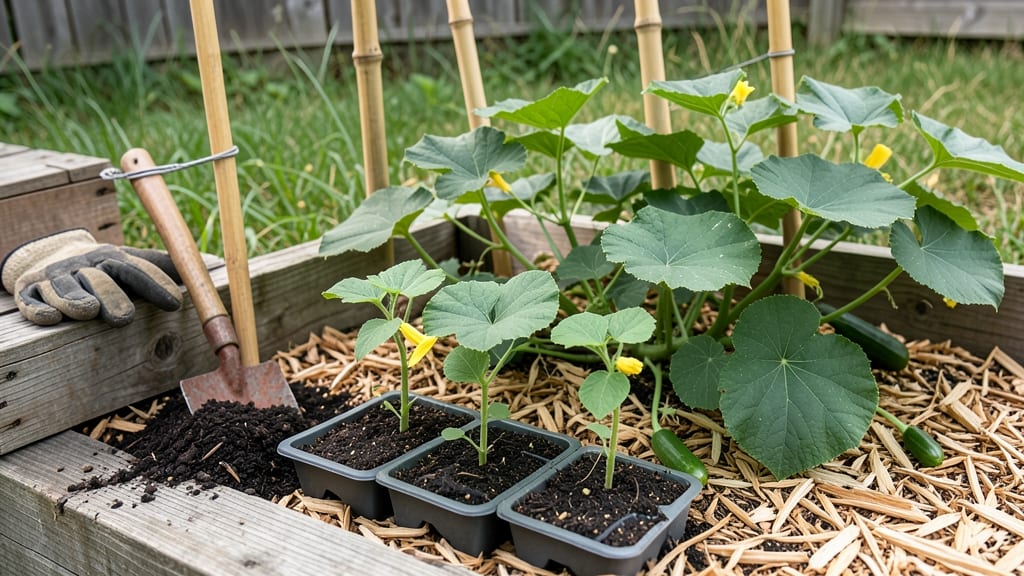
To plant cucumbers in a garden successfully, start by choosing the right time—after your last frost date in April or May—and a sunny spot with well-draining soil 🥒.
Struggling to grow cucumbers that actually produce? The secret isn’t just water or luck—it’s mastering the perfect planting conditions, from soil depth to sunlight exposure. Too much shade or poor soil prep can leave you with bitter, stunted plants instead of crisp, vine-ripened cucumbers.
This guide breaks down everything you need to know, from spacing seeds 3-4 feet apart to pairing them with the right companions (like beans or radishes) for a thriving garden. Avoid common mistakes like overcrowding or skipping mulch, which can invite pests and diseases.
By the end, you’ll know exactly how to set up your cucumbers for a high-yield harvest—ready to enjoy fresh, homegrown slices by July or August.

Step-by-step guide to planting cucumbers for maximum yield
Cucumbers thrive when planted with precision—timing, depth, and spacing directly impact your harvest. Whether you're a beginner or seasoned gardener, these steps ensure your plants grow strong and produce abundant, high-quality fruit. I’ll cover both direct sowing and transplanting methods, plus pro tips to avoid common mistakes.
Timing is everything: Wait until the soil reaches at least 60°F (15°C) and the last frost has passed. In most regions, this means planting in late spring (April–May). Cucumbers are warm-season crops, so cold soil stunts growth and delays fruiting. Check your local frost dates to plan ahead!
For maximum yield, choose a sunny spot with 6–8 hours of direct sunlight daily. Cucumbers are heavy feeders, so enrich your soil with compost or aged manure before planting.
If your soil is heavy clay or sandy, amend it with organic matter to improve drainage and moisture retention.
How to Plant Cucumbers in 6 Simple Steps
-
Step 1: Prepare the Soil
Loosen soil to a depth of 12 inches and mix in 2–3 inches of compost. Aim for a pH of 6.0–6.8. Test your soil if unsure—cucumbers hate acidic or alkaline extremes. -
Step 2: Choose Your Method
Direct Sowing: Plant 3 seeds per hill, 1 inch deep, and 3–4 feet apart in rows 4–6 feet apart. Thin to the strongest seedling per hill after sprouting.
Transplanting: Start seeds indoors 3–4 weeks before last frost. Harden off seedlings for 7–10 days before transplanting, spacing them 12–18 inches apart. -
Step 3: Plant at the Right Depth
Bury seeds 1 inch deep—deeper planting can cause rot or poor germination. If transplanting, dig a hole twice as wide as the root ball and 1 inch deeper to encourage root spread. -
Step 4: Space for Success
Vining varieties need 3–4 feet between plants and 4–6 feet between rows to prevent disease spread and overcrowding. Bush varieties can be spaced 12–18 inches apart—ideal for small gardens or containers. -
Step 5: Add Companion Plants
Plant bush beans, radishes, or marigolds nearby to repel pests and improve soil. Avoid planting near potatoes, aromatics (like dill), or melons, as they compete for nutrients or attract shared pests. -
Step 6: Water and Mulch
Water deeply at planting to settle soil around roots. Apply 2–3 inches of mulch (straw or shredded leaves) to retain moisture, suppress weeds, and keep fruit clean. Mulch also prevents soil-borne diseases from splashing onto leaves.
After planting, monitor your cucumbers closely for the first 2–3 weeks. Young plants are vulnerable to damping off (a fungal disease) if the soil stays too wet. Water at the base of the plant in the morning to allow foliage to dry quickly—this reduces disease risk.
If you notice yellowing leaves, it could signal overwatering or nutrient deficiency.
For vertical growth, install a trellis or cage when seedlings are 6 inches tall. This saves space, improves air circulation, and makes harvesting easier. Vining varieties like 'Straight Eight' or 'Marketmore' thrive on trellises, while bush types like 'Bush Champion' don’t need support.
Just be sure to train vines gently to avoid damaging stems.
Pro tip: If your cucumbers start flowering but no fruit appears, they may need more phosphorus. Side-dress with a balanced fertilizer (10-10-10) or compost tea to encourage blooming. And remember—harvest regularly!
Picking cucumbers every 2–3 days prompts the plant to produce more fruit. Let them get too big, and you’ll end up with bitter, seedy cucumbers.
With these steps, you’ll enjoy a bountiful harvest from July through September. Happy gardening—and may your vines be long and your cucumbers plentiful! 🥒✂️🌿
Best soil, sunlight, and watering conditions for cucumbers
Cucumbers thrive when you nail three key factors: soil quality, sunlight exposure, and consistent watering. Start with loamy soil rich in organic matter, because cucumbers hate soggy roots or compacted ground.
The ideal pH range of 6.0–6.8 ensures nutrients like nitrogen and potassium are available for vine growth and fruit production.
For sunlight, aim for 6–8 hours of direct sun daily. Partial shade can stretch vines but reduces yield. Morning sun is especially critical—it dries dew quickly, preventing fungal diseases like powdery mildew. If your garden gets less than 6 hours, consider trellising to maximize vertical growth toward sunlight.
Watering cucumbers is an art: 1–2 inches per week is the sweet spot, but adjust for heat. Deep watering in the morning (before 10 AM) mimics natural rainfall and prevents fungal issues. Avoid wetting leaves—water at the base of plants instead. Yellowing leaves or bitter-tasting fruit often signal inconsistent moisture.
| Factor | Ideal Condition | Red Flags |
|---|---|---|
| Soil Type | Loamy, well-draining (6.0–6.8 pH) | Clay (root rot), sandy (dries too fast) |
| Sunlight | 6–8 hours direct sun | <4 hours (stunted growth), >10 hours (bitter fruit) |
| Watering | 1–2 inches/week (deep, morning) | Wilting (underwatering), yellow leaves (overwatering) |
| Soil Prep | Compost + aged manure | Fresh manure (burns roots), no amendments |
Heavy clay soil? Amend with compost and perlite to improve drainage. Sandy soil? Mix in peat moss or coconut coir to retain moisture. A 2-inch mulch layer (straw or grass clippings) locks in humidity and suppresses weeds—critical for cucumbers, which spread aggressively.
Watch for overwatering signs: yellowing leaves, mushy stems, or mold on soil. Underwatered cucumbers show crispy edges on leaves and bitter fruit. Use your finger to check soil moisture—top 1–2 inches should feel damp, not wet. Adjust your watering schedule weekly based on rainfall and temperature spikes.
Pro tip: Group cucumbers with companion plants like beans or radishes to improve soil structure naturally. Avoid planting near potatoes or sage, which compete for nutrients. With these conditions mastered, your cucumbers will reward you with abundant, crisp harvests all season long.