
How To
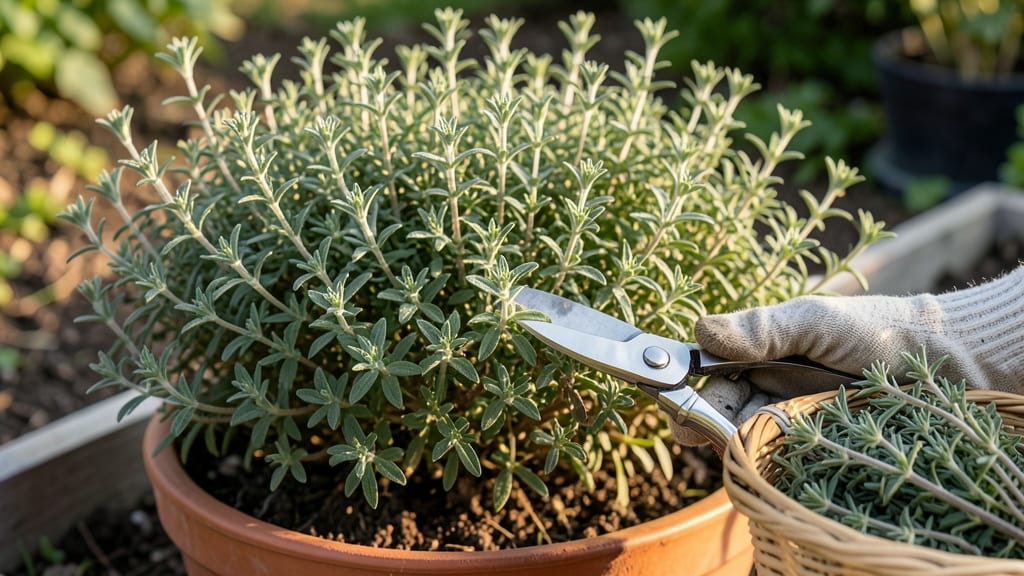
To harvest thyme so it keeps growing, focus on timing, technique, and avoiding over-pruning—these three factors determine whether your plant thrives or struggles.
Picture this: you’ve spent months nurturing your 🌿 thyme, only to snip too much at once and watch it wilt. The right approach keeps your plant lush, flavorful, and ready for repeated harvests without stress.
Thyme is resilient, but it needs guidance—like pruning just above leaf nodes, never cutting more than one-third of the plant, and harvesting in the morning for peak freshness. Small adjustments make a big difference.
Below, I’ll walk you through the exact steps to trim thyme the right way, from seasonal timing to post-harvest care, so your plant stays vigorous and productive all season.


The right way to harvest thyme without killing growth
Harvesting thyme properly is an art that balances flavor, yield, and plant health. Unlike aggressive harvesters who strip plants bare, I focus on selective pruning that encourages dense, aromatic growth.
The key lies in understanding which stems to cut, how much to remove, and when to stop—all while avoiding the common mistake of over-harvesting that weakens thyme plants.
Thyme thrives when you mimic its natural growth cycle. In the wild, it grows in sun-drenched, well-drained conditions where it rarely faces competition. By following these principles, you’ll keep your thyme bushy, productive, and flavorful for years.
The best time to harvest is in the morning after dew has evaporated, when essential oils are at their peak concentration.
How to Harvest Thyme for Continuous Growth
- 1 Choose the right stems: Select non-flowering stems that are at least 3-4 inches tall. Flowering stems divert energy away from leaf production, so snip them off to keep the plant focused on leafy growth.
- 2 Use clean, sharp tools: Grab a pair of bypass pruners or sharp scissors to make clean cuts. Dull tools crush stems, inviting disease and pests while slowing regrowth.
- 3 Cut just above a leaf node: Always snip 1/3 inch above a set of leaves (the leaf node). This encourages new shoots to sprout from that point, creating a fuller plant over time.
- 4 Never remove more than 1/3 of the plant: Harvesting too much stresses thyme, leaving it vulnerable to disease and poor regrowth. If you’re harvesting for culinary use, spread it out over multiple sessions rather than taking everything at once.
- 5 Remove woody stems: If your thyme develops thick, brown stems, trim them back to green growth. This rejuvenates the plant and promotes new, tender shoots with the best flavor.
- 6 Harvest seasonally: Focus on harvesting in late spring and early summer when growth is most vigorous. In fall, reduce harvesting to allow the plant to store energy for winter.
🌿 Pro Tip: Bundle harvested stems and hang them upside down in a dry, dark place to preserve flavor until needed.
Seasonal timing plays a crucial role in maintaining thyme’s health. In spring, when new growth emerges, focus on light harvesting to encourage bushiness. By mid-summer, thyme is at its peak, and you can harvest more aggressively—but always leave enough foliage to support photosynthesis.
In fall, scale back to avoid weakening the plant before winter dormancy.
One of the biggest mistakes I see is harvesting thyme when it’s flowering. While the flowers are beautiful, they signal the plant to shift energy from leaf production to seed development.
By removing flower spikes early, you redirect that energy back into leafy growth, keeping your thyme lush and flavorful. Think of it as giving your plant a growth boost instead of a harvest.
After harvesting, thyme often rebounds quickly if given the right care. Water the plant deeply at the base (avoid wetting the leaves to prevent fungal diseases) and ensure it’s in well-draining soil.
A light application of balanced fertilizer (5-10-10) in early spring can also encourage robust regrowth. Within 2-4 weeks, you’ll see new shoots emerging from the leaf nodes where you made your cuts.
If your thyme starts looking leggy or woody, it’s a sign you’ve been harvesting too much. To revive it, trim back one-third of the plant to green growth and reduce watering slightly.
Within a few weeks, you’ll notice fresh, vibrant growth as the plant focuses on rebuilding its structure. This technique works wonders for older thyme plants that have lost their compact shape.
For container-grown thyme, the same rules apply, but be extra cautious about root space. Since pots limit growth, never remove more than 10-15% of the foliage at a time. Container thyme also benefits from regular pruning to prevent it from becoming root-bound, which stunts growth and reduces flavor.
Finally, always harvest thyme in the morning when essential oils are most concentrated. This ensures the best flavor and aroma in your dishes. Store harvested thyme in the fridge for up to
Thyme regrowth secrets: how often to prune for maximum yield
Pruning thyme isn't just about keeping your plant tidy—it's the key to encouraging dense, flavorful regrowth. Unlike annual herbs, thyme is a perennial powerhouse that rewards proper care with years of harvests.
The timing and technique of your pruning directly impact whether your thyme stays bushy and productive or becomes sparse and woody.
Most gardeners make one critical mistake: pruning too aggressively or at the wrong time. I learned this the hard way when my first thyme plant turned into a brown, leggy mess after over-pruning in winter.
The secret lies in understanding thyme's natural growth cycles and how to stimulate new shoots without stressing the plant.
How to Harvest Thyme So It Keeps Growing
- Spring (March-May): Prune lightly to remove dead or damaged stems—never cut more than 10% of the plant. Focus on shaping rather than harvesting.
- Summer (June-August): Harvest 20-30% of growth by cutting just above leaf nodes. Do this every 4-6 weeks to encourage bushiness.
- Fall (September-November): Reduce pruning to light maintenance. Remove only spent flowers and leggy stems—thyme needs to prepare for dormancy.
- Winter (December-February): Never prune. Thyme is dormant; cutting now stresses the plant and invites disease.
🌿 Pro Tip: Always use clean, sharp scissors to avoid crushing stems.
Your thyme will send you clear warning signs when you're over-harvesting. Watch for bare stems, yellowing leaves, or stunted new growth. These are red flags that you're taking too much too soon.
Even hardy thyme can't recover from aggressive harvesting—it's a slow-growing perennial that needs time to replenish.
If your thyme looks stressed or woody, don't panic. Revival is simple: reduce harvesting immediately and focus on watering deeply but infrequently. Trim back only the most damaged stems and avoid fertilizing—thyme prefers lean, well-draining soil. Within 4-6 weeks, you'll see fresh green shoots signaling recovery.
For maximum yield, I've found that summer is prime harvest time. This is when thyme grows most vigorously, and the leaves are most aromatic. That said, morning harvests after dew dries give you the best flavor and keep your plant happy.
Always leave at least 3-4 healthy stems to maintain the plant's structure.
Remember: thyme's woody stems are a sign of maturity, not neglect. The older stems provide structure and support for new growth. Only prune them back if they're completely dead or blocking sunlight from lower leaves.
With the right pruning rhythm, your thyme will reward you with years of lush, flavorful harvests.