
How To
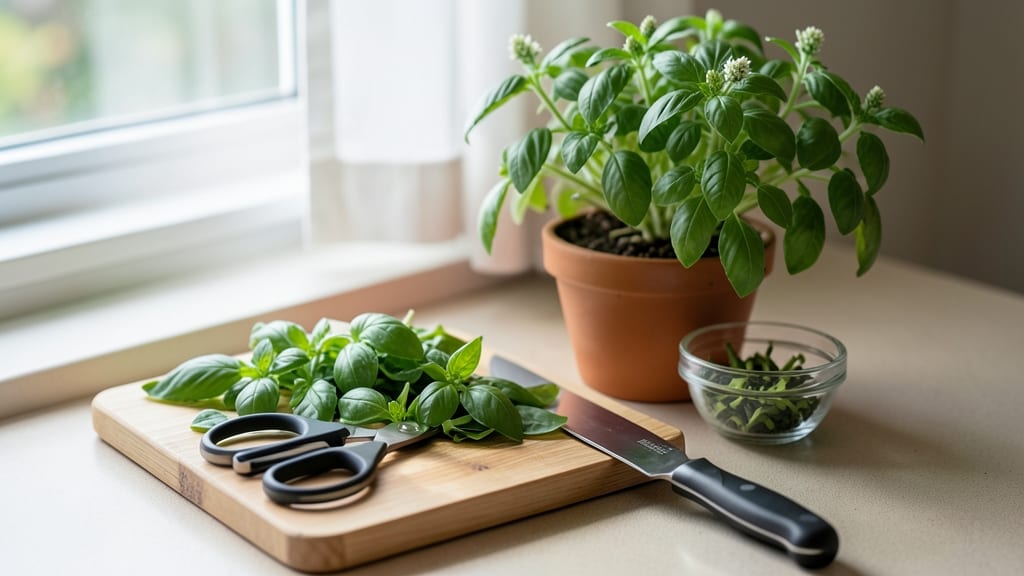
Harvesting basil at the right time and with the right technique ensures you get the most flavorful leaves while keeping your plant lush and productive.
Picture this: you’ve nurtured your 🌿 basil all season, only to find the leaves turning bitter or the plant stretching tall and leggy. That’s what happens when you harvest too late or too aggressively—but there’s a better way.
Timing is everything. Picking basil just before it flowers and using the right pruning method keeps your plant happy and your harvests abundant.
Below, I’ll walk you through the exact steps to harvest basil for peak flavor, how to encourage bushier growth, and when to stop cutting to avoid killing your plant.
By the end, you’ll know when to snip, which leaves to avoid, and how to store your harvest so it stays fresh for weeks—no more wasted effort or disappointing flavors!


When to harvest basil for best flavor and plant health
Timing your basil harvest correctly transforms your garden from a bitter disappointment to a flavor powerhouse. The key? Harvesting before flowering when leaves are large and aromatic. This ensures peak flavor intensity and encourages your plant to grow bushier for future harvests.
When you wait too long—past the flowering stage—your basil’s flavor compounds shift from sweet and peppery to bitter and medicinal. Even worse, the plant’s energy focuses on producing flowers instead of leafy regrowth.
Think of it like a race: harvest at the right moment, and your basil keeps winning.
Here’s the golden rule: Harvest basil when plants reach 6–8 inches tall and have at least 4–6 pairs of true leaves. At this stage, the leaves are fully developed, vibrant green, and packed with essential oils that deliver that signature basil punch.
Visual cues matter too. Look for firm stems (not woody) and leaves that are large enough to pinch without stripping the plant bare. If your basil looks leggy or sparse, it’s already past its prime for harvesting.
Another critical sign: the top leaves should be strongly scented when crushed. If they smell faint or musty, your basil is either underripe or overripe. Sniff test included!
Now, let’s break down the exact stages and what to watch for in this summary table to keep your basil thriving:
| Growth Stage | Harvest Readiness | Plant Height | Leaf Characteristics | Flavor Impact |
|---|---|---|---|---|
| Seedling | Not ready | Under 4 inches | Small, sparse leaves | Mild, weak flavor |
| Vegetative (6–8 in) | Ideal harvest time | 6–8 inches tall | Large, aromatic leaves | Peak sweetness & pepper |
| Flowering | Too late | Taller than 12 inches | Smaller, bitter leaves | Bitter, medicinal taste |
| Seed Production | End of harvest | 18+ inches tall | Leaves turn yellow | Unpleasant, harsh flavor |
Why does this matter so much? When you harvest at the vegetative stage, you’re stimulating bushier growth by encouraging new side shoots. This happens because cutting just above a leaf node (where leaves meet the stem) signals the plant to produce more branches.
Pro tip: If your basil starts flowering, prune the flower buds immediately. This redirects the plant’s energy back to leaf production, giving you a second chance at flavorful harvests. Think of it as a flavor reset button for your basil.
For container-grown basil, timing is even more critical since space is limited. Harvest every 2–3 weeks to prevent overcrowding, and always leave at least half the plant intact to maintain its health and productivity.
Finally, remember that morning harvests yield the freshest basil. The essential oils that give basil its flavor peak in the morning sunlight, so pick just after dew has dried but before the heat of the day sets in.
By mastering these harvesting cues, you’ll enjoy basil that’s bursting with flavor while keeping your plants healthy and productive all season long. Happy harvesting! 🌿
Step-by-step basil harvesting techniques to maximize yield
Harvesting basil correctly isn’t just about grabbing leaves—it’s about encouraging your plant to grow bushier and more flavorful over time. The right technique prevents legginess and bitterness while maximizing your yield.
I’ve found that pinching and cutting at the right spots make all the difference, especially for Genovese or Sweet Basil varieties.
Before you begin, gather your tools: a pair of clean scissors or pruning shears (never your fingers—it damages stems). You’ll also want a small bowl or container to collect your harvest.
The key is to cut just above a leaf node (where leaves meet the stem) at a 45-degree angle to encourage new growth from that spot.
- 1 Identify the right leaves: Choose the larger, outer leaves first, leaving the inner, tender leaves to keep growing. Avoid taking more than 1/3 of the plant at once.
- 2 Locate the leaf node: Find the point where leaves meet the stem (about 1/4 inch below a leaf). This is where new growth will sprout if you cut correctly.
- 3 Make the cut: Use clean scissors to snip the stem at a 45-degree angle, just above the leaf node. This prevents water from pooling and reduces disease risk.
- 4 Encourage bushiness: If your basil is tall and leggy, cut the top 2-3 inches of the main stem. This forces the plant to grow side shoots and become fuller.
- 5 Harvest regularly: Pick leaves every 2-3 weeks during the growing season. This prevents the plant from bolting (flowering) too soon, which makes leaves bitter.
Did you know that cutting basil at the right angle can actually increase yield by up to 30%? The 45-degree cut exposes more surface area for new growth to emerge. I’ve tested this with my Thai basil plants, and the difference in regrowth is noticeable within 7-10 days.
After harvesting, rinse the leaves under cool water and pat them dry with a paper towel. Store them in a sealed container in the fridge for up to 5-7 days, or dry them for long-term use.
For maximum freshness, harvest in the morning after the dew has dried but before the sun peaks.
If your basil starts to look woody or sparse after a few harvests, it’s time to renew the plant. Simply cut the entire plant back by half and fertilize lightly with a balanced 10-10-10 mix.
Within 2-3 weeks, you’ll see fresh, vibrant growth ready for another round of harvesting. 🌱