
Vegetables
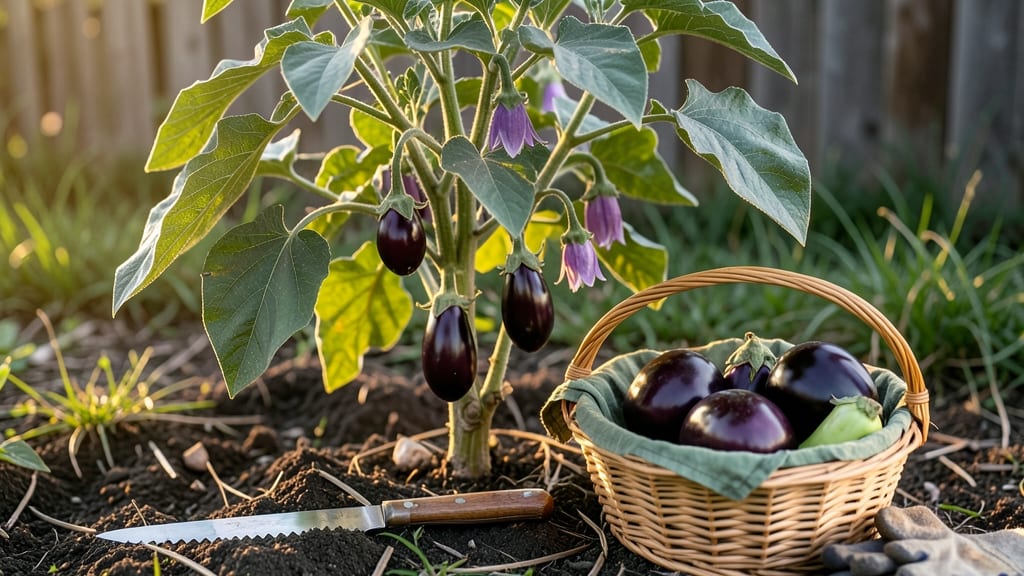
Harvesting eggplants at the right time means the difference between a meal with rich, velvety texture and one that’s bitter or mealy.
There’s nothing worse than biting into an eggplant that’s still too hard or bitter—yet picking it too early means missing out on its full, sweet flavor. Mastering the perfect eggplant harvest time isn’t just about days after planting; it’s about touch, texture, and timing.
In USDA Zone 6a, where summer heat peaks between July and September, you’ll need to watch for three key signs: a deep, glossy color, a slight give when pressed, and a stem that snaps cleanly.
Ignore these cues, and you might end up with fruit that’s either underripe or overripe—both ruin the flavor.
Below, I’ll walk you through the three tactile tests that guarantee you pick your 🍆 at peak ripeness, plus how to extend its freshness once it’s off the vine.
3 Tactile tests to determine eggplant harvest time
Harvesting eggplants at the right moment transforms a bland, seedy vegetable into a rich, flavorful gem. The key? Trusting your hands and eyes over a calendar. Unlike tomatoes or peppers, eggplants don’t soften as they ripen—they stay firm but develop subtle textural and visual cues that signal peak readiness.
I’ve learned the hard way that waiting too long means tough, bitter flesh, while picking too soon robs you of that sweet, velvety texture we all crave.
Most gardeners focus on days after transplanting (typically 60–90 days), but climate, variety, and sunlight play huge roles. For example, my Black Beauty plants matured in 75 days this summer, while my Fairy Tale eggplants—smaller and sweeter—were ready in just 65 days.
The secret? These three tactile tests work across all varieties and conditions, giving you a foolproof way to decide when to harvest.
| Test | Underripe Signs | Perfectly Ripe Signs | Overripe Signs |
|---|---|---|---|
| Skin Firmness Test | Hard, resists pressure 🟢 | Slight give when pressed 🤏 | Soft, dents easily 🟡 |
| Stem Snap Test | Stem bends, doesn’t snap 🔍 | Stem snaps cleanly when bent ✂️ | Stem separates easily 🌱 |
| Color Uniformity | Pale or streaky 🔍 | Deep, glossy color 🟣 | Dull, wrinkled skin 🌿 |
The skin firmness test is my go-to method because it’s instant feedback. Gently press an eggplant with your thumb—if it springs back slightly but doesn’t dent, it’s ready.
I once harvested a batch that felt like a tennis ball (overripe) because I ignored this cue, and the flavor was woody and bitter. Pro tip: Use your fingertips, not nails, to avoid bruising the skin.
Next, perform the stem snap test to check internal maturity. Hold the eggplant near the stem and bend it gently—if the stem snaps cleanly (not just bends), the fruit is at peak ripeness.
A stem that tears or pulls away means it’s overripe and past its prime. I test 3–5 fruits per plant to ensure consistency, especially in hot climates where ripening speeds up.
Don’t overlook the color uniformity test, which reveals hidden clues. A perfectly ripe eggplant should have a deep, consistent hue—no green shoulders or pale patches.
My white eggplants (like Casper) turn from pale green to a creamy ivory with a slight gloss, while purple varieties develop a rich, velvety sheen. Uneven coloring often means the fruit was shaded or stressed during growth.
Timing matters most in early morning harvests, when eggplants are cool and firm. I always pick mine between 7–9 AM to avoid the midday heat softening that can trick you into thinking they’re ripe.
Store harvested eggplants in a cool, dark place (like a pantry) for up to 5 days, but use them sooner—they’re at their peak flavor fresh off the vine.
One common mistake? Harvesting based on size alone. While most eggplants reach 4–6 inches at maturity, some varieties (like Ichiban) stay small but pack intense flavor.
Always combine size with the tactile tests—a 6-inch eggplant that’s still hard isn’t ready, just like a 4-inch one with glossy skin might be perfect.
For container gardeners, these tests work too—just be extra gentle to avoid damaging roots. I’ve grown bush varieties in 5-gallon pots and found they ripen slightly faster due to limited root space.
If you’re unsure, harvest a test fruit, slice it open, and check for small, soft seeds (not hard or black). That’s your final green light.
Mastering these tests took me three growing seasons, but now I never miss a harvest. The payoff? Eggplants so tender and sweet, they taste like summer in every bite. Try these methods this season—your taste buds (and your dinner guests) will thank you.
Eggplant variety harvest time: when to pick purple vs. white vs. long types
Not all eggplants mature at the same time—some varieties like Black Beauty take longer to reach harvest than Fairy Tale or Ichiban. Understanding these differences ensures you pick your eggplants at their sweetest, most flavorful stage.
The key lies in knowing each type’s average days to maturity and visual maturity cues.
For example, purple-skinned varieties like Black Beauty often need 75-90 days to mature, while white or pale types like Casper or Rosa Bianca may ripen in just 60-75 days.
Long, slender varieties like Ichiban or Tyrian Purple also have unique timelines and size benchmarks. Let’s break down how to time your harvest for each type.
| Variety | Days to Harvest | Size at Harvest | Color Cue | Texture Test |
|---|---|---|---|---|
| Black Beauty | 75-90 days | 6-8 inches | Deep purple/black | Firm but yields slightly |
| Ichiban | 65-80 days | 8-12 inches | Glossy purple | Skin resists pressure |
| Fairy Tale | 60-70 days | 4-6 inches | White/pale green | Slightly soft when pressed |
| Casper | 65-75 days | 5-7 inches | Creamy white | Glossy, firm skin |
| Tyrian Purple | 70-85 days | 10-14 inches | Deep purple | Stem snaps easily |
If you’re growing Black Beauty, wait until the skin turns a deep, glossy purple and the fruit reaches 6-8 inches. These varieties often take the longest, so patience pays off with richer flavor.
For white or pale varieties like Fairy Tale, harvest when the skin is creamy white and slightly soft to the touch—these ripen faster and can become seedy if left too long.
Long varieties like Ichiban or Tyrian Purple require extra attention. Their elongated shape means they need more space on the vine and should be picked when they reach full length (8-14 inches).
A stem snap test works best here: gently twist the stem near the fruit—if it snaps cleanly, it’s ready. Overlooking this can lead to bitter, fibrous eggplants.
Regional climate also plays a role. In warmer zones (USDA 9-10), eggplants may mature 10-15 days faster than in cooler areas. Always check the seed packet for days-to-maturity estimates and adjust based on your local growing season.
For example, if your last frost is late May, start seeds indoors in March to ensure a July harvest.
Pro tip: Use a harvest journal to track when your plants produce fruit. Note the days from transplanting to harvest for each variety—this helps refine your timing in future seasons. And remember, morning harvests keep eggplants fresher longer by preventing wilting from afternoon heat.