
Watering
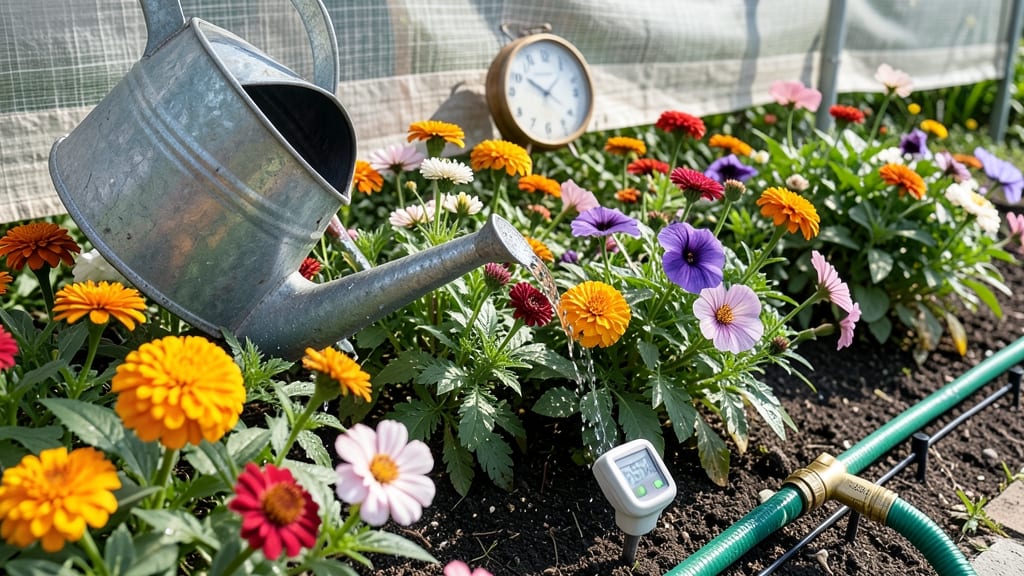
To water your garden in summer often enough keeps roots thriving without drowning them—something I learned the hard way after losing a row of tomatoes to root rot in a heatwave.
Summer heat turns your garden into a high-stakes survival game—water too little, and your plants wilt; too much, and you drown their roots. The secret? A soil-smart watering schedule that adapts to your plants' needs, not just the calendar.
Most Garden (General) 🌱 varieties need 1-2 inches of water per week, but that changes fast when temps hit 90°F+. Drip irrigation or soaker hoses deliver moisture straight to roots, cutting waste and keeping leaves dry to prevent fungal issues.
Below, I’ll break down how often to water by plant type, the best times to water for maximum efficiency, and how to spot when your garden is thirsty—or drowning. No guesswork, just science-backed tips to keep everything green and growing.
Summer watering frequency by plant type: a soil-based guide
Summer watering isn't about following a rigid schedule—it's about reading your soil and your plants. Unlike winter, when rainfall might suffice, summer demands deep, consistent moisture to combat evaporation and heat stress. The key?
Checking soil moisture 1-3 inches deep daily for thirsty plants and every 2-3 days for drought-tolerant varieties. Your tomatoes and peppers will beg for water daily, while lavender and rosemary can survive on weekly deep soaks.
Forget the "water every other day" rule—it’s a one-size-fits-none approach that fails most gardens. Instead, use your finger to test moisture: if the top 1 inch feels dry, it’s time to water.
For vegetables like cucumbers and lettuce, aim for 1-2 inches of water per week, while shrubs and trees need deep watering every 7-10 days to encourage root growth. Mulch acts as your secret weapon, locking in moisture and keeping roots cool.
Here’s the game-changer: drought-tolerant plants thrive on neglect, while high-need plants wilt without daily attention. Your succulents and yarrow can go weeks without water, but basil and marigolds need daily hydration to prevent bolting or wilting.
The solution? Group plants by their water needs and create micro-climates in your garden—place thirsty plants near drip lines and drought-resistant ones in sunnier, hotter spots.
Let’s talk real-world adjustments. If your garden is in a clay-heavy soil, water less frequently but deeper—clay holds moisture longer, while sandy soil drains quickly, demanding daily checks. Heatwaves? Increase frequency by 30-50% and water early in the morning to minimize evaporation.
And if you’re using container gardens, expect to water 2-3 times daily in summer, as pots dry out faster than in-ground beds.
Pro tip: Drip irrigation or soaker hoses deliver water directly to roots, reducing waste and fungal risks. Avoid overhead
5 Signs your garden needs water (and when to ignore the clock)
Summer heat makes it easy to overthink watering schedules, but your plants don’t follow a clock—they follow soil conditions. Ignoring visual cues can lead to wilting or root rot, both of which stress your garden.
Instead of guessing, watch for these 5 key signs that your plants are thirsty or drowning.
Before you grab the hose, check the soil moisture at the root level. A quick finger test—inserting your finger 1-2 inches deep—reveals whether your garden is parched or waterlogged.
Many gardeners make the mistake of watering based on time rather than plant needs, which can backfire during summer’s unpredictable weather.
- 1. Leaf Wilting: Drooping leaves by midday aren’t always a sign of thirst—check if they perk up in the evening. True wilting means roots aren’t absorbing water.
- 2. Soil Crusting: Hard, dry topsoil prevents water from reaching roots. Break it up with a fork or mulch to retain moisture.
- 3. Fungal Growth: Yellowing leaves with mold or spots signal overwatering. Water at the base, not overhead, to avoid fungal spores.
- 4. Root Exposure: Roots poking above soil mean they’re searching for water. Add organic mulch to keep soil cool and moist.
- 5. Dull, Crispy Edges: Brown leaf tips or edges indicate underwatering. Adjust your schedule to deep watering 2-3 times per week.
Morning dew or recent rain can trick you into thinking your garden is hydrated, but these signs are temporary. Always check the soil depth—surface moisture doesn’t mean roots are satisfied. For example, tomatoes and peppers need consistent moisture, while succulents thrive on neglect.
Overwatering is just as harmful as underwatering. If your container plants feel light when lifted or develop a sour smell, they’re waterlogged. Let the top inch of soil dry out between waterings, especially in clay pots, which retain excess moisture.
Adjust your watering routine based on plant type and weather. For instance, herbs like basil need frequent watering, while lavender prefers dry soil. Use a moisture meter for accuracy, especially in heatwaves or humid climates.
Remember, the clock isn’t your best friend—your garden’s health is. Pay attention to these signs, and you’ll avoid the guesswork that leads to wilted blooms or rotting roots. Happy gardening! 🌿