
Light Requirements
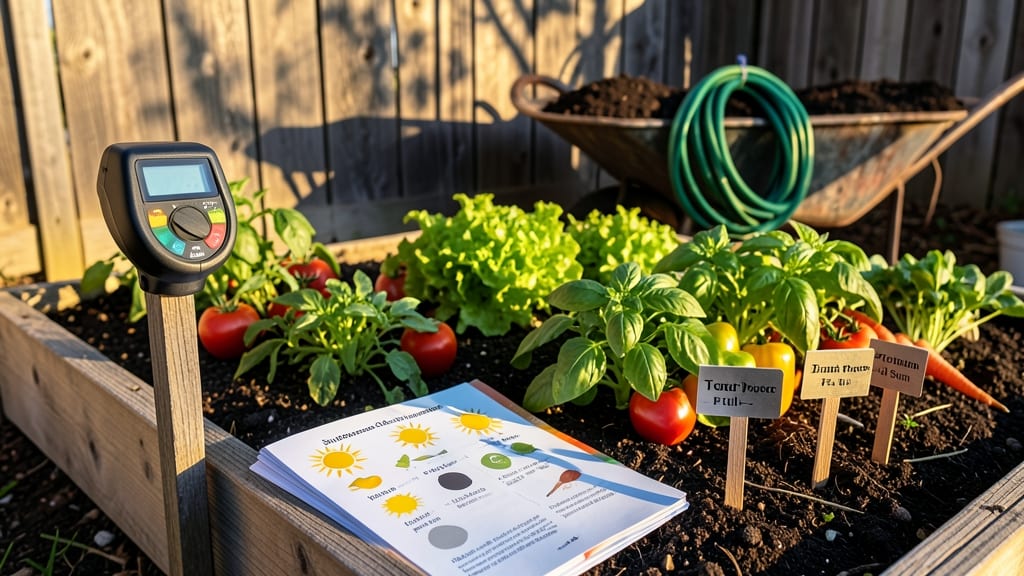
To get your vegetable garden 🥬 thriving, you need the right amount of sun — and most gardeners guess wrong, costing them time and harvests.
Picture this: you’ve spent weeks preparing your soil, planting with care, and watering faithfully, only to watch your tomatoes struggle or your lettuce bolt into bitter stems. The culprit? Too much or too little sun. Without knowing the exact hours each crop needs, you’re flying blind.
Some vegetables demand full sun (think tomatoes, peppers, and cucumbers), while others thrive in just partial shade (like leafy greens or radishes). I’ll break down the sun requirements for your favorite crops, show you how to measure sunlight in your garden, and share tricks to maximize growth—even in tricky spots.
By the end, you’ll know exactly where to place each plant for bigger yields and fewer headaches. Let’s turn your guesswork into a foolproof plan.

Vegetable sun requirements by crop type: full sun vs. partial shade breakdown
Understanding vegetable sun requirements is the foundation of a productive garden. Too little sunlight leads to leggy plants and poor yields, while too much can scorch delicate leaves. Most vegetables thrive with 6-8 hours of direct sunlight daily, but some adapt beautifully to partial shade or even dappled light.
Let's break down the exact sunlight needs for 15+ common crops so you can place them perfectly in your garden.
Before we dive into specifics, here's a critical rule: full sun means 6+ hours of direct sunlight, partial sun means 3-6 hours, and shade-tolerant crops handle under 3 hours.
Misjudging these can lead to stunted growth, bitter flavors, or even plant death. For example, tomatoes in shade will produce small, tasteless fruits, while lettuce in full sun bolts prematurely.
Now let's explore the sunlight spectrum for your favorite vegetables. The following table categorizes crops by their ideal light conditions, including growth warnings for incorrect exposure. Use this as your garden's sun exposure blueprint!