
How To
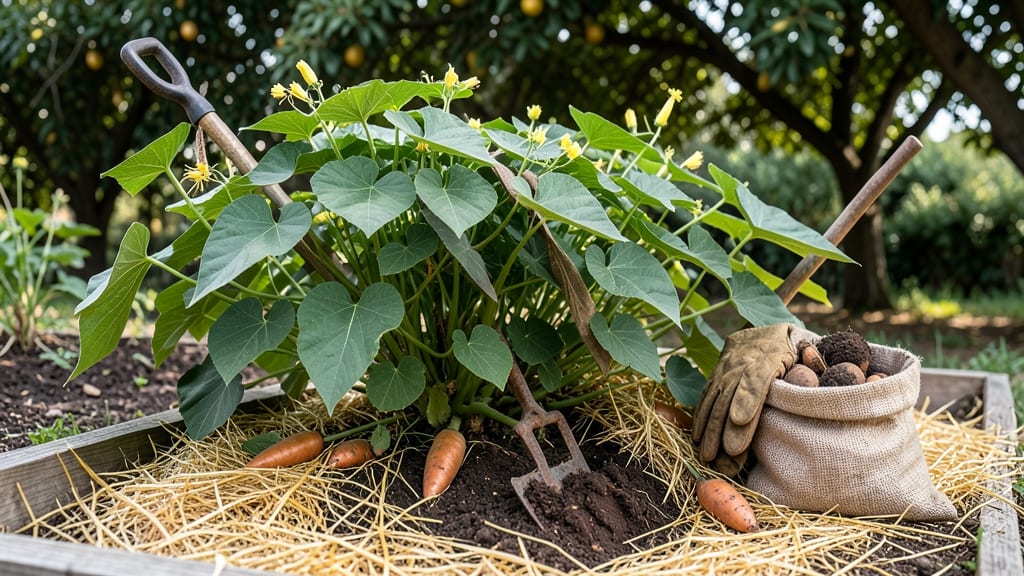
Harvesting sweet potatoes after 90 to 150 days is all about reading the plants—not just counting days.
Picture this: your 🍠 vines are turning golden, the soil cracks when you probe it, and the tubers feel rock-hard under your fingers. That’s the sweet spot—but miss it, and you’re left with bitter, woody roots. The key? Knowing when to pull the plug before the vines die back completely.
In USDA Zone 6a, where frost sneaks in by October, timing is everything. A late harvest means smaller yields, while digging too early leaves you with undersized tubers.
Below, I’ll walk you through the exact signs to watch—from leaf color shifts to soil checks—and how to adjust for your local growing season.
You’ll leave here with a clear plan to harvest at peak sweetness, plus troubleshooting tips for when Mother Nature throws a curveball. Ready to dig in?

Sweet potato harvest timeline: days to maturity by variety & climate zones
Sweet potatoes thrive in warm climates but demand precision timing—especially when balancing days to maturity with USDA zone temperatures. In Zone 7, your Beauregard may need 140 days, while in Zone 10, the same variety could mature in 90 days.
Heat accelerates growth, but heat stress after 95°F can stunt tubers. Let’s break down the variety-specific timelines and how to adjust for your microclimate.
Your harvest window hinges on two critical factors: variety genetics and average nighttime temperatures. For example, Purple sweet potatoes often mature 10–15 days slower than Jewel due to their slower vine growth.
Meanwhile, Zone 8–10 gardeners can push harvests earlier by 2–3 weeks compared to Zone 7 growers. Without proper timing, you risk woody tubers or frost damage before maturity.
| Variety | Days to Maturity (Zone 7) | Days to Maturity (Zone 8) | Days to Maturity (Zone 9-10) | Heat Stress Risk | Frost Sensitivity |
|---|---|---|---|---|---|
| Beauregard | 135–145 days | 120–130 days | 90–100 days | High (above 95°F) | Moderate (vines die at 32°F) |
| Jewel | 120–130 days | 105–115 days | 85–95 days | Moderate (above 90°F) | Low (tolerates light frost) |
| Purple | 140–150 days | 125–135 days | 100–110 days | High (above 92°F) | High (vines die at 30°F) |
| Georgia Jet | 110–120 days | 95–105 days | 80–90 days | Low (thrives in heat) | Moderate (vines yellow at 35°F) |
| Centennial | 100–110 days | 90–100 days | 75–85 days | Very Low (heat-tolerant) | Low (survives light frost) |
Notice how Centennial and Georgia Jet mature faster in Zone 10—these varieties are bred for heat tolerance and can handle 100°F+ days without stress. In contrast, Purple varieties lag behind due to their slower vine development.
If you’re in Zone 7 and planting Beauregard, start slips by May 1st to avoid first frost (typically October 15th) cutting your season short.
Temperature swings after 90 days can derail your harvest. For instance, a sudden drop below 50°F at night halts tuber growth, while consistent 80°F+ days speed up maturity. Use row covers in Zone 7 to extend the season by 2–3 weeks if frost threatens.
My Zone 8 garden once lost half its Jewel crop when an early September frost hit—always monitor your local frost date.
For Zone 9–10 growers, the challenge shifts to heat stress. Sweet potatoes need warm soil (60°F+) to develop properly, but prolonged 100°F+ days cause blossom-end rot and shriveled tubers. Mulch with straw or black plastic to keep soil temps stable.
I’ve seen Beauregard tubers in Zone 10 mature in just 85 days with proper mulching, while unmulched beds took 110 days.
Pro tip: Track your cumulative heat units (growing degree days) using a garden thermometer. Sweet potatoes need 1,200–1,500 GDDs to mature. In Zone 7, this usually means August
3 Key signs it’s time to harvest (leaf color, soil test & vine condition)
Knowing when to harvest your sweet potatoes is all about reading three key signals: leaf color, soil conditions, and vine health. Ignore these cues, and you might end up with woody tubers or shriveled roots.
The good news? These signs are easy to spot once you know what to look for.
First, pay attention to the foliage. When the vines turn yellow and start dying back naturally, it’s a strong indicator that the tubers below are ready. This process usually begins around 120 days after planting, but cooler climates may push it closer to 140 days.
Don’t confuse this with disease—healthy yellowing is gradual, not sudden.
- 🌿 Leaf Color Shift: Vines turn bright yellow and crispy—this means tubers are fully mature.
- 🌡️ Soil Loosening: Gently probe soil—if tubers slip free with minimal effort, they’re ready. Resist digging if soil feels tight.
- 🍠 Vine Dieback: 90% of vines brown and die—harvest within 1–2 weeks to avoid spoilage.
Next, test the soil around your plants. Use a garden fork to gently loosen the top 6 inches of soil. If the tubers slide out easily and aren’t still attached to the roots, they’re harvest-ready.
If the soil feels compacted or the tubers resist, wait another 7–10 days. Overripe sweet potatoes develop a hard, woody texture, so timing is everything.
Finally, check the vines themselves. When 90% of the foliage turns brown and crispy, it’s your final green light. This usually happens 2–3 weeks after the leaf color shift.
If frost threatens before this stage, harvest immediately—even if the tubers aren’t fully sized. Frost-damaged vines won’t recover, but the tubers can still cure properly.
To avoid damaging your sweet potatoes while digging, use a wide garden fork to gently lift the soil away from the base of the plant. Never pull or yank—this can bruise the tubers.
Once unearthed, let them cure in warm, dry conditions for 10 days to develop their sweet flavor and thick skin.
Remember: Premature harvest leads to small, watery tubers, while overripe ones turn tough and bitter. Master these three signs, and you’ll enjoy a perfect harvest every time—no guesswork required! 🍠