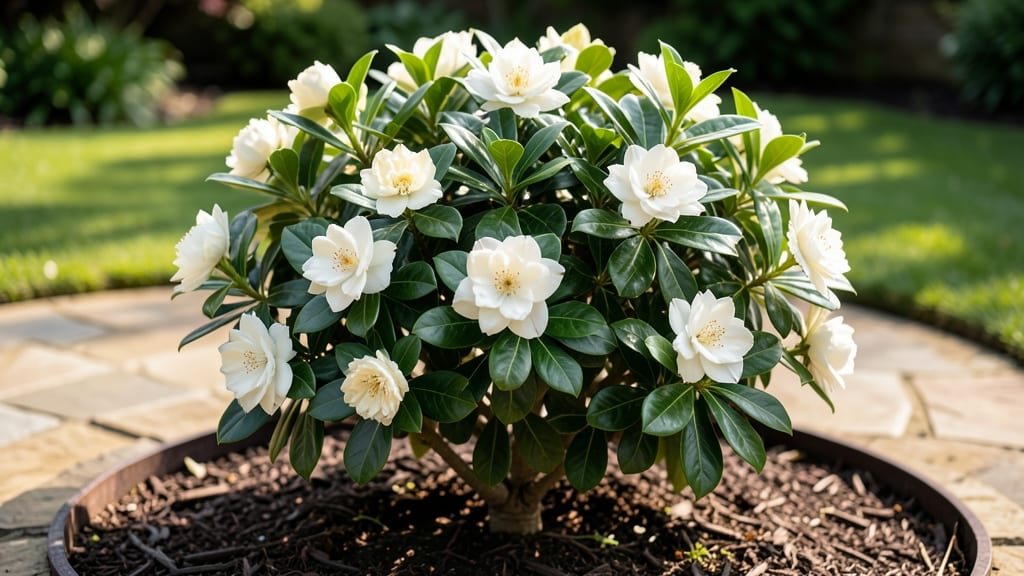
Gardenia bushes grow to be between 2 and 6 feet tall, depending on the variety and growing conditions, with a spread that can reach up to 4–5 feet wide—so knowing their size is key to planning your garden.
If you're dreaming of fragrant gardenias but wondering whether they’ll sprawl across your backyard or stay neatly contained in a pot, their mature size matters more than you think.
For example, the classic Gardenia jasminoides 🌸 can hit 5–6 feet with proper care, while dwarf varieties like 'Radicans' stay compact at just 2–3 feet. Sunlight, soil acidity, and pruning all play a role in how big they get.
Below, I’ll break down the size ranges by popular varieties, how to control growth with pruning, and which types work best for small spaces or large landscapes.
Gardenia bush mature size by popular variety (with growth charts)
Choosing the right gardenia variety isn’t just about stunning blooms—it’s about knowing how big do gardenia bushes get to fit your space. Some varieties stay compact enough for patio pots, while others become towering shrubs.
Let’s break down the mature size of the most popular gardenia types so you can plan your garden layout with confidence.
Gardenia bushes typically reach mature heights between 2 to 6 feet, but their spread can vary dramatically. Dwarf varieties like 'Radicans' stay under 3 feet tall, while standard types like 'Veitchii' can soar to 8 feet or more.
Understanding these differences helps you select the perfect variety for your garden design, whether you’re aiming for a fragrant hedge or a showstopping focal point.
Below is a detailed gardenia bush size chart featuring 10+ varieties, including their mature height, width, and growth habits. This will help you visualize how each variety will look in your landscape or container garden.
🌿
| Variety |
Mature Height |
Mature Width |
Growth Habit |
Best For |
| 'Kleim’s Hardy' |
3–4 ft |
3–4 ft |
Upright, bushy |
Containers, small gardens |
| 'Radicans' |
2–3 ft |
3–4 ft |
Trailing, mounding |
Hanging baskets, borders |
| 'Veitchii' |
6–8 ft |
4–6 ft |
Tall, upright |
Privacy screens, large gardens |
| 'Fortuniana' |
4–5 ft |
4–5 ft |
Bushy, rounded |
Hedges, foundation plantings |
| 'Mystery' |
3–4 ft |
3–4 ft |
Compact, bushy |
Containers, urban gardens |
| 'Kleim’s Hardy Gold' |
3–4 ft |
3–4 ft |
Upright, dense |
Patio pots, mixed borders |
| 'Augusta' |
5–6 ft |
4–5 ft |
Tall, spreading |
Backyard focal points |
| 'Cleopatra' |
4–5 ft |
How to control gardenia bush size: pruning and training tips
If your gardenia bushes are growing taller than your vision for your garden, don’t worry—you’re not stuck with an overgrown shrub. With the right pruning techniques and training methods, you can shape your gardenias to fit your space perfectly.
The key is timing and precision, as gardenias bloom on new wood, meaning they need a gentle touch to keep flowering while controlling size.
Understanding your gardenia’s growth habit is essential. Most varieties, like the popular Gardenia jasminoides, naturally reach 4-6 feet tall and wide, but with strategic pruning, you can keep them compact or even train them into a small tree shape.
Whether you’re working with a dwarf variety or a standard bush, these methods will help you maintain the size you desire without sacrificing those fragrant blooms.
- Step 1: Prune After Flowering
Wait until your gardenia finishes blooming in late spring or early summer. This ensures you’re not cutting off next year’s flower buds, which form on new growth.
- Step 2: Remove Dead or Weak Growth
Use sterilized pruning shears to trim any dead, diseased, or crossing branches back to the nearest healthy node. This improves airflow and plant health.
- Step 3: Shape the Bush
Cut back overgrown branches by up to one-third of their length to encourage bushier growth. Focus on branches that are growing outward to maintain a rounded shape.
- Step 4: Pinch New Growth
For compact gardenias, pinch back the tips of new shoots in early summer. This encourages branching and a fuller, smaller plant.
- Step 5: Restrict Root Growth (For Pots)
If growing in a container, use a root-restricting pot or prune roots lightly during repotting to control overall size.
- Step 6: Avoid Heavy Pruning in Fall
Never prune heavily in late fall or winter, as this can reduce flowering and stress the plant during dormancy.
For small-space gardeners, consider training your gardenia into a standard tree shape. Start by selecting one central stem and removing lower branches to create a trunk. Prune side branches to encourage a rounded canopy, and avoid cutting back the central leader to maintain height control.
This method works best with dwarf varieties or young plants.
If your gardenia is already too large, don’t panic. You can still gradually reduce its size over 2-3 years by pruning back one-third of the oldest growth each year.
This approach minimizes shock and allows the plant to recover while slowly shrinking. Always use sharp, clean tools to prevent damage and disease.
Remember, consistent care is key. Combine pruning with proper watering, fertilizing, and acidic soil to keep your gardenia healthy and manageable. With patience, your gardenia will thrive in the perfect size for your garden—whether that’s a potted patio plant or a scented hedge.
★★★★★4.7(1 review)
|