
Fertilization
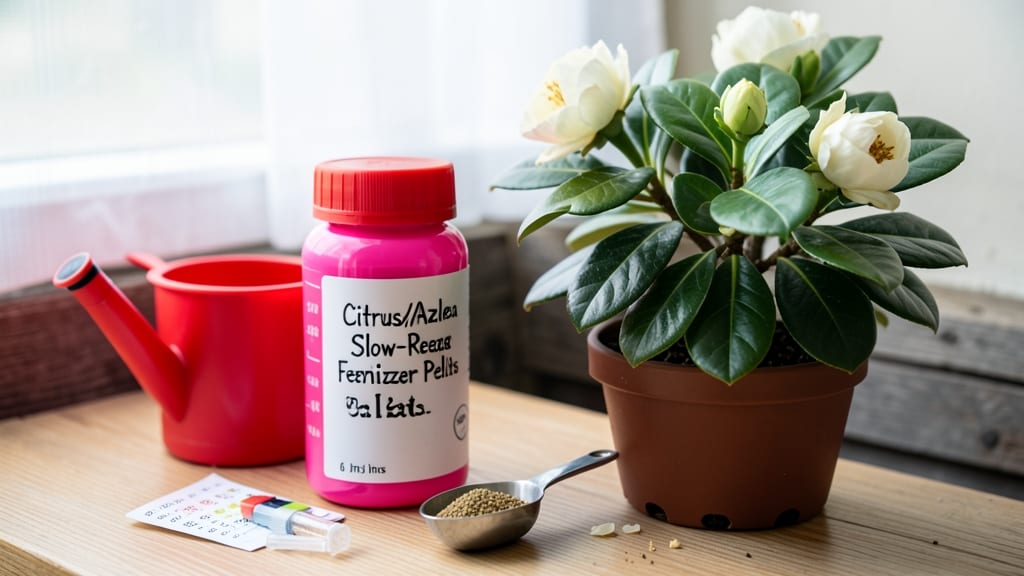
Struggling to keep your potted gardenias blooming vibrantly? The right fertilizer can transform your struggling plant into a fragrant, lush beauty—without risking root burn or overfeeding.
Most gardeners assume any balanced fertilizer will work, but gardenias crave acid-loving nutrition with a specific NPK ratio to fuel their growth. Too much nitrogen can mean fewer flowers, while too little phosphorus stunts those showstopping blooms.
In this guide, you’ll discover the best fertilizer types for potted gardenias, how often to feed them, and how to spot signs of over- or under-feeding before it’s too late.

Best NPK ratios for potted gardenias: what to look for in fertilizers
Potted gardenias thrive when you decode the NPK ratio on fertilizer labels—those three numbers represent nitrogen (N), phosphorus (P), and potassium (K), respectively. For gardenias, the right balance promotes fragrant blooms and healthy foliage, while the wrong mix can lead to leaf burn or sparse flowering.
Since gardenias are acid-loving plants, they also need iron-rich fertilizers to prevent chlorosis (yellowing leaves). Let’s break down what to look for and how to adjust for seasonal needs.
Gardenias in containers are especially sensitive to over-fertilization because their roots are confined. A balanced NPK ratio like 6-6-6 or 8-3-9 works well, but you’ll want to tweak this based on your plant’s current growth stage.
For example, a higher phosphorus (middle number) ratio, like 6-12-6, encourages more blooms, while a higher nitrogen (first number) ratio, like 10-5-5, supports leafy growth. Always dilute synthetic fertilizers to half-strength to avoid root damage.
Here’s a quick guide to help you choose the right fertilizer for your potted gardenias, including seasonal adjustments and soil type considerations:
If your gardenia’s soil is sandy or fast-draining, nutrients wash away quickly, so opt for a slow-release fertilizer or apply liquid feeds more frequently. For clay-heavy soils, which retain moisture and nutrients longer, reduce feeding to every 6-8 weeks to prevent salt buildup.
Always water your potted gardenia thoroughly before and after fertilizing to help distribute nutrients evenly and flush out excess salts.
For gardenias in smaller pots (under 5 gallons), use half the recommended dose of fertilizer to avoid overloading the root system. Larger containers (10+ gallons) can handle full-strength applications, but monitor your plant’s response closely.
If you notice crispy leaf edges or stunted growth, flush the soil with water to remove excess salts. Organic options like fish emulsion or worm castings are gentler and improve soil structure over time.
Seasonal adjustments are key: in spring, focus on a balanced NPK ratio to encourage new growth, while in summer, shift to a phosphorus-heavy formula to support blooming.
Avoid fertilizing in fall and winter when your gardenia is dormant. Instead, focus on maintaining consistent moisture and moderate humidity to keep the plant healthy until spring.
One common mistake is assuming that more fertilizer equals more blooms. Over-fertilizing can actually reduce flowering by encouraging excessive leaf growth at the expense of buds. If your gardenia isn’t blooming, check the NPK ratio—a low phosphorus content is often the culprit.
Switch to a bloom-specific fertilizer and reduce nitrogen to redirect energy toward flower production. Pair this with regular deadheading
Organic vs. synthetic fertilizers for gardenias: pros, cons, and application tips
Choosing the right fertilizer for your potted gardenias can feel overwhelming, especially when deciding between organic and synthetic options. Both have unique benefits, but your gardenia's acid-loving nature and container limitations require careful consideration.
I've experimented with both in my own collection of fragrant gardenias, and here's what I've learned about balancing nutrients without risking root burn.
Potted gardenias thrive when their soil stays consistently moist but well-draining, which means nutrients can leach out faster than in-ground plants. This makes slow-release fertilizers particularly valuable, whether organic or synthetic.
I've found that organic options like composted manure or fish emulsion provide steady nutrition, while synthetic blends offer precise NPK ratios tailored to blooming phases.
Organic Fertilizers for Gardenias in Pots
- Improves soil structure over time
- Releases nutrients gradually (reduces burn risk)
- Supports beneficial microbes in soil
- Safe for earthworms and beneficial insects
- Requires more frequent application
- Can smell unpleasant (especially fish emulsion)
- Slower results compared to synthetics
- May attract pests if overused
- Composted manure (chicken or cow)
- Fish emulsion (high in nitrogen)
- Worm castings (gentle nutrient boost)
- Coffee grounds (acidifies soil)
- Mix 1 tbsp per gallon of pot
- Apply every 4-6 weeks in growing season
- Water thoroughly after application
- Avoid overloading small pots
Synthetic fertilizers offer immediate results and precise nutrient control, which is why I reach for them during my gardenias' budding phase when they need that extra phosphorus push. Look for balanced NPK ratios like 6-6-6 or 8-3-9, specifically formulated for acid-loving plants.
These provide the phosphorus boost needed for vibrant blooms without overwhelming your potted plant's delicate root system.
One of my favorite synthetic options is a slow-release granular fertilizer mixed into the top inch of soil. This prevents nutrient spikes while maintaining consistent growth. I apply it in early spring and again after the first flush of blooms.
For liquid synthetics, I dilute them to half-strength to avoid salt buildup in container soils, which can actually harm your gardenia's roots over time.
When applying either type, timing is everything. I always fertilize in the early morning after watering, which gives the roots time to absorb nutrients before the heat of the day.
During summer's peak growth, I reduce feeding to every 6-8 weeks to prevent stress, and I completely stop fertilizing by late summer to prepare the plant for its dormant winter period.
Remember that potted gardenias are particularly sensitive to overfertilization, which can manifest as yellowing leaves, stunted growth, or even leaf drop. If you notice these signs, flush the soil with water immediately to leach out excess salts.
I've learned this the hard way—once, my gardenia's leaves curled up like little boats after I overdid it with a synthetic bloom booster! 🌸