
Watering
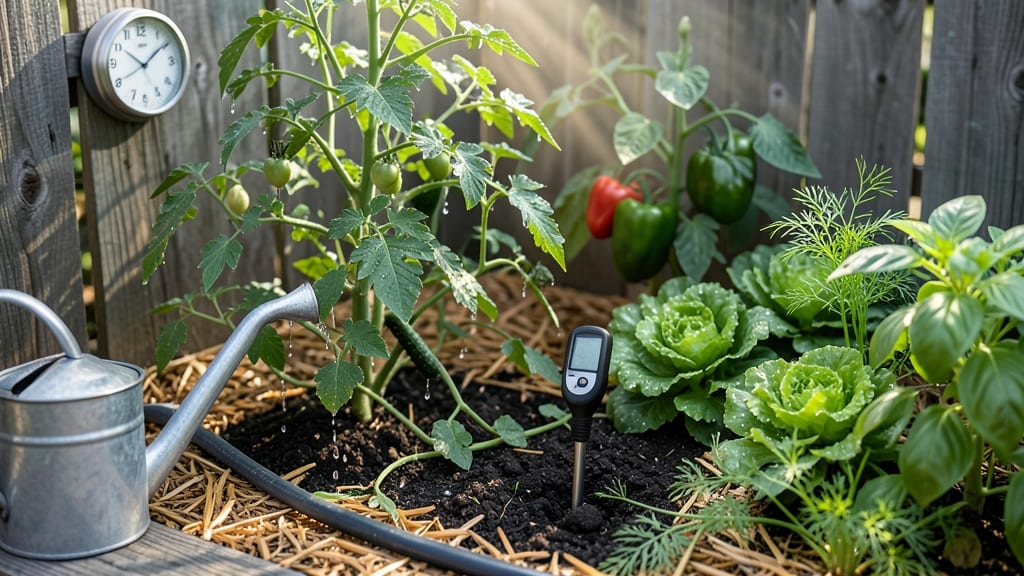
The best time to water your vegetable garden is early morning 🥬—before the sun climbs high enough to dry the soil or trigger fungal growth.
Struggling to keep your vegetable garden thriving? The timing of your watering routine could be making all the difference—especially when it comes to root development and plant health.
Morning watering gives roots a chance to absorb moisture before the heat of the day kicks in, while also reducing evaporation and preventing pesky diseases like powdery mildew.
In this guide, I’ll break down the science behind morning watering, how to adjust your schedule based on your plants and climate, and the common mistakes that might be holding back your harvest.
Why morning watering boosts root growth and plant health
If you’ve ever wondered why your tomatoes or peppers seem to thrive more during certain watering times, the answer lies in the science of root development and plant physiology.
Watering in the morning isn’t just a habit—it’s a strategic move that maximizes nutrient absorption and minimizes stress on your plants. Let’s break down why this timing makes all the difference for your vegetable garden.
One of the biggest advantages of morning watering is reduced evaporation. When you water early, the soil retains moisture longer, giving roots time to absorb water before the sun intensifies. This is especially critical during hot summer months when water can evaporate up to 30% faster by midday.
By watering before 10 AM, you ensure your plants have the hydration they need to grow strong and healthy.
Morning watering also helps prevent fungal diseases like powdery mildew or blight. Wet leaves at night create a perfect environment for pathogens to thrive, as humidity levels rise and temperatures drop.
When you water in the morning, foliage dries quickly, reducing the risk of leaf infections that can stunt growth or kill plants entirely. This is a game-changer for leafy greens like spinach or kale, which are particularly susceptible to fungal issues.
Here’s how morning watering directly impacts root growth: Roots are most active in the morning, absorbing water and nutrients to fuel photosynthesis. When you water at this time, you’re essentially giving your plants a head start for the day.
Studies show that plants watered in the morning can absorb up to 20% more nutrients compared to those watered in the evening. This efficiency translates to stronger stems, larger leaves, and better yields.
Another critical factor is water stress during peak sunlight. When plants are dehydrated, they close their stomata (tiny pores on leaves) to conserve water, which also limits their ability to take in carbon dioxide for photosynthesis.
Morning watering ensures your plants stay hydrated throughout the day, allowing them to photosynthesize efficiently and grow at their full potential. This is particularly important for fruiting plants like cucumbers or eggplants, which require consistent moisture to produce high-quality harvests.
| Time of Day | Evaporation Rate | Fungal Risk | Root Absorption | Best For |
|---|---|---|---|---|
| Morning (5-9 AM) | Low (30% loss) | Low (leaves dry quickly) | High (roots active) | All vegetables |
| Midday (10 AM-4 PM) | High (50%+ loss) | Medium (leaves stay wet) | Low (roots stressed) | Emergency only |
| Evening (5-9 PM) | Low (30% loss) | High (humidity + dark) | Medium (roots less active) | Avoid for most plants |
| Late Night (9 PM-1 AM) | Low (minimal loss) | Very High (fungal breeding) | Low (roots dormant) | Never recommended |
For root vegetables like carrots or beets, morning watering is non-negotiable. These crops rely on consistent moisture to develop their edible roots without cracking or splitting. If the soil dries out too quickly, the roots can become woody or misshapen.
By watering in the morning, you create a stable moisture environment that encourages uniform growth and prevents these common issues.
Even the soil temperature plays a role in why morning watering works best. Cooler morning soil allows water to penetrate deeper and reach the root zone more efficiently.
In contrast, watering during the heat of the day can cause the water to pool on the surface, leading to runoff and wasted water. This is particularly important in sandy soils, which drain quickly and require frequent, deep watering to keep roots hydrated.
If you’ve ever noticed your plants wilting by midday, it’s often a sign of water stress caused by poor timing. Morning watering ensures your plants have the reserves they need to withstand the heat and still produce energy through photosynthesis.
This is especially true for heat-loving plants like peppers or okra, which can bolt or produce bitter fruits if they’re not consistently hydrated.
Pro tip: Pair your morning watering routine with a layer of mulch to further reduce evaporation and keep soil temperatures stable.
Organic mulches like straw or wood chips can help retain moisture for up to 2-3 extra days, giving your plants even more time to absorb water before the next watering session. This simple addition can make a world of difference in drought-prone areas or during hot summer months.
So next time you’re reaching for your watering can, remember: the clock is your ally. Watering in the morning isn’t just about convenience—it’s about giving your veget
Optimal morning watering schedule by vegetable type
Not all vegetables thrive on the same watering schedule—what works for leafy greens might stress root crops, while fruiting plants need extra hydration during peak production. The key is understanding how each plant type absorbs water and when they need it most.
In arid climates, morning watering prevents rapid evaporation, while humid zones require adjustments to avoid fungal issues. Let’s break down the perfect morning routine for your garden’s star players.
Morning watering between 6 AM and 10 AM gives roots time to soak up moisture before the heat of the day. However, temperate climates with cooler mornings might extend this window to 11 AM, while hot desert regions demand earlier watering by 5 AM. The goal?
Keep soil consistently moist without drowning roots or inviting pests. Let’s dive into the specifics for your garden’s most common crops.
- 🥬 Leafy Greens (Lettuce, Spinach, Kale) Water early morning (6-8 AM) for shallow roots. Avoid wetting leaves to prevent fungal diseases. Humid climates: Water by 7 AM; arid zones: Water by 5 AM.
- 🥔 Root Crops (Carrots, Potatoes, Beets) Water deeply by 8 AM to encourage root growth. Temperate zones: 1-2 inches of water; hot climates: Add mulch to retain moisture.
- 🍅 Fruiting Plants (Tomatoes, Peppers, Cucumbers) Water consistently by 9 AM during fruiting. Focus on soil, not leaves to avoid blossom-end rot. Humid areas: Space watering to 2 days apart.
- 🌶️ Herbs (Basil, Cilantro, Parsley) Water lightly by 7 AM—herbs hate soggy soil. Drought-tolerant herbs like rosemary need less frequent watering (every 3-4 days).
- 🌡️ Climate Adjustments Arid: Water before 6 AM; Humid: Water by 8 AM; Temperate: 6-10 AM window works best.
For leafy greens, shallow roots mean frequent but light watering. I water mine at 6 AM to keep the top inch of soil moist without oversaturating. In humid climates, this prevents mildew, while arid zones require mulching after watering to lock in moisture.
A quick check with your finger—if the top inch feels dry, it’s time to water.
Root crops like carrots and potatoes need deep watering to prevent splitting. I aim for 1-2 inches of water per week, delivered in the morning so roots can expand without competition from weeds.
In hot summers, I water by 5 AM to reduce evaporation losses. A drip irrigation system helps maintain consistent moisture without wetting foliage.
Fruiting plants such as tomatoes and peppers demand extra attention during their productive phase. I water these by 9 AM to support heavy fruit loads, avoiding evening watering to prevent blossom-end rot.
In temperate zones, a soaker hose works wonders, delivering water directly to the roots while keeping leaves dry.
Herbs often get overlooked, but they’re just as picky about water. I water basil and cilantro lightly by 7 AM, ensuring the soil stays evenly moist but never soggy.
Drought-tolerant herbs like rosemary or thyme can wait until every 3-4 days, but I still water in the morning to avoid fungal issues.
Adjusting your watering schedule based on climate and plant type is the secret to a thriving garden. Whether you’re battling 100°F heat or 90% humidity, morning watering sets the stage for healthy roots, vibrant foliage, and bountiful harvests.
Start with these guidelines, then tweak as you observe your plants’ responses—your garden will thank you!