
Trees
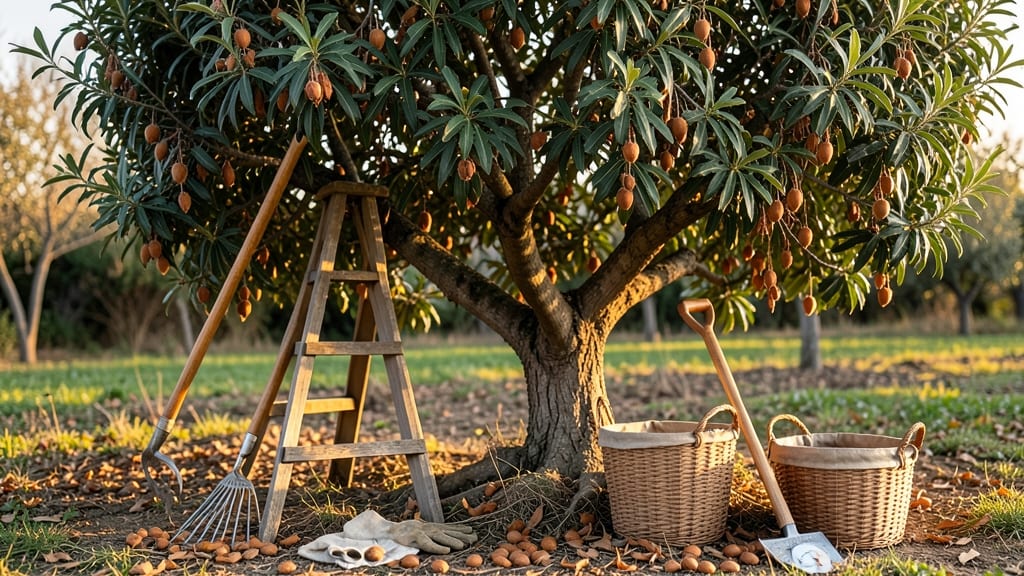
Timing the almond tree harvest time correctly means catching the nuts when the hull splits open naturally and the nut inside is fully developed 🌰 — usually between late summer and early fall.
If you’ve ever wondered why your almond tree’s branches are suddenly littered with shells but no nuts—or when to expect that perfect harvest—timing is everything. Miss the window, and you’ll lose your crop to pests, birds, or over-ripening.
In USDA Zone 6, where most home growers plant their trees, the harvest typically falls between August and October, but the exact timing depends on your tree’s maturity and local climate.
A young tree may take 3-5 years to produce its first harvest, while mature trees yield consistently once they reach 10+ years old.
Below, I’ll break down the key signs to watch for—like hull cracking, nut firmness, and leaf color—plus regional variations and the best harvesting methods to ensure you don’t miss a single nut.

How to determine the exact almond tree harvest time by shell color & cracking
Timing your almond harvest is an art that combines observation, patience, and a little bit of science. The moment your tree's hulls begin cracking and nuts start falling isn't random—it's a precise signal from nature.
I've learned that missing this window by even a few days can mean softer nuts, higher pest attraction, or even mold growth. The key lies in three visual cues: shell color changes, cracking patterns, and nut maturity. Let's break down how to read these signs like a pro.
First, focus on the shell color transformation. Immature almond hulls are bright green, almost neon in sunlight. As they mature, they transition to a dull greenish-brown, and finally to a tan or light brown when fully ripe.
This color shift happens gradually over weeks, so check your tree weekly starting in late summer. The exact timing varies by climate zone—California trees often ripen earlier (August) than those in cooler Mediterranean regions (September-October).
Here's how to spot the perfect moment using these three critical indicators:
| Harvest Indicator | Ready Stage | Not Ready Stage | Action |
|---|---|---|---|
| Shell Color | Tan/brown | Green or greenish-brown | Harvest within 3-5 days |
| Cracking Pattern | 30-50% open | Closed or <10% open | Check daily for progress |
| Nut Maturity | Firm, no soft spots | Soft or shriveled | Wait 1-2 weeks |
| Leaf Condition | Brown and falling | Green and healthy | Monitor for color changes |
| Ground Conditions | Dry surface | Moist soil | Reduce watering |
The cracking pattern is your most reliable indicator. When you see 30-50% of hulls splitting open, that's your green light.
I once waited until 70% were open on my Nonpareil variety, and while the nuts were edible, they were softer and had higher moisture content—making them more prone to mold.
The ideal moment is when you can gently shake a branch and hear (and see) nuts rattling and falling freely. This usually happens when the hulls have split enough to release the nuts but haven't yet dried out completely.
Nut maturity is often overlooked but crucial. A truly ripe almond will be firm to the touch with no give when squeezed gently. If you press a nut and feel softness or hear a hollow sound, it's overripe. I test maturity by cracking open 3-5 nuts from different branches.
The kernel inside should be plump, white, and fully developed. If it's shriveled or discolored, you've missed your window. Varieties like Butte and Price tend to mature slightly earlier than Carmel or Fritz, so adjust your expectations accordingly.
Climate plays a surprising role in harvest timing. In hot, dry regions like California's Central Valley, almonds ripen faster due to accelerated hull drying. I've seen harvests start as early as late July in these areas. Conversely, in cooler coastal climates or Mediterranean zones, the process stretches into October.
Even within the same region, microclimates matter—trees in sunny, sheltered spots will ripen 1-2 weeks ahead of those in windy or shaded areas. Pay attention to your local temperature swings too; sudden heat waves can speed up ripening dramatically.
One common mistake I see is assuming all nuts on a tree ripen at once. They don't! Almonds mature gradually from the bottom up, so you'll often see the lowest branches harvesting first. This staggered ripening means you'll need to harvest in multiple passes over 2-3 weeks.
I mark branches with colored flags when they first show signs of readiness, then return every few days to collect the mature nuts. This method prevents over-maturity while ensuring you don't miss any early-ripening nuts.
Pro tip: Combine visual cues with a simple taste test. Crack open a nut and sample the kernel. A ripe almond has a sweet, nutty flavor with no bitterness. If it tastes bland or bitter, it's not ready.
This works especially well for heirloom varieties where flavor profiles vary widely. I've used this method to distinguish between Mission almonds (sweeter) and Texas almonds (more bitter when unripe).
Remember that early morning harvests yield the best quality nuts. The cooler temperatures and higher humidity reduce stress on the tree and prevent the nuts from drying out too quickly. I always harvest between 6 AM and 9 AM, using a <
Step-by-step guide: when and how to harvest almonds for maximum yield
Harvesting almonds at the right time ensures you get the highest quality nuts with minimal waste. The key is watching for the hull to split naturally—this signals the nut inside is fully mature.
If you harvest too early, the nuts won’t be fully developed, and if you wait too long, they’ll fall to the ground, attracting pests or spoiling.
Timing also depends on your climate zone. In warmer regions like California, harvests typically begin in early September, while cooler zones may see harvests as late as October. Always check the hull’s color and texture—it should turn from green to brown and leathery before harvesting.
Watch for the hull to crack open and turn brown. Gently shake branches—if nuts rattle inside, they’re ready.
Pick nuts between 6 AM and 9 AM when temperatures are cool. This prevents the hull from drying out too quickly.
For small trees, hand-pick with gloves. For larger trees, use a harvesting rake or pole pruner to avoid damaging branches.
Stop harvesting once 50% of nuts have fallen naturally. Over-mature nuts are more prone to mold or insect damage.
Spread nuts in a single layer in a dry, shaded area for 1-2 weeks. Once fully dry, store in airtight containers in a cool, dark place.
One common mistake is harvesting when the hull is still partially green. Immature nuts won’t crack properly and may not store well. Always test a few nuts by tapping them—if they sound hollow, they’re ready.
For mechanical harvesting, use a tarp beneath the tree to catch fallen nuts, but avoid shaking the tree too hard to prevent branch damage.
After harvest, clean the tree by removing any remaining hulls or fallen nuts. This reduces pests and diseases for next season. If you’re unsure about timing, observe neighboring trees or check local harvest reports for your region, as weather patterns can shift harvest dates by a week or more.
With the right technique, you’ll enjoy a bountiful almond harvest that’s perfect for roasting, baking, or snacking straight from the shell. Just remember: patience and timing are your best tools in the garden! 🌰