
Fertilization
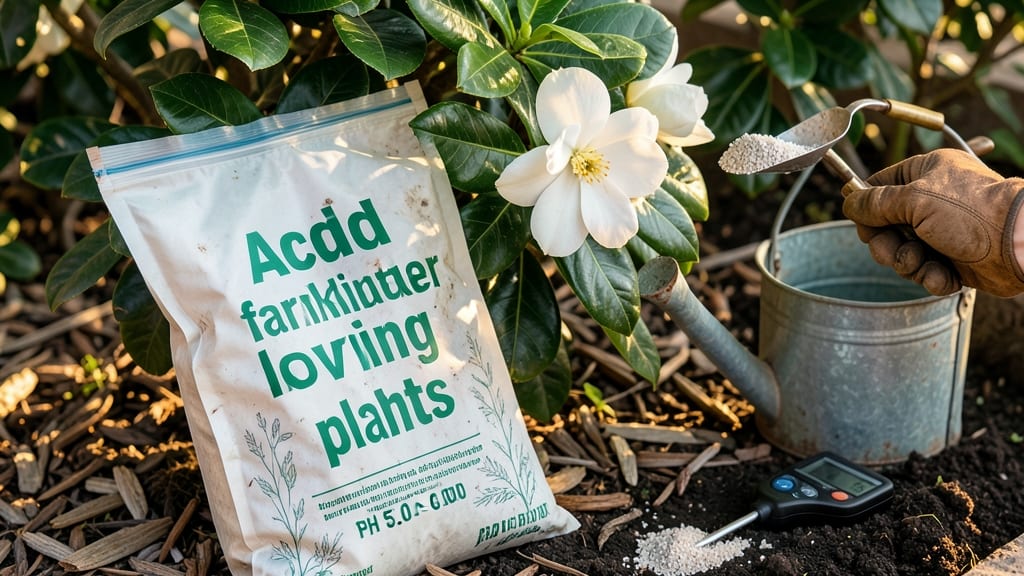
Using acid fertilizer for gardenias is the game-changer between sparse buds and lush, fragrant blooms year-round—because these tropical beauties demand acidic soil to thrive.
If you’ve ever watched your gardenias 🌸 struggle to produce flowers, even with plenty of sun and water, the issue is likely your soil’s pH. Without the right acid fertilizer, their roots can’t access the nutrients they need, leaving you with leggy stems and few blooms.
Gardenias in USDA Zones 9-11 need a consistent pH between 4.5 and 5.5, which means synthetic or organic acid fertilizers are non-negotiable. The good news? With the right approach, you can transform your gardenias into a fragrant, blooming powerhouse.
In this guide, I’ll walk you through how to choose and apply acid fertilizer correctly—plus organic alternatives, seasonal timing, and how to spot when your soil is just right.

How acid fertilizer adjusts soil pH for optimal gardenia growth
Gardenias are finicky about their soil—too alkaline, and their glossy leaves and fragrant blooms disappear faster than a morning dew. The magic number? A pH range of 4.5 to 5.5, where acid fertilizers shine.
These fertilizers don’t just lower pH; they deliver essential nutrients like nitrogen, phosphorus, and potassium while keeping the soil hospitable for gardenia roots. Without the right balance, your plants might look healthy but produce fewer flowers or none at all.
Think of acid fertilizer as a pH-tuning tool—it slowly releases acids (like sulfuric acid from elemental sulfur) that react with soil minerals to lower alkalinity. Unlike quick fixes, these fertilizers also feed your gardenias over time, preventing nutrient deficiencies that stunt growth.
For example, iron sulfate not only acidifies but also supplies iron, a critical nutrient gardenias need for vibrant foliage. Without it, yellowing leaves (chlorosis) become a common problem.
Before diving into fertilizers, you’ll need to test your soil’s pH. A simple soil pH test kit (available at garden centers) or a digital meter can reveal whether your gardenias are thriving or struggling.
Aim for the 4.5–5.5 range—any higher, and your plants may reject nutrients, even if they’re present. If your soil is already acidic but lacks nutrients, a balanced acid fertilizer can bridge the gap without over-acidifying.
Now, let’s break down how different acid fertilizers work. Each has its own mechanism for pH adjustment and nutrient delivery, making some better suited for specific needs. For instance, elemental sulfur is a slow-release acidifier, ideal for long-term pH correction, while peat moss adds organic matter and acidity quickly.
Understanding these differences helps you choose the right product for your gardenias’ stage of growth.
Elemental sulfur is my top recommendation for long-term pH adjustment because it releases acid gradually, avoiding sudden pH swings that can shock gardenia roots. Sprinkle it around the base of your plants in early spring, then water it in.
Over time, it converts to sulfuric acid, lowering pH without overwhelming your plants. For example, 1 pound of sulfur per 100 square feet can drop soil pH by about 1 point over a season—perfect for fine-tuning.
If your gardenias show signs of iron deficiency (yellow leaves with green veins), iron sulfate is a game-changer. It not only acidifies the soil but also provides iron directly, which gardenias can’t access in alkaline conditions.
Apply it in early spring or whenever you notice chlorosis creeping in. Just be cautious—too much can make the soil too acidic, so follow package rates closely.
Organic options like peat moss or cottonseed meal are fantastic for gardeners who prefer natural amendments. Peat moss, for instance, adds acidity immediately while improving soil structure, making it ideal for newly planted gardenias or containers where soil can compact.
Mix it into the top 6 inches of soil before planting, and you’ll give your gardenias a nutrient-rich, acidic foundation from day one.
Timing is everything when
Best acid fertilizers for gardenias: organic vs. synthetic options
Gardenias demand acidic soil (pH 4.5-5.5) to thrive, and choosing the right acid fertilizer makes all the difference. I’ve tested both organic and synthetic options to help you pick what works best for your garden.
Organic choices like cottonseed meal and pine bark fines feed soil long-term, while synthetic options like Miracle-Gro Azalea blend deliver quick results. Let’s break down the pros, cons, and best application methods for each.
For organic acid fertilizers, I recommend starting with cottonseed meal—it’s rich in nitrogen and slowly lowers pH while improving soil structure. Another great option is pine bark fines, which mimics the natural acidic environment of gardenias’ native habitats.
These organic choices are eco-friendly and safe for composting, but they take 4-6 weeks to show results. If you’re in a hurry, synthetic fertilizers like Miracle-Gro Azalea, Camellia & Gardenia provide immediate nutrients and acidity.
Here’s a quick comparison to help you decide:
- Improves soil health long-term
- Eco-friendly and compostable
- Slow-release nutrients reduce burn risk
- Slower results (4-6 weeks)
- Requires more frequent reapplication
- Can attract pests if overused
- Fast-acting (results in 1-2 weeks)
- Precise nutrient balance for gardenias
- Easy to apply (liquid or granular)
- Can burn roots if overapplied
- Less eco-friendly (chemical-based)
- Requires regular monitoring of pH
When it comes to application timing, I feed my gardenias every 4-6 weeks during the growing season (spring through early fall). For organic options, I mix 2-3 tbsp of cottonseed meal into the top 2 inches of soil around the plant.
Synthetic fertilizers like Miracle-Gro Azalea blend are easier—just follow the label instructions for liquid or granular forms. Always water thoroughly after applying to help nutrients absorb and prevent root burn.
Cost-wise, organic fertilizers like pine bark fines ($10-$15 per 40-lb bag) are slightly pricier upfront but save money long-term by improving soil health. Synthetic options like Miracle-Gro ($8-$12 per 4-lb box) are more budget-friendly for quick fixes.
If you’re growing gardenias in containers, I recommend synthetic fertilizers for their convenience, but always flush the soil with water after application to prevent salt buildup.
For maximum blooms, I combine both types: organic cottonseed meal in early spring to kickstart growth and synthetic Miracle-Gro in late summer to support fall blooming. Test your soil’s pH every 3-6 months to ensure it stays in the ideal range.
With the right acid fertilizer, your gardenias will reward you with vibrant, fragrant blooms year-round.
🌸