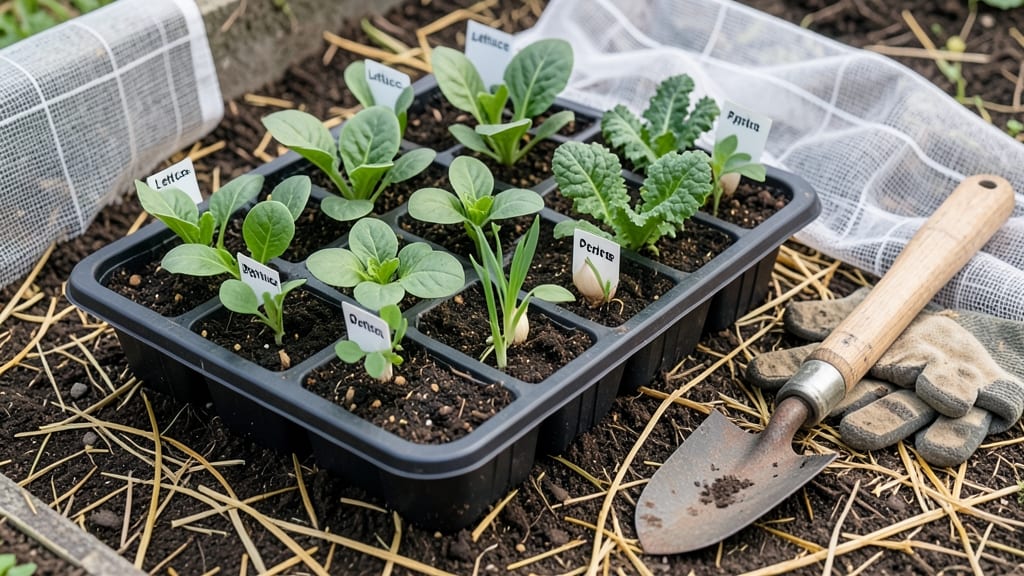
Starting a garden in Ohio after the last frost date is the key to avoiding frost-burned seedlings and maximizing your harvest 🌱—and the window is narrower than you think.
Ohio’s unpredictable spring weather can turn your gardening dreams into a guessing game—unless you know the exact last frost dates for your county. Planting too early risks frost damage, while waiting too long cuts your harvest window short.
Most Ohio gardeners in Zone 6a should wait until mid-April to early May, but your county’s frost history might push that date a week earlier or later. I’ll break down the county-by-county data so you can align your planting with real-world conditions.
You’ll also learn how to adjust for microclimates, use row covers for early starts, and spot the warning signs of planting too soon—so your tomatoes don’t turn into six-foot vines with no fruit.
Ohio last frost dates by county: when to plant cool-season vs warm-season crops
Ohio’s last frost dates vary dramatically across its 88 counties, with USDA zones 5b-6b creating microclimates that can shift planting windows by 2-3 weeks. Northern counties like Ashtabula often see frost until May 15, while southern regions like Lawrence County typically hit April 15.
These differences mean cool-season crops like spinach or peas planted too late in northern Ohio will bolt, while warm-season crops like tomatoes need soil at 60°F+ before transplanting.
To navigate this, I’ve organized Ohio’s counties into three frost zones—early (south), average (central), and late (north)—with historical extremes to help you plan. For example, Franklin County (Columbus) averages a last frost of April 22, but you’ve seen frost as late as May 10 in 2018.
Meanwhile, Cuyahoga County (Cleveland) typically warms up by April 28, but 2020’s late frost hit May 15. These ranges are critical for warm-season crops like peppers and eggplants, which cannot tolerate frost.
Here’s the key takeaway: Cool-season crops (e.g., lettuce, kale, peas) should be planted 4-6 weeks before your average last frost date, while warm-season crops (e.g., tomatoes, cucumbers, beans) need to wait until 2 weeks after your last frost.
For heat-loving crops like squash or melons, soil temperature matters more than air temperature—aim for 70°F+.
Use this county-by-county comparison to pinpoint your planting window, then adjust for microclimates like urban heat islands (which can warm up 1-2 weeks earlier) or protected valleys (which may frost 1 week later).
For instance, if you’re in Hamilton County (Cincinnati), you might plant warm-season crops by April 25, but a frost in 2017 delayed safe planting until May 5. Always have row covers ready for a 10-day buffer after your average last frost.
Below, I’ve highlighted 10 key counties spanning Ohio’s frost zones, with their average last frost dates, earliest safe planting windows for warm-season crops, and cool-season crop windows.
Bookmark this for your garden planning—and don’t forget to check your local weather station for real-time updates in April and May.
| County |
USDA Zone |
Avg. Last Frost |
Early Planting Window (Cool-Season) |
Safe Warm-Season Planting |
Historical Late Frost |
| Lawrence |
6b |
April 10 |
March 15 |
April 25 |
April 28 (2021) |
| Franklin |
6a |
April 22 |
March 25 |
May 5 |
May 10 (2018) |
| Hamilton |
6a |
April 18 |
March 20 |
April 30 |
May 5 (2014) |
| Cuyahoga |
6a |
April 28 |
How to adjust planting dates for Ohio’s microclimates and unpredictable springs
Ohio’s microclimates can vary dramatically between urban areas and rural zones—sometimes just miles apart. For example, Cincinnati’s downtown might be 5°F warmer than nearby Hamilton due to heat islands, while Appalachian counties like Athens can experience frost weeks later.
These differences mean your neighbor’s planting schedule might not work for you. To avoid costly mistakes, I always adjust my planting dates based on three key factors: local frost data, soil temperature, and urban vs. rural heat effects.
Start by using the Ohio State University’s frost-free date calculator (available on their Extension website). This tool accounts for your specific ZIP code and provides a historical average of last frost dates—plus a 10-year range to help you plan for variability.
For instance, in Columbus (Zone 6a), the average last frost is April 15th, but I’ve seen it range from March 28th to May 2nd. To play it safe, I wait until April 30th for warm-season crops like tomatoes and peppers.
🌱 Ohio Planting Adjustments by Microclimate
Urban Areas (Heat Islands)
Rural Areas (Cooler)
Plant warm crops 5–7 days earlier (e.g., tomatoes on April 25th instead of May 2nd)
Delay planting by 7–10 days (e.g., peppers on May 10th instead of May 3rd)
Use row covers for cool-season crops like lettuce to extend harvest
Prioritize cold-hardy varieties (e.g., ‘Winterbor’ kale or ‘Sugar Snap’ peas)
Monitor soil temp—wait until it reaches 60°F for warm-season plants
Test soil pH—urban soils often need lime (target 6.0–7.0)
Pro Tip: Use a soil thermometer to confirm readiness—50°F for cool crops, 60°F for warm crops.
Extend your growing season with row covers or cold frames, which can add 2–4 weeks to your planting window. For example, I plant spinach and peas under floating row covers as early as March 15th in Zone 6a, knowing they’ll be protected until the last frost.
For warm-season crops like basil and cucumbers, I use black plastic mulch to warm the soil faster—sometimes shaving off 5–7 days of waiting time.
Before the last frost, prepare your soil and seeds with this quick checklist:
☑️ Test soil pH (aim for 6.0–7.0 for most veggies)
☑️ Amend with compost or aged manure (2–3 inches mixed in)
☑️ Harden off seedlings (acclimate to outdoor temps over 7–10 days)
☑️ Check seed packets for days to maturity—plant accordingly
☑️ Mark your last frost date on a calendar and set reminders for 2 weeks before/after
By tackling these prep steps early, you’ll be ready to plant the moment conditions align.
Don’t let Ohio’s unpredictable springs derail your garden. I’ve learned that flexibility is key—always have a backup plan for late frosts, like quick-maturing varieties (e.g., ‘Early Girl’ tomatoes) or container gardening to move plants indoors if needed.
With these adjustments, you’ll maximize your harvest window and enjoy fresh produce from May through October—no matter where you garden in the state.
★★★★★4.6(7 reviews)