
Tools
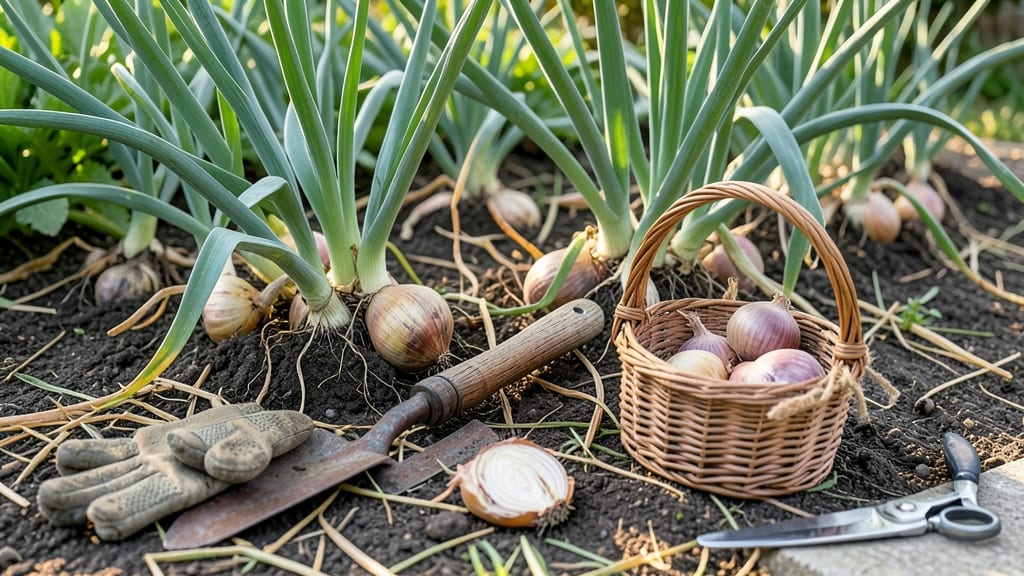
Pulling onions from your garden at the right time ensures sweet, flavorful bulbs that store well — and missing the window means tough, pungent, or rotting harvests.
You’ve spent months nurturing your 🧅 crop, but one wrong move can turn your hard work into a bitter disappointment. The key? Watching for three simple visual cues that tell you when your onions are truly ready.
Overgrown onions lose their tenderness and develop strong flavors, while underripe ones shrivel or spoil quickly. Below, I’ll walk you through the exact signs to look for — plus how to handle them once they’re out of the ground.
By the end, you’ll know not just when to pull your onions, but how to cure and store them for months of fresh, homegrown flavor.
3 Visual cues to determine when onions are harvest ready
Harvesting onions at the right time ensures sweet flavor and long storage life. But how do you know when those bulbs are truly ready? I’ve learned the hard way—wait too long, and you get bitter, pithy onions that won’t store well.
The key is watching for these three visual cues that signal peak harvest time.
First, pay attention to the top growth. Healthy green tops are a sign of active growth, but when they start to yellow and fall over, that’s your first clue.
This shift happens when the onion’s energy shifts from leaves to bulb development. Ignoring this sign often leads to overmature onions that spoil faster.
Next, examine the bulb size and firmness. At the perfect harvest moment, your onions should feel solid and dry to the touch, not soft or spongy. A good test is gently squeezing the bulb—if it gives slightly but holds its shape, it’s ready.
Soft bulbs mean you’ve waited too long, while still-firm bulbs need more time in the ground.
Finally, check the neck of the onion. The neck is that narrow section between the bulb and the tops. When it starts to shrink and tighten, that’s your final green light.
A tight neck indicates the bulb has stopped growing and is now maturing. If the neck is still thick and flexible, your onions need a few more weeks.
-
1. Yellowing Tops
Look for dry, yellow tops that fall over naturally. This signals the bulb is fully developed and ready for harvest. -
2. Firm, Dry Bulbs
Gently squeeze the bulb—it should feel solid and papery, not soft or spongy. A firm bulb stores better and tastes sweeter. -
3. Shrinking Neck
The neck tightens as the bulb matures. If it’s thin and dry, it’s time to harvest before pests or rot set in.
Timing your harvest correctly also depends on your climate and variety. In warmer regions, onions mature faster, so I often pull mine in late June or early July. Cooler climates may need to wait until August or early September.
Short-day onions (like Texas Super Sweet) respond to daylight changes, while long-day onions (like Yellow Sweet Spanish) need consistent long days to mature.
One mistake I used to make was harvesting based on size alone. Just because an onion looks big doesn’t mean it’s ready! Some varieties grow large but stay soft and pithy inside.
Always check the three visual cues together for the most accurate reading. For example, a large bulb with green tops is still immature—wait until the tops yellow before pulling.
Pro tip: Harvest onions on a dry, sunny day to speed up curing. Wet conditions can lead to fungal diseases like onion smut or mold. After pulling, I trim the tops to about 1 inch above the bulb and let them cure in a well-ventilated, shaded area for 1-2 weeks.
This step is crucial for long-term storage and preventing rot.
If you miss the harvest window, don’t panic! Onions left too long in the ground can split or rot, especially in wet weather. But if you catch them early enough, you can still use them fresh—just expect softer texture and milder flavor.
The key is to act at the first sign of these visual cues to avoid disappointment.
Remember, the goal is sweet, flavorful onions that store well through winter. By mastering these three visual cues, you’ll never second-guess harvest time again. Happy digging! 🧅
How to test onion maturity: the finger-push method explained
If you’ve ever wondered when to pull onions from your garden, the finger-push method is my go-to trick for foolproof results. This tactile test helps confirm onion maturity without guessing—no more pulling too early (and getting small, pungent bulbs) or too late (and dealing with tough, split onions).
The best part? It takes just 10 seconds per onion and works for all varieties.
Start by selecting an onion with yellowing tops that have begun to flop over. Gently grasp the green tops near the base and push downward with your thumb. If the bulb resists and feels firm but slightly soft (like a ripe avocado), it’s ready.
This resistance comes from the bulb’s natural sugars converting to storage compounds—a clear sign of maturity.
⚠️ WARNING: Common Mistakes That Ruin Your Harvest
⚠️ Pulling onions too early (green tops still upright) leads to small, sharp bulbs that won’t store well. Overlooking the neck shrinkage (the stem above the bulb) is another red flag—this tightens as the onion matures. Harvesting in wet soil causes rot, so wait for dry, sunny days after the finger-push test. Always cure onions properly to maximize shelf life!
For long-day onions (like Yellow Sweet Spanish), the finger-push method is especially critical because they mature later in the season. I’ve found that testing 2–3 onions per week after 120 days of growth catches the perfect window.
Pro tip: Use a sharp garden fork to loosen soil before pulling—this prevents bulb damage.
What if your onion feels too soft or mushy when you push? This usually means it’s overripe or rotting inside. On the flip side, if the bulb feels rock-hard, it might still need 2–3 more weeks to mature.
Pay attention to the papery skin too—it should feel tight, not loose.
After confirming maturity with the finger-push test, harvest onions on a dry morning to avoid soil clinging to the bulbs. Let them cure in a shady, well-ventilated spot for 1–2 weeks before storing. Proper curing prevents spoilage and extends shelf life to 6–8 months in a cool, dark place.
Remember, the finger-push method isn’t just about timing—it’s about quality. Sweet, flavorful onions start with knowing exactly when to pull them. Once you master this tactile test, you’ll never second-guess your harvest again! 🧅