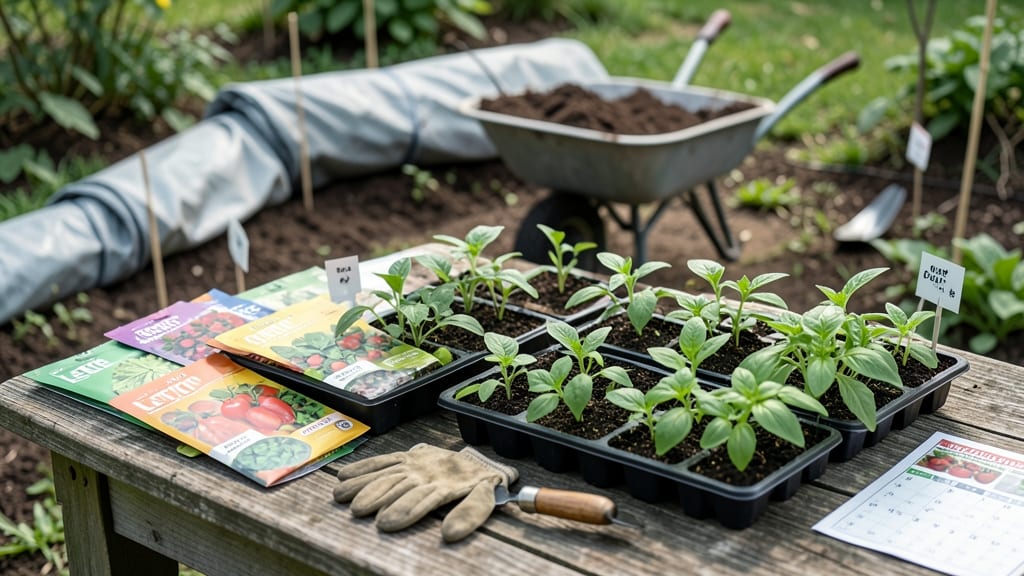
To plant a garden in Upstate New York, timing is everything—waiting until mid-April to early June after the last frost is the key to avoiding frost damage and maximizing your harvest.
Upstate New York’s unpredictable spring weather can turn your gardening plans into a gamble—unless you know the exact last-frost dates for your county. Planting too early risks frost damage, while waiting too long shortens your growing season.
With USDA zones 5b-6b across the region, your planting window varies from March to June, depending on whether you’re growing cool-season crops like lettuce or warm-season favorites like tomatoes.
Below, I break down the 2024 frost projections by county, how to adjust for microclimates, and the most common timing mistakes—so you can plant with confidence and avoid wasted seeds.
🌱
When to Plant General Garden Plants (Upstate NY) Garden Plants (Upstate NY)
Jan
❄️
Feb
🌱
Mar
🌱
Apr
🌱
May
🌱
Jun
☀️
Jul
☀️
Aug
☀️
Sep
🍂
Oct
🍂
Nov
🍂
Dec
❄️
Upstate NY last-frost dates by county: 2024 planting timeline
Timing your garden right in Upstate New York means knowing your county’s average last-frost date—and adjusting for 2024’s USDA projections. Northern counties like St. Lawrence often see frost as late as May 15th, while southern Dutchess County may warm up by April 20th.
These dates separate cold-hardy crops (like kale) from frost-sensitive varieties (like tomatoes).
Use this guide to plan your spring and fall planting windows. For example, warm-season crops like peppers should wait until 2 weeks after your county’s last frost, while cool-season crops like spinach can go in 4-6 weeks before the final frost.
Microclimates—like urban heat islands or protected valleys—can shift these dates by 1-2 weeks.
Below is your county-by-county breakdown of 2024 last-frost dates, based on USDA data and historical trends. Bookmark this for your planting calendar—and don’t forget to monitor soil temperature (aim for 50°F+ for warm-season crops)!
Pro Tip: If you’re in doubt, use row covers or cold frames to extend your planting window by 2-4 weeks. These tools let you plant frost-sensitive crops like basil or cucumbers earlier in the season.
| County |
Avg. Last Spring Frost |
Avg. First Fall Frost |
2024 Projection |
Cold-Hardy Crops |
Frost-Sensitive Crops |
| Albany |
April 25 |
October 15 |
April 20-May 2 |
Kale, Spinach, Peas |
Tomatoes, Peppers, Basil |
| Cayuga |
May 5 |
October 5 |
April 25-May 5 |
Broccoli, Lettuce, Radishes |
Cucumbers, Eggplant, Okra |
| Dutchess |
April 20 |
October 20 |
April 15-25 |
Swiss Chard, Arugula, Onions |
Melons, Sweet Potatoes |
| Essex |
May 15 |
September 25 |
May 5-15 |
Potatoes, Carrots, Beets |
Corn, Squash, Beans |
| Jefferson |
May 10 |
October 10 |
May 1-10 |
Cabbage, Brussels Sprouts |
Peppers, Tomatoes |
| Montgomery |
April 30 |
October 10 |
April 25-May 5 |
Lettuce, Spinach, Radishes |
How to adjust planting dates for Upstate NY’s microclimates
Upstate New York’s diverse geography means your neighbor’s last-frost date might be weeks earlier or later than yours. Whether you’re gardening in the Adirondacks’ high-altitude chill, a protected valley’s warmth, or an urban heat island, microclimates drastically alter planting windows.
The key? Adjusting your schedule based on soil temperature, elevation shifts, and local shelter—not just county averages.
For example, a south-facing slope in Albany County might warm up 10 days earlier than a north-facing urban lot just 5 miles away. Similarly, Lake Erie’s coastal breeze delays spring in Buffalo compared to inland Rochester. Use these adjustments to maximize your growing season without risking frost damage.
- 1
Add 10–14 days to last-frost dates for high-altitude areas (e.g., Adirondacks, Catskills). Soil warms slower at elevations above 2,000 feet. Use cold frames to start seedlings 4 weeks earlier safely.
- 2
Subtract 7–10 days for protected valleys or urban heat islands. South-facing walls or stone foundations absorb heat, raising soil temps by 5–10°F. Plant warm-season crops like tomatoes or peppers 2 weeks earlier in these spots.
- 3
Use row covers to extend spring planting by 3–4 weeks. Lightweight frost blankets protect cabbage, lettuce, and spinach from late frosts. Remove covers when plants outgrow them or temps stay above 50°F at night.
- 4
Monitor soil temperature with a soil thermometer—not air temperature. Warm-season crops (e.g., beans, cucumbers) need soil at 60°F+. In Zone 5b, this often means waiting until late May in northern areas vs. mid-May in valleys.
- 5
Adjust fall planting by 2–3 weeks in cooler microclimates. For example, kale or radishes can handle light frosts, but in the Adirondacks, plant them by August 1st for a fall harvest. In Rochester, you might push it to August 15th.
Don’t rely solely on almanac dates. Test your microclimate by planting cold-hardy crops like peas or spinach 2 weeks early. If they survive, you’ve found your safe planting window. For urban gardens, check with local master gardeners—they often track hyper-local frost data.
Pro tip: Pair row covers with black plastic mulch to warm soil faster. This combo can shave 10–14 days off your spring planting schedule in Zone 5b areas. Just remove the mulch once plants emerge to avoid overheating.
Remember, microclimates aren’t static. A new building or tree can shift your garden’s warmth. Reassess your planting dates every 3–5 years to stay ahead of changes. With these tweaks, you’ll turn Upstate NY’s unpredictable weather into a garden advantage—not a risk. 🌱
★★★★★4.6(1 review)
|