
Planting
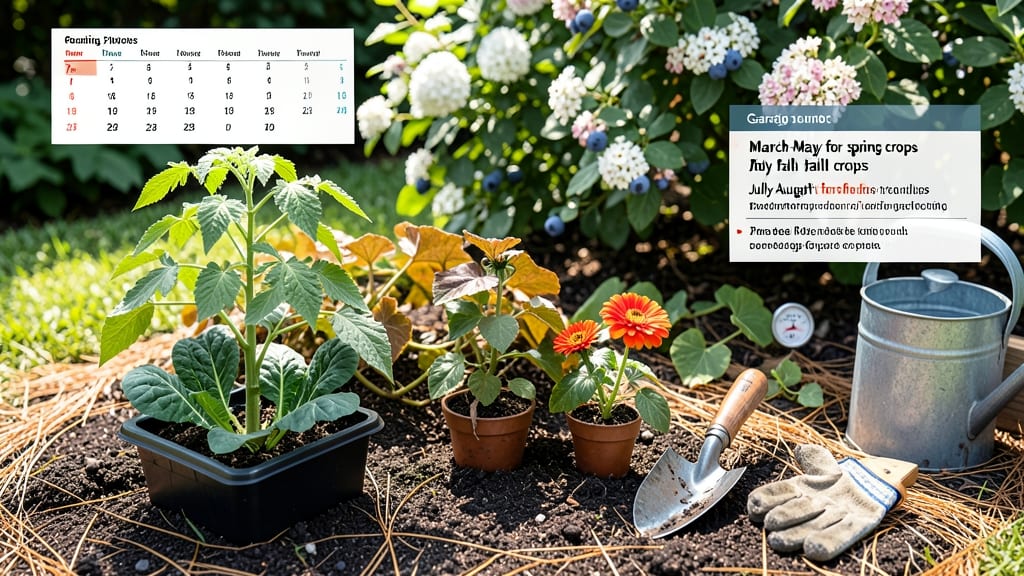
Planting a garden in Georgia at the right time can mean the difference between a bountiful harvest and a sad pile of wilted seedlings.
Georgia’s warm climate and long growing season make it a gardener’s paradise—but planting too early or late can mean wasted seeds and stunted plants. Timing is everything, and missing the frost-free window by even a few days can spell disaster for your hard work.
With USDA zones 7a-8b and microclimates that vary from the Coastal Plain to the Appalachian foothills, your planting schedule depends on where you live. Whether you’re growing tomatoes, lettuce, or perennials, knowing your last frost date is the key to success.
In this guide, I’ll break down the exact frost-free dates by region, show you how to calculate your local window, and give you a month-by-month planting calendar for Georgia’s most popular crops.
Georgia’s frost-free dates by region: when to plant cool-season vs. warm-season crops
Georgia’s diverse climate means your frost-free dates can vary by hundreds of miles—and even within your own backyard. The North Georgia Mountains might still see frost in May, while South Georgia’s coastal plain could be planting tomatoes by March 1st.
Knowing your last average frost date is the first step to avoiding frozen seedlings or bolted lettuce.
For this guide, I’ve broken Georgia into three key regions—North, Central, and South—with exact frost-free averages based on 30-year climate data. But here’s the secret: your microclimate (that sunny slope vs. the shady corner) can shift your planting window by 1-2 weeks.
We’ll cover how to adjust for those too.
🌱
| Region | Last Avg. Frost Date | First Avg. Frost Date | Cool-Season Planting Window | Warm-Season Planting Window | Key Adjustments |
|---|---|---|---|---|---|
| North GA (USDA Zones 6b-7a) | April 15 | November 1 | March 1 - April 15 | May 1 - June 15 | Wait 2 weeks after last frost; use row covers for early starts. |
| Central GA (USDA Zones 7b-8a) | March 25 | October 20 | February 15 - March 31 | April 15 - May 31 | Soil temps matter—wait until 60°F for warm crops. |
| South GA (USDA Zones 8a-8b) | March 1 | November 15 | January 15 - March 15 | March 1 - April 15 | Longer season—succession plant warm crops through June! |
🌡️ Note: These are averages—check your local NOAA station for 5-year trends.
If you’re in North Georgia, your cool-season crops like broccoli and spinach should hit the soil by March 1st, but wait until April 15th for warm-season stars like tomatoes and peppers.
Central Georgia gardeners can start cool crops as early as February 15th, while South Georgia might even squeeze in a spring radish crop by January.
But here’s the trick: microclimates can shift your window by 1-3 weeks. A south-facing slope might warm up 10°F faster than your north-facing yard. Use these adjustments:
• Sunny slopes: Plant warm-season crops 10-14 days earlier—they’ll warm up faster. • Shady spots: Delay planting by 1-2 weeks or choose shade-tolerant varieties like ‘Outredgeous’ lettuce. • Low spots: Frost lingers longer—wait 2 weeks after the average date. • Urban heat islands: Pavement and buildings can raise temps by 5-10°F, letting you plant earlier.
For cool-season crops, think broccoli, kale, and carrots. These thrive in 50-65°F soil and can handle light frosts.
In North Georgia, sow spinach by March 1st for a spring harvest, but in South Georgia, you might get two harvests—one in February and another in September.
Warm-season powerhouses like tomatoes, peppers, and squash need soil temps above 60°F. Use a soil thermometer
Planting calendar for Georgia’s most popular vegetables: month-by-month guide
Georgia’s long growing season lets you grow everything from heirloom tomatoes to sweet potatoes, but timing is critical. Plant too early, and frost will kill tender seedlings. Wait too long, and you’ll miss the harvest window.
My month-by-month guide covers the best times to direct-sow or transplant 15+ top Georgia crops, plus how to extend seasons with row covers or cold frames.
For cool-season crops like broccoli and spinach, start in late winter (February-March) and again in late summer (August-September). Warm-season plants such as peppers and okra thrive when soil temperatures hit 60°F+, typically after mid-April in most regions.
Use this calendar to avoid common mistakes like planting tomatoes before the last frost or sowing beans too late for a fall harvest.
Direct-sow hardy crops like radishes and turnips as soon as soil is workable (February-March), while transplants of peppers and eggplants need to wait until after May 1 for best results. Succession planting—sowing lettuce every 2 weeks—ensures a steady harvest. For heirloom varieties, check seed packets for specific days-to-maturity and adjust your schedule accordingly.
| Crop | Direct Sow | Transplant | Succession Plant | Extend Season |
|---|---|---|---|---|
| Broccoli | Feb-Mar, Aug-Sept | Mar-Apr, Aug | Every 3 weeks | Row covers |
| Tomatoes (Heirloom) | N/A | Apr-May, Aug | N/A | Cold frame |
| Peppers | N/A | May-Jun | N/A | Black plastic mulch |
| Lettuce | Feb-Mar, Aug-Sept | N/A | Every 2 weeks | Shade cloth |
| Okra | May-Jun | N/A | N/A | None needed |
| Sweet Potatoes | May-Jun | N/A | N/A | Black plastic mulch |
| Cucumbers | May-Jun | N/A | Every 2 weeks | Trellis + row cover |
Extend your harvest season with row covers or cold frames. For example, use floating row covers to protect spinach and kale from light frosts in March or November.
A cold frame can keep heirloom tomatoes producing until December in mild Georgia winters. Always remove covers during the day to prevent overheating, especially in summer months.
In northern Georgia (e.g., Atlanta), wait until mid-April for warm-season crops, while coastal areas (e.g., Savannah) can start as early as February. Adjust for microclimates—south-facing beds warm up faster, while shaded areas stay cooler.
For succession planting, sow bush beans every 2 weeks from April to July for a continuous harvest.
Start planning now!