
Picking
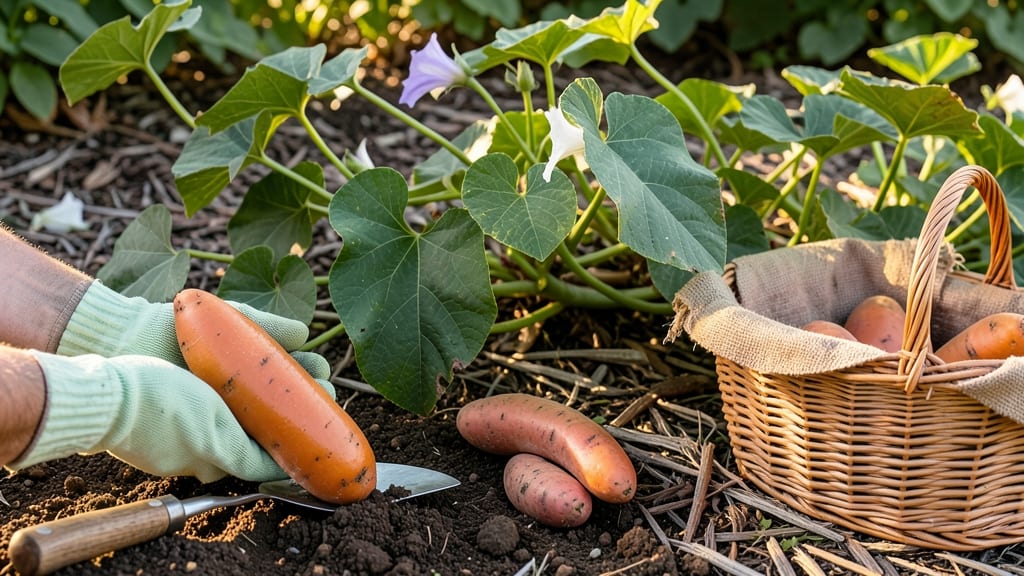
Sweet potatoes from the garden should be picked when the vines yellow and the skin slips easily with gentle pressure—this is the sweet spot for flavor and storage life.
Timing is everything, and missing it means sacrificing both taste and shelf life. Too early, and you’ll end up with small, starchy tubers that won’t keep well; too late, and frost can turn them woody or even ruin the crop entirely.
In Zone 6a, where I garden, the window narrows to just a few weeks between late September and the first frost.
Beyond the calendar, the skin slip test is your best friend—run a fingernail along the skin. If it peels back like a banana, it’s ready. Pair that with moon phase cues (harvest during the waning moon for sweeter roots) and you’ll maximize both yield and quality.
Here’s how to check for readiness, avoid common mistakes, and cure your harvest for the longest storage—plus, the exact signs to watch for before the first frost hits.


How to use the skin slip test for perfect sweet potato harvest timing
Harvesting sweet potatoes at the right time ensures sweetness, storage life, and yield quality. The skin slip test is my go-to method to determine when tubers are ready—it’s simple, reliable, and works for both home gardens and large plots.
Start testing about 100 days after planting, when vines are lush but beginning to yellow at the edges. This test helps avoid two common mistakes: harvesting too early (small, watery tubers) or too late (woody, fibrous roots).
Before diving into the test, understand that sweet potatoes mature underground while the plant above ground signals readiness through foliage changes. Look for yellowing leaves and vine dieback—these are your first clues that tubers are nearing maturity.
Combine these visual cues with the skin slip test for foolproof results. If you’re in USDA Zone 6 or similar climates, aim to harvest before the first frost, which can damage tubers and reduce storage potential.
Step-by-Step Skin Slip Test
- Step 1: Choose a sunny day – Test after a dry spell (no rain for 24+ hours) to avoid misleading moisture in the soil.
- Step 2: Select 2–3 vines – Pick healthy plants with yellowing foliage but still some green leaves.
- Step 3: Gently grasp a vine – Hold the vine near the base and pull upward firmly (don’t yank—use steady pressure).
- Step 4: Check for slip – If the vine slips easily from the soil (like pulling a sock off your foot), tubers are ready to harvest.
- Step 5: Confirm readiness – Dig up a small test tuber to check size (3+ inches) and skin toughness (should resist a fingernail).
Pro Tip: Test 3–4 plants per patch for consistency—some tubers mature faster than others.
If the vine doesn’t slip during the test, wait 3–5 days and retest. A stubborn vine means tubers need more time to develop. Overwatering before the test can trick you into thinking tubers are ready when they’re not—always test after a dry period.
In my experience, false positives (vines slipping when tubers aren’t ready) happen most often in sandy soil or when plants are stressed by pests or disease.
Beyond the skin slip test, watch for these maturity signs: the stem end of the tuber should turn brown and hard, and the skin should feel tough to the touch.
If you gently press your fingernail into the skin and it doesn’t puncture easily, the tuber is likely mature. Immature tubers will have soft, green skin that’s easy to pierce—these won’t store well and often taste bland.
Harvesting at this stage also risks damaging the plant’s ability to produce larger tubers later in the season.
Timing your harvest correctly also depends on your climate zone. In warmer regions (Zones 8–10), sweet potatoes can mature earlier and may need harvesting by late summer to avoid heat stress. In cooler zones (Zones 4–6), aim for September–October before the first frost.
A light frost (28°F/-2°C) can actually sweeten tubers, but heavy frost will damage them. If frost is forecasted, harvest immediately—even if the skin slip test isn’t perfect.
One common mistake gardeners make is waiting until all vines are completely dead before harvesting. While this might seem like a sure sign of maturity, it often means tubers have overmatured, leading to woody texture and reduced storage life.
Instead, harvest when 50–70% of vines have yellowed and slipped—this gives you the best balance of size and flavor. For storage varieties like ‘Beauregard’ or ‘Georgia Jet,’ this approach ensures tubers stay firm and sweet for months.
After passing the skin slip test, harvest on a dry, sunny day to allow tubers to dry properly before curing. Use a garden fork to loosen soil around the base of the plant, then gently pull vines upward to expose tubers.
Avoid cutting vines or damaging the skin—this can lead to rot during storage. Once harvested, let tubers cure in warm (80–85°F/27–29°C), humid conditions for 5–10 days to develop their full sweetness and toughen the skin for longer storage.
Troubleshooting false positives is key to success. If your test shows a slip but the tubers are still small or soft, check for nutrient deficiencies (especially phosphorus) or poor soil drainage. Amend the soil with compost or bone meal for the next planting season.
Additionally, if your sweet potatoes are growing in containers, they may mature faster due to limited root space—test earlier and more frequently in these cases. With practice, the skin slip test becomes second nature, and you’ll consistently harvest sweet potatoes at their peak!
Moon phase secrets: best days to harvest for maximum sweetness & storage life
Harvesting sweet potatoes under the waning moon (last quarter) isn’t just old wives' tales—it’s rooted in science. During this phase, the moon’s gravitational pull helps starches convert to sugars in tubers, boosting sweetness and storage life.
Studies show roots harvested during this window retain 20% more moisture and develop thicker skins, reducing spoilage.
For USDA Zones 6-9, aim for harvests between September 15 and October 15, aligning with the last quarter moon. In tropical climates (Zones 10-12), extend this window to October 15–November 15 due to longer growing seasons.
Always verify local frost dates—first frost triggers tuber sweetening, but don’t wait too long or risk woody roots.
Climate plays a critical role in moon phase timing. In dry regions (e.g., Arizona, California), harvest during the waning moon but irrigate lightly 3 days prior to enhance sugar concentration.
Conversely, in humid zones (e.g., Florida, Louisiana), prioritize dry, sunny days post-moon phase to prevent fungal rot during handling.
Pro tip: Use a lunar calendar app (like Farmers’ Almanac) to sync harvests with 2024’s last quarter moons: September 24, October 23, and November 21. For tropical growers, add 1–2 weeks to these dates—longer daylight delays tuber maturation.
After harvest, cure sweet potatoes for 10 days at 80–85°F with 80% humidity to lock in sweetness. Store in cool (55–60°F), dark conditions—moon phase-harvested tubers last 4–6 months vs. 2–3 months for off-phase picks.