
Picking
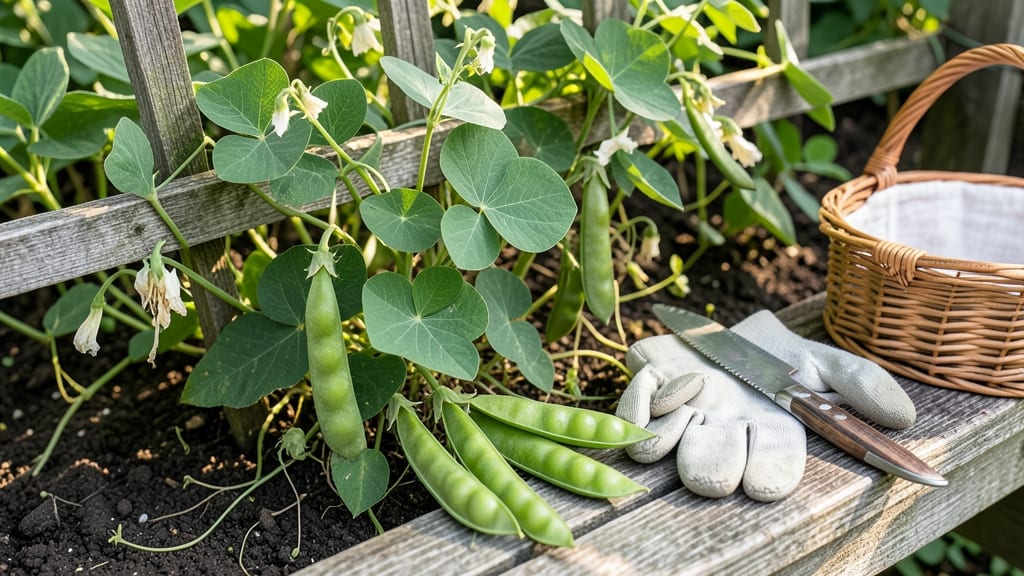
To pick peas from your garden at the perfect moment means catching them when they’re sweetest and most tender — a window that closes fast once those pods start to toughen.
Peas are one of the fastest-growing vegetables in your garden, but picking them too early or too late can turn your harvest from sweet perfection to tough, mealy disappointment. Timing is everything — here’s how to master it.
Look for pods that are 2-3 inches long, swollen but still firm, and bright green with visible seeds that aren’t bulging. These are the three key signs of peak ripeness, and missing them means sacrificing flavor for convenience.
Below, I’ll walk you through how to test for sugar content, the best harvesting frequency for your variety, and why checking your peas every 2-3 days keeps your plants producing longer.


3 Key signs your peas are ready for harvesting (with visual cues)
Knowing exactly when to pick peas from your garden transforms a mealy, tough harvest into a sweet, crisp reward. Peas mature quickly—often in just 60-70 days—but their window for peak flavor is narrow.
Miss it, and you’ll end up with oversized pods or shriveled seeds. The good news? With these three foolproof signs, you’ll never second-guess your timing again.
First, focus on pod size. Immature peas are tiny—think under 1 inch—while perfectly ripe pods swell to 2-3 inches long. That’s your sweet spot. Next, check the color and texture: pods should feel firm but yield slightly when pressed, like a ripe avocado.
Finally, peek inside—visible seeds that aren’t bulging mean it’s time to harvest. Ignore these cues, and you risk bitter peas or wasted effort.
Here’s the game-changer: a sugar test you can do without tasting. Squeeze the pod gently—if it snaps cleanly and the inside seeds are plump but not overcrowded, that’s your signal.
Overripe peas? They’ll feel woody and dry, with seeds pushing against the pod walls. Now, let’s break it down visually so you can spot the difference at a glance.
Now that you’ve got the visual cues, let’s talk pea varieties—because not all peas play by the same rules. Snap peas (like Sugar Snap) are ready when pods are 3-4 inches long and still crisp. Snow peas (like Oregon Sugar Pod) should be flat and 2-3 inches long with tender tips. Shelling peas (like Lincoln) need those 2-inch pods with plump seeds we mentioned earlier.
Pro tip: Check your variety’s label—some are bred for earlier harvesting than others.
Timing isn’t just about the pod—it’s also about the plant’s energy. If you wait too long, the plant diverts resources to seed production, leaving your pods tough and flavorless. Worse, overripe peas on the vine can reduce future yields because the plant thinks its job is done.
That’s why I harvest mine every 2-3 days during peak season. Yes, it’s work, but it pays off with sweeter peas and longer harvests.
Here’s a trick I learned from my grandpa: Harvest in the morning when pods are cool and crisp. This ensures you’re getting the freshest flavor and avoids the afternoon heat, which can make peas mealy faster.
Store them in the fridge for up to 5 days (or eat them immediately—they’re that good). And if you’re growing multiple varieties, prioritize the ones with the shortest days to maturity first.
One more thing: Don’t ignore the leaves. As peas mature, the plant may start showing yellowing leaves or brown pods—these are red flags. Yellow leaves often mean the plant is exhausting its nutrients to produce seeds. Brown pods?
That’s a sign of overripeness or disease. Both mean it’s time to harvest what’s left and pull the plant if it’s past its prime. Prevention is key: Fertilize lightly at planting and water consistently to keep plants healthy.
Ready to put this into action? Grab your harvest
How often to harvest peas for maximum yield (and why frequency matters)
Harvesting peas at the right frequency isn't just about getting a few pods—it's about encouraging continuous production for weeks. When you skip harvests, your plants redirect energy to seed development, slowing new pod growth and leaving you with tough, stringy peas.
The key is regular picking, but the schedule depends on your pea variety.
Most gardeners make the mistake of waiting until pods look "ripe" before harvesting, only to find their plants have already stopped producing. Peas are self-pollinating, meaning each flower becomes a pod—if you don't pick, the plant thinks it's done.
For maximum yield, treat harvesting like weeding: do it every 2-3 days once pods appear.
🌱 When to Pick Peas by Variety
- Snap Peas (e.g., Sugar Snap, Snow Peas): Harvest every 2-3 days when pods reach 2-3 inches long and feel firm but slightly tender. Overlooking just 3 days can turn sweet pods into woody, stringy messes.
- Shelling Peas (e.g., Lincoln, Alderman): Pick every 3-4 days when pods are 1.5-2 inches long and seeds are visible but not bulging. These varieties produce faster than snaps, so check daily if possible.
- Dwarf Varieties (e.g., Little Marvel): Harvest every 2 days—their compact size means pods mature quickly. Skipping a day can lead to overcrowding and disease pressure from humidity trapped in dense foliage.
- Climbing Varieties (e.g., Wando, Oregon Sugar Pod): Check upper pods first (they ripen earliest) every 2-3 days. Use a trellis to space pods out—this prevents shading and fungal risks from wet pods touching leaves.
Frequency matters because peas are determinate growers, meaning each plant produces pods in waves. If you let pods mature to seed stage, the plant stops flowering for 7-10 days before trying again.
For continuous harvests, aim to pick 70-80% of visible pods every 2-3 days. This keeps plants focused on new flower production instead of seed development.
Watch for yellowing leaves or pods that split open—these are late signs your harvest schedule is too infrequent. In my garden, I set a weekly reminder to check pea patches, even if no pods are visible yet.
Early varieties (like Early Perfection) may only produce for 3-4 weeks, while late varieties (like Green Arrow) can keep going for 6-8 weeks with proper care.
Pro tip: Harvest in the morning when pods are cool and crisp. This preserves sugar content and makes shelling easier. Store picked peas in the fridge for 3-5 days or blanch and freeze for long-term storage. The sooner you eat or preserve them, the sweeter they'll taste!
Remember, peas are short-season crops, so every pod you harvest is a direct boost to your yield. Don't let them go to waste—your future salads will thank you! 🌱