
Picking
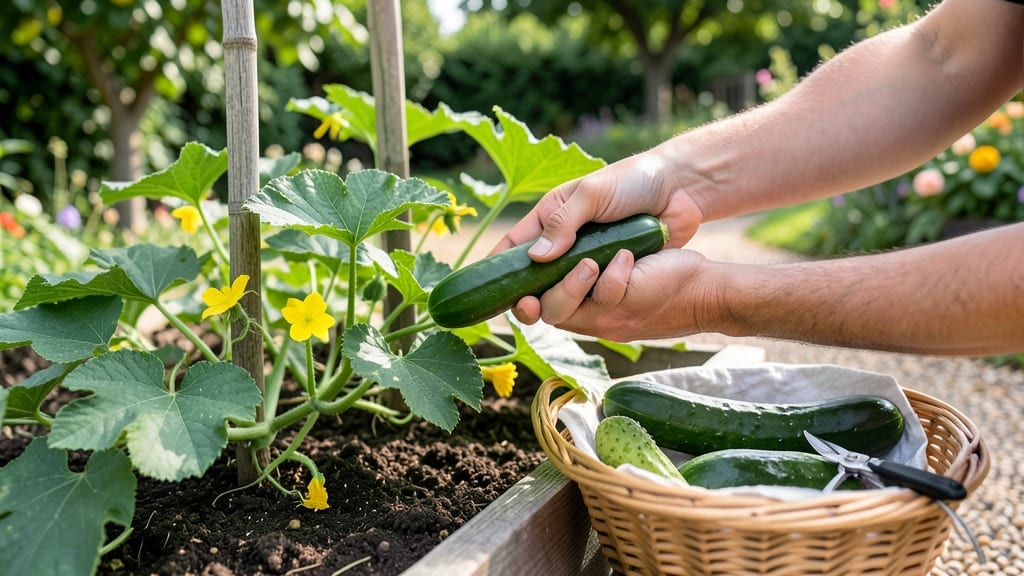
To pick cucumbers from your garden at the perfect moment means crunchy, flavorful bites—not bitter, seedy disappointments.
Nothing beats the crisp, fresh taste of homegrown 🥒—but timing your harvest wrong means rubbery, seedy disappointment. Master these 3 tactile tests to pick cucumbers at peak crunch, maximizing flavor and yield before they turn bitter or overripe.
Most gardeners wait too long, missing the ideal window when cucumbers are firm, vibrant, and packed with sweetness. The key? Checking size, skin firmness, and stem color—each tells a different story about ripeness.
Below, I’ll walk you through the exact cues to harvest for slicing, pickling, or heirloom varieties, plus how often to check your vines for the best continuous yield all season.


3 Tactile tests to determine perfect cucumber ripeness
Harvesting cucumbers at the right moment transforms your garden into a crunchy, flavor-packed treasure trove. The key lies in three simple tactile tests that reveal when cucumbers are primed for picking—before they turn bitter or mealy.
These methods work for slicing, pickling, and heirloom varieties, ensuring you never miss the sweet spot between underripe and overripe.
Many gardeners rely on visual cues like size or color, but cucumbers often hide their true ripeness beneath their skin. That’s where these hands-on techniques come in: the thumb pressure test, stem snap test, and skin texture analysis.
Each method reveals critical clues about internal maturity—like whether the seeds are still tiny or already plump.
I’ve tested these methods across my slicing cucumbers (like Marketmore) and pickling varieties (like Boston Pickling), and the results speak for themselves. A cucumber picked at the right moment stays crisp for days, while one left too long becomes seedy, bitter, and tough.
Let’s dive into the science-backed tests that’ll change how you harvest forever.
🌱 When to Pick Cucumbers: 3 Tactile Tests
- 1 Thumb Pressure Test: Press your thumbnail into the cucumber’s skin. If it resists slightly but doesn’t dent, it’s ready. A deep dent means underripe; no resistance signals overripe.
- 2 Stem Snap Test: Gently bend the cucumber’s stem near the fruit. A clean snap means it’s mature. If the stem bends without breaking, wait a day or two. A dry, brittle stem is a red flag for overripe.
- 3 Skin Texture Analysis: Run your fingers over the cucumber’s surface. Smooth, slightly waxy skin is ideal. Bumpy or dull skin means it’s overripe, while sticky or powdery residue signals disease risk.
The thumb pressure test is my go-to because it’s foolproof. I’ve seen gardeners pick cucumbers that dent too easily—those are still firming up inside and lack the sweetness of a properly ripe one.
A cucumber that gives just slightly under pressure is usually at its peak. Think of it like testing a ripe avocado: you want that perfect balance of give and firmness.
For pickling varieties, I adjust my approach. These cucumbers should be harvested small (1-3 inches) and picked every 2-3 days to prevent bitterness. The stem snap test is especially useful here because pickling cucumbers often mature faster than slicing types.
If the stem snaps cleanly, it’s time—even if the cucumber is still tiny. Ignoring this test can lead to seedy, bitter pickles, which is a heartbreaking mistake.
Skin texture is often overlooked, but it’s a tell-tale sign of a cucumber’s internal state. A smooth, slightly glossy surface means the cucumber is hydrated and at its best. If the skin feels dry or rough, the flesh inside is likely woody or hollow.
I once harvested a batch of cucumbers with dull, matte skin—they tasted bland and had large, developed seeds. That’s when I learned to trust my fingertips as much as my eyes.
Common mistakes include waiting for yellowing or harvesting only when cucumbers are large. Yellowing is a sign of overripeness, not ripeness. By then, the cucumber is often seedy, bitter, and tough.
Similarly, size alone isn’t a reliable indicator—some varieties stay small but are still perfect for eating. Always combine these tactile tests with visual cues like color consistency and stem color for the best results.
To maximize your harvest, I recommend picking cucumbers in the morning when they’re cool and crisp. This is when their natural sugars are highest and their texture is firmest.
Store them in the crisper drawer of your fridge for up to a week, but eat them as soon as possible to enjoy that farm-fresh crunch.
If you’re growing multiple varieties, keep a small notebook to track which tests work best for each—some heirlooms, like Armenian cucumbers, may need slightly different timing.
Mastering these tests will transform your cucumber game. No more rubbery slices or seedy snacks—just crisp, sweet, and perfectly ripe cucumbers straight from your garden. Next time you’re in your garden, grab a cucumber and give these methods a try. Your taste buds will thank you!
Cucumber variety harvest guide: when to pick for best flavor
Not all cucumbers are created equal when it comes to harvest timing. Slicing cucumbers like Marketmore 76 need to reach 6-8 inches for peak crunch, while pickling varieties such as Boston Pickling shine at just 1-3 inches.
Heirlooms like Lemon Cucumber or Armenian Cucumbers have their own unique benchmarks—often yellow or pale green when ripe. Getting this right means the difference between crisp, sweet bites and bitter, seedy disappointment.
Harvesting at the wrong stage also affects yield. Overripe cucumbers develop yellow blossom ends and hard seeds, signaling it's too late. Meanwhile, underripe ones lack flavor and may never reach full size.
The key is knowing your variety's ideal size, color, and texture—and checking them daily once they start setting fruit. Morning harvests are best, as cucumbers firm up overnight after cooling.
| Variety Type | Ideal Size | Color Benchmark | Harvest Window | Texture Test |
|---|---|---|---|---|
| Slicing (e.g., Marketmore 76) | 6–8 inches | Deep green | 45–55 days | Firm but yields to gentle thumb pressure |
| Pickling (e.g., Boston Pickling) | 1–3 inches | Bright green | 40–50 days | Skin resists thumbnail pressure |
| Heirloom (e.g., Lemon Cucumber) | 4–6 inches | Pale green/yellow | 50–60 days | Skin slightly waxy, stem snaps cleanly |
| Armenian (e.g., Snake Cucumber) | 12–18 inches | Dark green | 60–70 days | Firm with slight give at ends |
| Parthenocarpic (e.g., Sweet Success) | 5–7 inches | Uniform green | 50–55 days | Skin thickens as it matures |
For slicing cucumbers, aim for 6-8 inches with deep green skin that resists gentle thumb pressure. Varieties like Straight Eight or Diva are classic choices, and harvesting them at this stage ensures maximum crunch and sweetness.
Use a sharp knife or pruners to avoid damaging the vine, and always cut 1/4 inch above the fruit to prevent disease entry points.
Pickling cucumbers demand precision—harvest when they're 1-3 inches long and bright green. Look for small bumps along the sides (future pickles!) and a firm, slightly waxy skin. Overlooking these tiny cucumbers means they'll grow into oversized, seedy monsters unsuitable for pickling. Check your plants every 2-3 days during peak production to stay ahead.
Heirloom varieties like Lemon Cucumber or Apple Green often have unique color cues—think pale yellow or striped patterns—and may reach maturity at 4-6 inches. These types can be sweeter and more aromatic than hybrids, but their shorter shelf life means harvesting promptly.
If you spot yellowing blossom ends, it's a red flag: these cucumbers have passed their prime and may develop bitterness.
Pro tip: Harvest in the morning when cucumbers are coolest and crispest. Store them in the crisper drawer of your fridge for up to 1 week, but never wash before storing—excess moisture speeds up spoilage.
For longer storage, wrap unwashed cucumbers in paper towels and refrigerate. And remember: the more you pick, the more your plants will produce!