
Vegetables
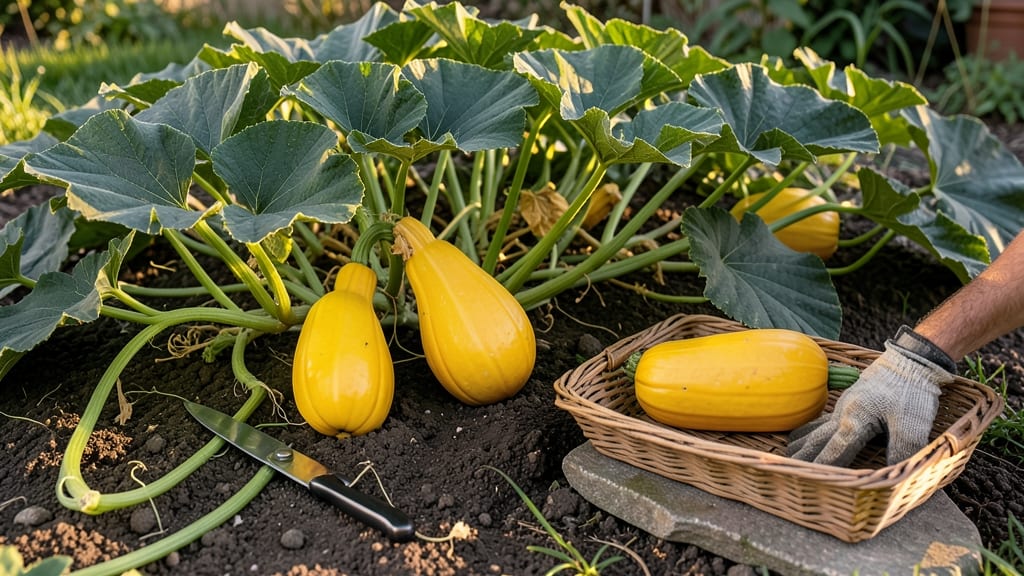
Harvesting yellow crookneck squash at the right time ensures sweet, tender flesh that turns every meal into a standout dish.
Picture this: you’ve been watching your 🎃 vines thrive all summer, but how do you know when that squash is just ripe? One wrong move and you’re left with mealy, bitter fruit—or worse, a harvest that never comes.
The key? A simple three-step finger test that takes seconds and saves your squash from the "too early" or "too late" trap.
Most gardeners wait for the classic yellow hue, but color alone isn’t enough. You’ll also need to check firmness, seed hardness, and even the stem’s behavior—each clue tells a different part of the story.
Miss these cues, and you might end up with squash that’s either rock-hard or turning to mush before you can use it.
In this guide, I’ll walk you through the exact 3 finger-press tests to determine peak ripeness, plus the best time of day to harvest and how to store your squash for weeks. No guesswork, just foolproof results for that perfect, buttery texture every time.


3 Finger-press tests to determine yellow crookneck squash ripeness
Yellow crookneck squash reaches its peak sweetness when harvested at just the right moment—this isn't guesswork. Use these three simple finger-press tests to avoid picking squash too early (bland) or too late (stringy).
The key lies in tactile cues that reveal the perfect balance of firmness, seed development, and skin color.
First, check the skin color. Mature yellow crookneck squash should transition from green to golden yellow, especially on the side facing the sun. Look for uniform color without green patches—this signals the squash is ready.
A partial yellow patch means it needs more time, while fully yellow skin with a few brown spots means it's ideal for immediate harvest.
Next, perform the finger-press test for firmness. Gently press your fingertip into the squash's skin near the stem. If it doesn't dent and feels firm but not hard, it's ready.
A soft or easily dented squash is underripe, while one that feels rock-hard may be overripe. This test ensures you avoid the mealy texture of premature harvests.
Here’s where most gardeners go wrong: they rely only on size (4-6 inches) or color. But seed development is the final clue. Press your thumb and forefinger firmly on opposite sides of the squash.
If the seeds inside feel firm but not hard, like a peanut, it’s time to harvest. Soft seeds mean it’s too early, while crunchy seeds signal overripeness.
Pro tip: Combine all three tests for 100% accuracy. For example, a squash with fully yellow skin but soft seeds needs more time, while one with firm seeds but green patches might still ripen in a few days. Harvest in the morning when temperatures are cooler to preserve freshness.
Another common mistake is waiting until the squash detaches easily from the vine. While this can happen, it’s often a sign of overripeness. Instead, use a sharp knife or pruners to cut the squash 1 inch above the stem—this prevents damage and extends shelf life.
Avoid twisting, which can bruise the fruit.
If you’re growing yellow crookneck squash in hot climates, they may ripen faster. Monitor them daily once they reach 3 inches in length. In cooler areas, they’ll take longer to mature, so be patient. The curved neck should also point upward—this is a classic sign of readiness.
Once you’ve mastered these tests, you’ll never miss the sweet spot again. Store harvested squash in a cool, dry place (50-55°F) for up to 2 weeks, or cook them immediately for the best flavor. Happy harvesting!
Optimal harvesting window: days to maturity and seasonal timing
Timing your yellow crookneck squash harvest correctly depends on days to maturity and your local climate. Most varieties reach peak ripeness in 55-70 days after transplanting, but heat waves or cooler seasons can shift this window by 1-2 weeks.
Early-season varieties like 'Early Prolific' mature in 45-50 days, while late-season types such as 'Golden Hubbard' may take up to 75 days.
In USDA Zone 6a, where frost-free days average 165 days, planting after the last frost (mid-April) ensures harvests from late July to early September.
Gardeners in warmer zones (like Zone 8) can extend harvests into October, while cooler climates (Zone 4) may only get 2-3 weeks of prime harvest time. Adjust planting dates to align with your first frost date—stop fertilizing 4-6 weeks before frost to prevent late-season growth spurts.
| Variety | Days to Maturity | Harvest Window (Zone 6a) | Climate Adjustments |
|---|---|---|---|
| Early Prolific | 45-50 days | Late July - Early August | Plant in early May for heat tolerance |
| Golden Hubbard | 70-75 days | Mid-August - Early September | Extend season with row covers in cooler zones |
| Straightneck Hybrid | 55-60 days | Early August - Mid-September | Avoid planting after July in hot climates |
Heat stress accelerates maturity—squash planted in June or July may ripen 10-15 days faster but risk bitter flavors if harvested too early. Conversely, cooler summers (like 2023’s La Niña patterns) can delay harvests by 2 weeks.
Monitor vine growth: vines slowing signals nearing maturity, while yellowing leaves indicate overripeness. In container gardens, maturity may be 5-7 days earlier due to limited root space.
Seasonal cues matter just as much as days on the calendar. Harvest when morning temperatures stay above 60°F—cool nights slow sugar development. If frost threatens before squash ripens, harvest green but firm specimens; they’ll after-ripen indoors for 3-5 days.
Store in a cool, dark place (50-55°F) to slow further ripening. For long-term storage, cure harvested squash for 3-5 days in a warm (80-85°F), humid (80-90%) environment before refrigerating.
Pro tip: Use a harvest journal to track maturity dates in your microclimate. Note when first blooms appear—count 10-14 days after pollination as the earliest possible harvest window.
In my Zone 6a garden, I’ve found that succession planting every 2 weeks from May to June ensures a continuous harvest through September. This strategy works especially well for bush varieties, which mature faster than vining types.
Remember, yellow crookneck squash is most flavorful when harvested at peak ripeness—don’t wait for overripe softness or seed hardness. With the right timing, you’ll enjoy sweet, tender flesh perfect for roasting, grilling, or stuffing. Happy harvesting! 🎃