
Vegetables
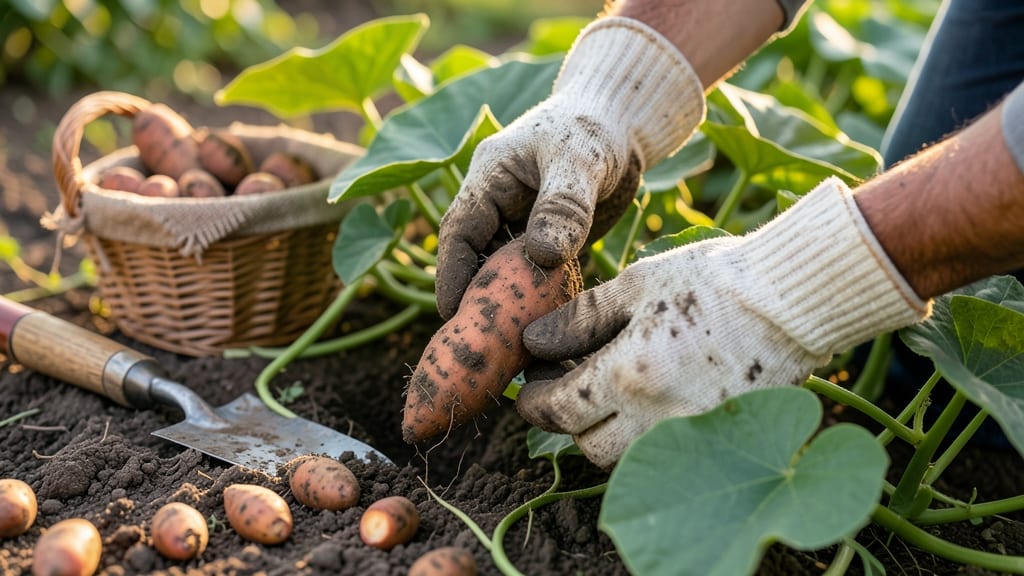
Harvesting sweet potatoes in Texas at the right time means the difference between a starchy mess and a sweet, flavorful reward—especially when you’re racing against frost or scorching heat.
Timing your harvest isn’t just about counting days; it’s about reading the 🍠 plant’s signals and your soil’s secrets. In North Texas, a late October freeze can turn your crop to mush, while South Texas gardeners might still be harvesting in December if they wait too long.
Here’s what to watch for: leaf yellowing, skin that resists a thumbnail, and tubers the size of a golf ball. But Texas’ unpredictable weather adds a twist—drought-stressed plants or sudden rain can throw off even the best-laid plans.
Below, I’ll break down the exact cues to harvest, how soil type affects timing, and the critical steps to cure your sweet potatoes for storage—so you don’t end up with a bin of shriveled disappointments.


Key signs your Texas-grown sweet potatoes are ready for harvest
Texas gardeners know sweet potatoes thrive in our long, hot summers—but knowing exactly when to harvest can feel like guessing. Unlike northern states, Texas’ extended growing season and variable soil types (from sandy Coastal Bend to clay-heavy North Texas) throw off typical harvest cues.
Miss the window, and you’ll either pull starchy, underdeveloped tubers or wait too long, risking rot in our humid falls. The secret? Watching for three key maturity signals that adapt to Texas’ climate quirks.
First, ignore the calendar. While most varieties need 90–140 days to mature, Texas’ heat spikes can speed up or stall growth. Instead, focus on the plant’s physical cues, which are more reliable than days since planting.
For example, in South Texas’ 10a zone, vines may yellow by early October, while in North Texas’ 8a zone, you might not see dieback until November. The difference? Soil moisture retention—sandy soils dry faster, accelerating maturity.
Here’s what to look for when your sweet potatoes are begging to be harvested:
Vines Turn Yellow and Die Back
Healthy green vines shift to golden-yellow and crisp up like autumn leaves. In Texas, this often happens 1–2 weeks before the first frost (earlier in East Texas, later in West Texas). If vines stay green past November, they’re fighting fungal stress from our humid air.
Skin Resists Your Thumbnail
Gently press a tuber through the soil. If the skin doesn’t dent when you press with your thumbnail, it’s ready. In clay-heavy soils (common in Central Texas), tubers may feel firmer earlier due to slower moisture loss. In sandy soils (like Coastal Bend), they’ll toughen up faster—check weekly starting at day 100.
Stem End Hardens and Turns Brown
Dig up a test tuber and check the stem end (where it attached to the vine). If it’s brown and woody (not green or soft), the tuber is cured and sweet. In Texas’ high humidity, this process happens faster—sometimes within 2–3 weeks of vine dieback. Rush it, and you’ll end up with watery, low-sugar tubers.
Tubers Reach 2–4 Inches in Diameter
Sweet potatoes in Texas often grow larger than northern varieties thanks to our heat. Aim for baseball-sized tubers (2–4 inches). Smaller ones (1 inch) are starchy and bland, while oversized ones (>5 inches) may crack in our hot, dry spells
Texas’ unpredictable weather adds another layer. After a hard freeze (below 28°F), sweet potatoes become mealy and inedible—so harvest 2 weeks before your region’s average first frost. For example, North Texas gardeners should start checking by mid-October, while South Texas growers can wait until late November.
Pro tip: Use a row cover to extend the season if frost threatens early.
Don’t skip the post-harvest curing step, either. Texas’ high humidity (especially in East Texas) makes curing critical. Lay tubers in a dry, shady spot (like a garage or screened porch) for 5–10 days to thicken their skins.
Skip curing, and your sweet potatoes will sprout prematurely or rot faster in storage.
One common mistake? Harvesting based on leaf color alone. In South Texas’ heat, leaves may yellow from heat stress (not maturity). Always combine vine dieback with the thumbnail test for accuracy.
And in clay soils, tubers might feel firm but still be undercooked—dig deeper to confirm size.
Timing your harvest right means sweeter, longer-storing tubers—and fewer trips to the grocery store. Pay attention to these cues, and you’ll turn your Texas garden into a year-round sweet potato supply, even through our wild winters. 🍠
Optimal harvest windows by Texas region (and how soil affects timing)
Texas’ diverse climate means your sweet potato harvest timing depends heavily on where you garden. North Texas gardeners face cooler nights and earlier frosts, while South Texas growers deal with relentless summer heat. Even a 100°F difference between regions can shift your harvest window by 2-4 weeks.
Understanding these regional differences—and how your soil type interacts with them—is key to avoiding starchy, underdeveloped tubers or rot from overripe harvests.
Soil type plays an equally critical role. Sandy soils drain too quickly, forcing sweet potatoes to mature faster (often by 10-14 days) but risking smaller yields. Meanwhile, clay-heavy soils retain moisture longer, slowing root development but producing larger, sweeter tubers.
In Texas, where soils range from East Texas’ clay to West Texas’ loam-sand mixes, adapting your harvest strategy to your specific soil is non-negotiable.
In North Texas, where first frosts arrive by December, your harvest window is tight. Aim to pull sweet potatoes between late October and mid-November, especially if your soil is clay-heavy.
These soils slow root development, so tubers may need the extra time to reach 2-4 inches in diameter. If your soil is sandy, however, you might harvest 2 weeks earlier—just be prepared for smaller yields. Always check for brown, hardened stem ends before digging.
South Texas growers have more flexibility due to milder winters, but the real challenge is humidity and heat stress. Here, sweet potatoes often mature 10-20 days later than in North Texas because the vines struggle to photosynthesize efficiently in 90°F+ temperatures.
If your soil is sandy (common in areas like Corpus Christi), prioritize drip irrigation to maintain moisture without overwatering. In clay soils near Houston, focus on raised beds to prevent waterlogging.
Regardless of region, soil pH between 5.8-6.5 is critical for sweet potato development.
Test your soil before planting—Texas’ alkaline soils often need sulfur or peat moss to lower pH. In sandy soils, add organic matter like compost to improve moisture retention, while clay soils benefit from gypsum to break up compaction.
These adjustments can shift your harvest window by up to 3 weeks, ensuring sweeter, more abundant tubers.
Pro tip: Mark your planting date and set a reminder for 90-140 days later. Texas’ unpredictable weather means missing the window can mean starchy, woody tubers or rot.
When in doubt, dig one test tuber—if it’s smaller than a golf ball or still has a green stem end, wait another week. Patience pays off with sweeter, longer-storing sweet potatoes.