
Vegetables
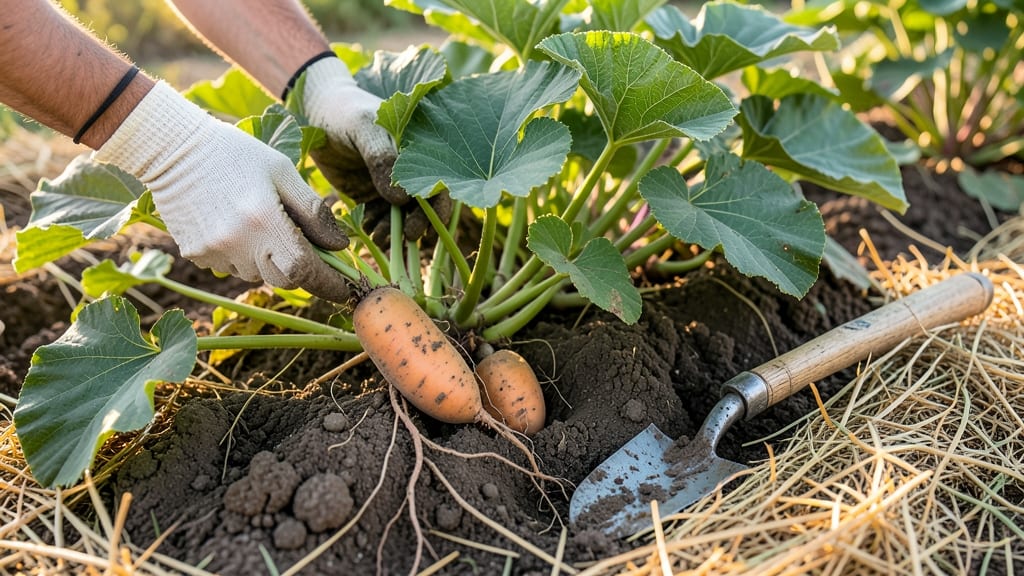
Harvesting sweet potatoes at the right time ensures you get sweet, starchy tubers instead of bitter, fibrous ones 🍠 — and the secret lies in watching for those leaf color shifts and soil triggers.
Picture this: your vines are yellowing and drying out, the skin resists your fingernail when you poke it, and the tops are wilting. That’s your cue to grab a fork and dig—because waiting too long means shriveled roots, while harvesting too early gives you tiny, underdeveloped potatoes.
Climate plays a huge role here. In Zone 6, where frost sneaks in by late October, you’ve got about 90-120 days from planting to harvest. Miss that window, and a sudden chill can turn your crop into a sad, mushy mess.
Below, I’ll walk you through the exact signs to watch for—from leaf changes to soil checks—and how to cure and store your harvest for maximum flavor and shelf life.

When to harvest sweet potatoes: leaf color & growth stage signs
Sweet potatoes are ready to harvest when their vines yellow and die back—a natural signal that the plant has redirected energy to the tubers. This typically occurs 90 to 120 days after planting, but exact timing depends on your climate and variety.
Early varieties like 'Beauregard' mature in 90 to 100 days, while late varieties like 'Georgia Jet' may need 110 to 120 days. Watching for these leaf color changes ensures you harvest at peak sweetness and starchy perfection.
In warmer regions like USDA Zones 8-10, sweet potatoes often mature earlier—sometimes as early as August—while cooler zones (Zones 6-7) may need to wait until late September or October.
Pay close attention to frost warnings, as even a light frost can damage tubers still in the ground. If frost threatens before your plants show natural signs, harvest immediately to avoid spoilage.
The summary table below breaks down key harvest cues by growth stage, variety, and regional timing to help you spot the perfect moment.
| Growth Stage | Visual Cues | Days After Planting | Regional Timing |
|---|---|---|---|
| Early Varieties (e.g., Beauregard) | Vines yellow and dry; skin toughens | 90–100 days | Zones 8–10: Late August |
| Mid-Season Varieties (e.g., Centennial) | Leaves brown; tubers 4–5 inches | 100–110 days | Zones 7–9: Early September |
| Late Varieties (e.g., Georgia Jet) | Vines fully dead; skin resists puncture | 110–120 days | Zones 6–7: Late September–October |
| Frost Warning | Harvest immediately; tubers may crack | N/A | All regions |
One of the most reliable signs is the color and texture of the leaves. Healthy green leaves transition to yellow or brown as the plant prepares for dormancy. If you see more than 50% of the foliage yellowing, it’s time to check the tubers.
Use your fingernail to test the skin toughness: if it resists puncture, the sweet potato is ready.
For early varieties, you might also notice the tubers reaching 4–6 inches in length while the vines are still partially green.
These varieties are bred for faster maturation, so don’t wait too long or they’ll become fibrous. Late varieties, on the other hand, need that full 120-day window to develop their signature sweetness and thick skins.
In cooler climates, like the Pacific Northwest or New England, sweet potatoes may take longer to mature. If your plants show stunted growth or slow leaf yellowing, consider using black plastic mulch to warm the soil and speed up the process.
This trick works wonders in short-season gardens where frost arrives early.
Another key indicator is the size and firmness of the tubers. Gently dig around the base of the plant with your hands or a small trowel to check for 4–6 inch tubers that feel dense and heavy.
If they’re smaller than a golf ball, they’re not ready yet—wait another 1–2 weeks.
If you’re growing multiple varieties, harvest the earliest maturing ones first to avoid overcrowding. This staggered approach also lets you enjoy fresh sweet potatoes over a longer period. Just be sure to label your rows at planting time so you don’t mix up varieties during harvest.
Finally, pay attention to the weather forecast. A sudden drop in temperatures or an early frost can ruin your crop if the tubers aren’t fully developed.
When in doubt, harvest a few tubers for testing—if they’re firm, sweet-smelling, and 4+ inches long, the rest of your crop is likely ready too.
Mastering these leaf color and growth stage signs ensures you harvest sweet potatoes at their peak—just sweet enough to bake, roast, or store for months to come. 🍠
Soil check triggers: how to test for perfect sweet potato harvest timing
Timing your sweet potato harvest isn't just about counting days—it's about reading your soil and plants like a seasoned pro. The ideal harvest window occurs when tubers reach 4-6 inches in length and the soil signals readiness through subtle but critical changes.
I’ve learned that ignoring these soil check triggers can turn your sweet, starchy harvest into a fibrous disappointment.
First, focus on the soil's texture. When it’s time to harvest, the soil around your sweet potato vines will feel noticeably looser and drier near the surface. This happens because the plant has shifted its energy from leaf production to tuber maturation.
Use your fingers to gently probe the soil—if it crumbles easily and resists compaction, your tubers are likely ready. This is your first green light to start checking for other signs.
Next, examine the root ball size by carefully lifting a vine. Look for a well-developed root system with tubers that are firm to the touch. If you can easily puncture the skin with your fingernail, the sweet potatoes are underdeveloped.
Wait a few more weeks. But if the skin feels thick and resists puncture, you’re in the harvest zone. This tactile test is one of my most reliable methods for nailing the perfect harvest time.
Don’t wait until the first frost hits—sweet potatoes cannot tolerate freezing temperatures. If nighttime temps drop below 50°F (10°C) for more than a few hours, the tubers will shrink and develop off-flavors. Check your local frost warnings and harvest at least 2 weeks before the first expected frost.
Pro tip: If your vines turn brown and crispy from a light frost, dig immediately—the tubers are still salvageable!
Environmental factors also play a crucial role. Pay attention to temperature drops and daylight shortening in late summer. When nights grow cooler and days shorter, sweet potatoes signal readiness by yellowing their leaves and drooping their vines.
This natural dieback is your plant’s way of saying, “I’m done growing above ground—time to harvest!” In my experience, this shift happens most noticeably in September, but it can vary by USDA zone.
For premature harvesting, watch for these red flags: tubers smaller than 3 inches, thin skin that punctures easily, or vines still growing vigorously. These signs mean your sweet potatoes need more time in the ground.
On the flip side, overripe tubers show as shrunken, cracked, or sprouting eyes. To avoid this, I set a harvest deadline of 120 days after planting, even if the soil feels perfect earlier.
Once you’ve confirmed all signs point to harvest, use a fork or hands to gently loosen the soil and pull up the vines. Shake off excess dirt and let them cure in warm, dry conditions for 10 days before storing.
This curing process enhances flavor and storage life. Trust your soil checks—they’re the key to a bountiful, delicious harvest every season. 🍠