
How To
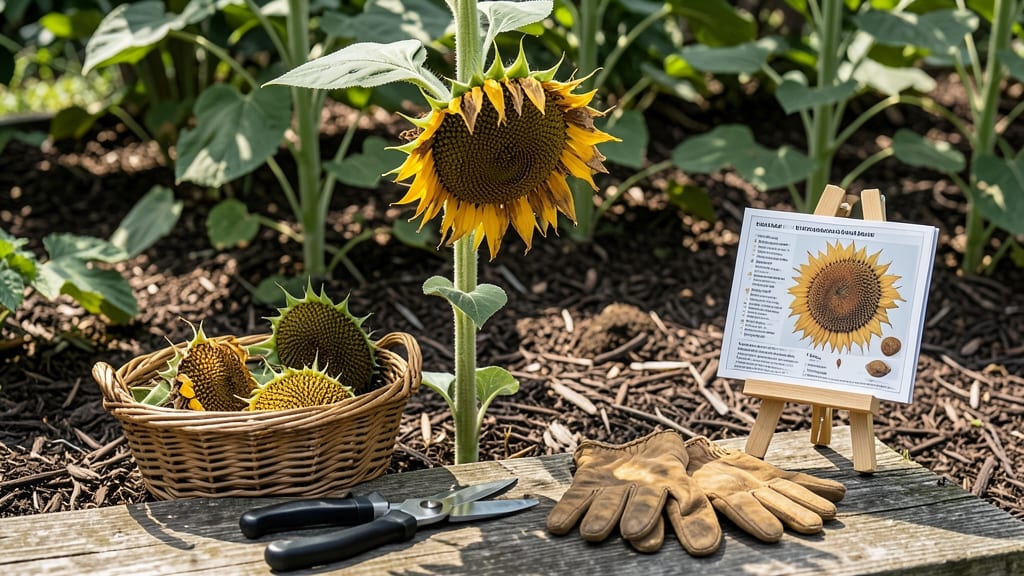
Harvesting sunflower heads at the right time ensures crisp petals and dense, flavorful seed clusters — and missing that window means bitter seeds or wilted blooms.
Picture this: you’ve nurtured your 🌻 sunflowers all season, only to wonder, "Did I wait too long?" The answer lies in three simple touch tests that reveal whether your sunflower is ready to pick or still needs time to mature.
Timing matters because sunflowers change fast. Too early, and the petals lack crispness; too late, and the seeds turn hard and lose their sweetness. In USDA Zone 6a, the ideal harvest window spans July through September, but knowing the exact moment makes all the difference.
Below, I’ll walk you through the three tactile checks—plus visual cues like petal color and seed firmness—to guarantee you harvest at peak perfection, whether you’re saving seeds or enjoying fresh petals in salads.


3 Touch tests to determine perfect sunflower harvest timing
Harvesting sunflowers at the right moment transforms a simple garden task into a rewarding experience. Instead of relying on guesswork, I use three simple touch tests to assess petal crispness, seed density, and stem readiness.
These tactile methods ensure you harvest sunflower heads when they're at their peak—whether you're saving seeds or enjoying edible petals.
The key to perfect timing lies in understanding how sunflowers mature. When the back of petals turns from green to yellow-brown and the seed head feels firm, that's your cue.
But don't just look—touch the flower head to confirm readiness. This hands-on approach eliminates uncertainty and guarantees the best flavor and texture for your harvest.
🌻 3 Touch Tests for Perfect Sunflower Harvest Timing
- 1
- 2
- 3
Pro Tip: Combine these tests with visual cues like yellow-brown petal backs and dry outer petals for foolproof results. 🌾
For seed-saving, the seed density test is your best friend. When seeds rattle loudly and the head feels rock-hard, that's your signal to harvest. I like to wait until the outer petals have turned completely brown and crispy—this ensures the seeds inside are fully developed and won't sprout prematurely.
If you're harvesting for edible petals, focus on the petal crispness test. Petals should be fully open, dry to the touch, and easily removable from the center.
Harvest them in the morning after dew has dried to preserve their vibrant color and delicate texture. Store them in a cool, dry place for up to a week.
Timing matters because sunflowers change rapidly. A 24-hour delay can turn perfectly crisp petals into brittle fragments or transform flavorful seeds into bitter ones. I always harvest in the early morning when temperatures are cooler—this reduces stress on the plant and keeps the heads fresh longer.
One common mistake I see is harvesting based solely on flower size. Some gardeners assume bigger = better, but oversized heads often mean overripe seeds. Always combine the touch tests with visual checks: look for dry outer petals and a brown seed head before cutting.
For dwarf varieties, like 'Teddy Bear' or 'Moulin Rouge,' the touch tests work just as well. These smaller sunflowers mature faster (in about 60-70 days), so I check them every 2-3 days during their final week.
Their petals and seed heads are more delicate, so handle them with extra care during the tests.
After harvesting, I always label and date my sunflower heads if saving seeds. Store them in a paper bag (not plastic) in a dry, dark place for 1-2 weeks to fully dry.
This prevents mold and ensures seeds stay viable for planting next season. For petals, I either use them fresh or dry them on parchment paper in a single layer.
Mastering these touch tests will give you confidence in your harvest timing. Soon, you'll be able to walk through your garden and instantly know which sunflowers are ready—no calendar or guesswork needed. Happy harvesting! ✂️🌻
How to harvest sunflower heads for seeds vs. petals (Step-by-Step)
Harvesting sunflowers at the perfect moment transforms your garden into a dual-purpose powerhouse—whether you're after crisp petals for salads or nutrient-rich seeds for snacking. The key lies in understanding two distinct harvest windows: one for edible petals and another for seed maturity.
Each requires different techniques, tools, and timing to preserve quality.
For petal harvests, you’ll want sunflowers in their prime—fully open but still vibrant, with petals that snap crisply between your fingers. Meanwhile, seed harvests demand patience, as you’ll wait until the seed heads turn brown and rattle like tiny maracas.
Let’s break down the exact steps for each, so you never miss the window again.
🌻 Step-by-Step Harvest Guide
- 🌿 Step 1: Gather Tools
- Pruning shears or sharp knife
- Glove (optional, for seed harvests)
- Paper bags or breathable mesh bags
- Twine or rubber bands
- 🌾 Step 2: Harvest Petals (Fresh or Dried)
- Pick fully open heads with yellow-brown backs
- Cut 1-2 inches of stem for fresh bouquets
- Hang upside-down in dry, dark space for 2-3 days to dry petals
- 🌻 Step 3: Harvest Seeds (Dry Method)
- Wait until seed head turns brown and rattles when shaken
- Cut heads and hang upside-down in warm, dry spot for 2-3 weeks
- Rub seeds from heads into bags once fully dry
- 💧 Step 4: Store Properly
- Petals: Store dried petals in airtight containers for up to 6 months
- Seeds: Keep seeds in cool, dark place (or freeze) to prevent spoilage
When harvesting for petals, focus on the color shift from bright yellow to a muted, golden hue—this signals peak edibility. For seeds, the dryness test is non-negotiable: a seed head should feel papery and hollow when squeezed.
Skipping this step leads to bitter, underdeveloped seeds that’ll ruin your harvest.
Pro tip: Harvest petals in the early morning when moisture levels are lowest, preserving their crisp texture. For seeds, wait until late afternoon on a dry day to avoid humidity trapping moisture in the heads. This small adjustment can extend your storage life by weeks.
If you’re saving seeds for next year’s garden, let them fully mature on the plant until they’re deep brown and the outer husk cracks open slightly.
This ensures high germination rates and robust seedlings. For immediate use, you can harvest seeds slightly earlier—just aim for 80% dryness to balance flavor and storage.
Remember, sunflowers are annuals, so every harvest is an opportunity to preserve your garden’s legacy. Whether you’re crafting sunflower seed butter or garnishing salads with petals, mastering these steps ensures your efforts yield abundant, high-quality rewards all season long. 🌻