
How To
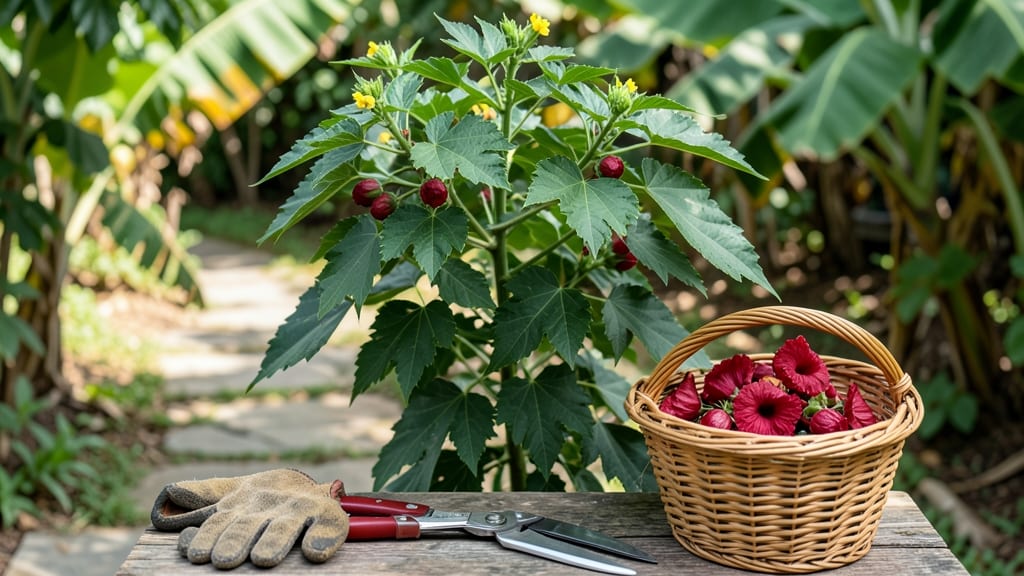
Harvesting roselle at the right moment transforms its tart, cranberry-like flavor from good to extraordinary—and missing it means ending up with bitter, overripe calyces or tough seeds.
Picture this: you’ve nurtured your 🌱 Roselle all season, and now the calyces are swelling, their color shifting from green to deep red or purple. That’s your cue—but how do you know it’s exactly the perfect time?
The answer lies in two simple checks: the color of the calyx and the firmness of the seeds inside.
In USDA Zone 6a, the ideal harvest window falls between late summer and early fall, roughly 4-6 months after planting. But climate plays a role—warmer regions may harvest earlier, while cooler areas might push it into October.
The key is catching those calyces when they’re fully formed but still firm, not hard.
Below, I’ll walk you through the exact color shifts to watch for, how to perform the seed hardness test, and how to adjust your timing based on your local climate. With these tricks, you’ll never miss the sweet spot again.


How to identify the perfect roselle calyx color for harvesting
Harvesting roselle at the right color stage is the secret to unlocking its signature tart, cranberry-like flavor. The calyx transforms from bright green to deep red or purple, signaling peak ripeness.
This shift isn’t just about aesthetics—it directly impacts flavor intensity and texture. Miss this window, and you risk bitter, overripe calyces or hard, unyielding seeds that ruin your harvest.
For most roselle varieties, the ideal harvest color is a rich, deep red (like hibiscus tea bags) or vibrant green (for the "green roselle" variety). This color appears 3-4 months after planting and typically coincides with late summer to early fall.
However, climate and region play a huge role in timing—tropical zones may see earlier color shifts, while cooler temperate areas might delay maturity by 2-4 weeks.
Here’s the color maturity timeline you should watch for:
The deep red color in roselle varieties like 'Red Roselle' indicates maximum anthocyanin content, which boosts antioxidant levels and deepens flavor. Meanwhile, the 'green roselle' variety stays bright green at peak ripeness but still reaches 3-4 inches in length.
Both varieties should feel firm yet slightly yielding when gently squeezed—a telltale sign of optimal harvest timing.
In tropical climates (USDA Zones 10-12), roselle may mature 2-3 weeks earlier due to longer growing seasons. I’ve seen harvests begin as early as late July in Florida, while temperate zones (like Zone 7-9) often delay harvest until September or October.
Pay attention to your local first frost date—roselle can’t tolerate freezing, so plan to harvest before temperatures drop below 40°F.
Climate also affects color intensity. Hotter, sunnier days produce brighter reds, while cooler or cloudy weather may result in muted tones. If your calyces are slow to color, consider supplementing with balanced fertilizer (5-10-10) during the flowering stage to encourage vibrant development.
Just avoid over-fertilizing, as this can lead to excessive foliage and fewer calyces.
One regional trick I’ve learned is to watch for local pollinators. In areas with high bee activity, roselle calyces may open faster, so harvest daily once color shifts begin.
In contrast, cooler mountain regions might see a slower color transition, so check calyces every 2-3 days during peak season. Always harvest in the morning when calyces are cool and firm for the best flavor.
Pro tip: Use a small magnifying glass to inspect calyx color up close. Some varieties, like 'Jamaican Red', develop faint red veins before fully coloring. These veins signal impending ripeness and give you a 1-2 day heads-up to prepare for harvest.
Pair this visual cue with the seed hardness test (covered in the next section) for foolproof results.
Remember, color alone isn’t enough. Combine it with size, texture, and seed firmness for the perfect harvest. Once you master this, you’ll consistently enjoy roselle’s signature tartness and vibrant hue in teas, jams, or stews—without a hint of bitterness.
Seed hardness test: the proven method to avoid overripe roselle
The seed hardness test is my go-to method for determining when roselle calyces are perfectly ripe for harvesting. Unlike relying solely on color, this tactile approach helps you avoid both underripe (tart but bland) and overripe (bitter, seedy) calyces. Here’s how to do it right every time.
Start by selecting a fully formed calyx that’s at least 3 inches long. Gently pinch the sides between your thumb and forefinger—this is the squeeze test.
If it feels firm but slightly yielding, like a ripe avocado, it’s ready. If it’s rock-hard, it’s too early; if it squishes easily, it’s past its prime.
⚠️ callout warning
For a more precise check, try the tap test. Hold the calyx over your palm and gently tap it with your finger. A ripe calyx will produce a dull thud, while an underripe one sounds hollow.
This works especially well for green varieties, where color changes are less dramatic.
If you’re still unsure, check the seed pods inside. At the perfect harvest stage, seeds should be plump but not hard. Hard seeds mean the calyx has been on the plant too long, while shriveled seeds indicate it was picked too early.
Aim for seeds that feel firm like a pea.
Harvest in the morning after dew has dried but before the sun peaks. Use clean pruning shears to snip the calyx 1 inch above the base, leaving the stem intact. This prevents disease and encourages more buds to form for a longer harvest season.
Pro tip: Harvest every 2-3 days during peak season to maintain quality. Store fresh calyces in the fridge for up to 1 week or freeze them for later use in teas, jams, or stews.
The seed hardness test saves you from bitter surprises—once you master it, you’ll never guess again! 🌱