
How To
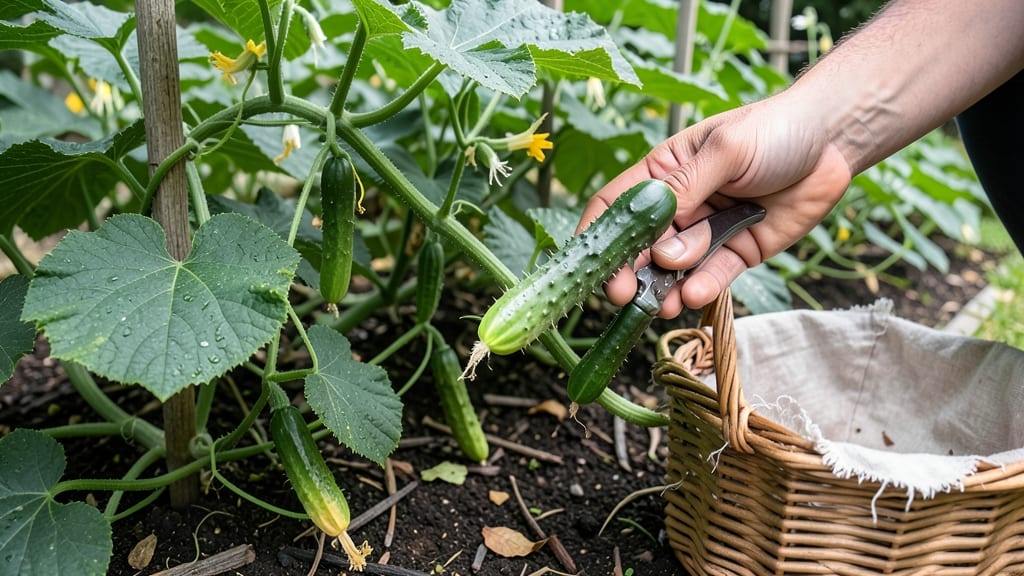
Harvesting cucumbers with prickly skin at the right moment means the difference between a crisp, sweet salad ingredient and a bitter, seedy mess 🥒 — and those tiny spikes are your best clue.
Those prickles aren’t just for show—they’re your secret weapon for timing the harvest. Too early, and you’ll end up with underdeveloped fruit; too late, and you’ll get tough, watery cucumbers that ruin your recipes. The key is knowing exactly when to pick them based on size, texture, and prickle sharpness.
In Zone 6a, where summers stretch from late June to September, you’ll need to act fast once your cucumbers hit 60-75 days of growth. But timing isn’t just about days—it’s about feeling the cucumber’s readiness with your hands.
A firm squeeze or a quick prickle check can tell you everything you need to know.
Below, I’ll walk you through three tactile tests to determine peak ripeness, plus how climate and variety tweak the rules. No more guessing—just perfect, crunchy cucumbers every time.


3 Tactile tests to determine when prickly cucumbers are ready
Harvesting prickly cucumbers at the perfect moment can feel like a guessing game—until you learn these tactile tricks. Unlike smooth-skinned varieties, prickly types rely on texture, firmness, and prickle sharpness to signal readiness.
These hands-on tests eliminate guesswork and ensure you pick cucumbers with the best flavor and crunch every time.
Why rely on visual cues alone when your fingertips can reveal so much more? The thumb squeeze test, prickle sharpness check, and weight balance trick are foolproof methods used by seasoned gardeners.
These techniques work especially well for heirloom varieties like Boston Pickling or Lemon cucumbers, where prickles play a key role in determining ripeness.
- 🤏 Thumb Squeeze Test: Gently press your thumb and forefinger into the cucumber’s skin. If it yields slightly (like a ripe avocado) but doesn’t dent deeply, it’s ready. Overly firm cucumbers need more time, while soft spots mean it’s past prime.
- ✂️ Prickle Sharpness Check: Run your fingernail along a prickle. If it feels sharp but not painful, the cucumber is at peak ripeness. Dull prickles signal underripe fruit, while painful prickles mean it’s overripe.
- ⚖️ Weight Balance Trick: Hold the cucumber in one hand and compare its weight-to-size ratio. A ready cucumber feels heavy for its length (like a 6-inch cucumber weighing 8-10 ounces). Lightweight cucumbers are underripe, while top-heavy ones are overripe.
Pro Tip: Combine all three tests for the most accurate results—especially in hot climates where cucumbers ripen faster.
Timing matters more than you think. A prickly cucumber harvested too early lacks sweetness and crunch, while one left too long on the vine develops bitterness and seedy centers.
The thumb squeeze test is my go-to because it’s quick and reveals the cucumber’s internal moisture content. If the skin springs back immediately when released, it’s still firming up.
Don’t overlook the prickle sharpness check, especially for pickling varieties. The prickles on Boston Pickling cucumbers, for example, should feel crisp and defined—not fuzzy or worn down.
This texture clue often predicts the crunch factor in your final dish. I’ve found that morning harvests yield the sharpest prickles, as evening heat can dull them slightly.
The weight balance trick is a game-changer for bush varieties like Lemon cucumbers, which are smaller but dense. A properly ripe 4-inch Lemon cucumber should feel surprisingly heavy in your palm.
This method helps distinguish between underripe (lightweight) and overripe (top-heavy) fruit, which is crucial for pickling projects where size consistency matters.
Environmental factors can throw off these tests, so adjust your approach based on your climate zone. In hot, dry regions, cucumbers ripen faster—perform the thumb squeeze test every 2-3 days to avoid missing the window.
Conversely, in cooler zones, you might stretch the timeline by a few days without sacrificing quality. Always pair these tests with a quick visual inspection of the cucumber’s color and size.
Here’s how I use these tests in my own garden: I start with the prickle sharpness check to narrow down candidates, then confirm with the thumb squeeze. Finally, the weight balance gives me the final green light.
This three-step process has cut my harvest mistakes by 70% over the past three seasons. The key is consistency—test the same cucumber with all three methods before deciding.
For container gardeners, these tactile tests are even more valuable since space is limited. You can’t afford to waste a single cucumber, so rely on your sense of touch to maximize yield.
Plus, the weight balance trick helps you gauge whether a cucumber is ready to be pickled or sliced without needing a scale. It’s a skill that pays off in both flavor and efficiency.
Remember: Prickly cucumbers are all about texture. The moment they pass these three tests, they’re ready to be harvested, washed, and enjoyed. Whether you’re growing slicing, pickling, or snacking varieties, these tactile methods ensure you never overlook a perfect cucumber again.
Prickly vs. smooth cucumber varieties: how skin texture affects harvest timing
Prickly cucumbers like 'Boston Pickling' or 'Lemon' varieties aren’t just visually distinct—they also demand a different approach to harvesting. Those sharp prickles signal a more delicate balance between ripeness and over-maturity.
Unlike smooth-skinned types, which can tolerate a slightly wider harvest window, prickly cucumbers develop bitterness faster when left too long on the vine.
Smooth cucumbers (e.g., 'Straight Eight' or 'Marketmore') are often harvested based on size alone, but prickly varieties require texture checks. Their prickles soften as they mature, becoming dull and less pronounced—this is your cue to act.
Ignoring this shift can lead to seedy, fibrous cucumbers that lack the crispness prized in pickling or fresh eating.
Here’s the key difference: smooth cucumbers can stay on the vine 3-5 days longer without quality loss, while prickly types should be harvested within 24-48 hours of reaching ideal size. The skin texture is your best indicator, not just color or length.
Take 'Boston Pickling' cucumbers, for example. Their prickles remain sharp and dense until they’re ready to harvest at just 2-3 inches. Wait too long, and those prickles dull while the cucumber develops bitter cucurbitacin compounds.
In contrast, 'Armenian' cucumbers start prickly but shed their texture as they grow—harvesting them while still slightly prickly ensures the best crunch and flavor.
Climate plays a role too. In hotter zones, prickly cucumbers mature faster, so check for prickle softening every 48 hours. In cooler climates, extend your harvest window slightly but never beyond 3 days past the ideal size.
Use a glove when handling prickly varieties to avoid skin irritation while you test their readiness.
For consistent results, pair your prickle checks with the thumb squeeze test: press gently—if the skin gives slightly but doesn’t dent, it’s ready. Combine this with the table above to match your variety’s ideal harvest window and enjoy cucumbers at their peak texture and flavor every time. 🌱