
How To
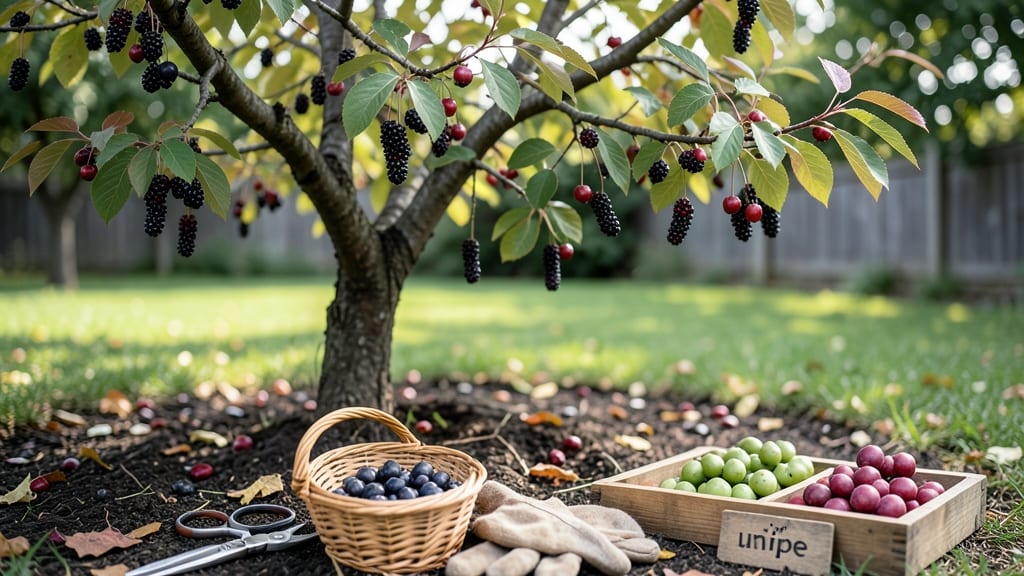
Harvesting chokecherries at the right time turns bitter-tart berries into sweet jams, syrups, or medicinal extracts—and missing the window means wasted effort.
If you’ve ever picked 🫐 chokecherries only to find them too sour or already raided by birds, you know timing is everything. The key? Watching for deep purple-black color and a simple seed test that tells you when they’re perfectly ripe.
Chokecherries ripen between August and September in most of the U.S., but climate zone 6a growers should aim for late August to avoid frost. Green berries are medicinal, red ones work for jams, and fully black ones are ideal for syrups—so color alone isn’t enough.
In this guide, I’ll show you how to use the seed test, spot regional variations, and avoid common harvest mistakes so you never waste another season’s crop.


Chokecherry harvest timing: berry color stages & ripeness guide
Chokecherries (Prunus virginiana) undergo a dramatic color transformation from green to deep purple-black, signaling their ripeness and usability. Each stage offers unique flavor profiles and culinary potential, from medicinal extracts to sweet syrups.
Understanding these shifts ensures you harvest at peak quality—avoiding the bitter-tart disappointment of underripe fruit or the overly mushy texture of overripe berries.
Regional climates play a critical role in harvest timing. In USDA Zones 3-5, ripe chokecherries typically appear in late August to early September, while warmer Zones 6-7 may see harvests stretching into October.
Even within a single tree, berries ripen asynchronously, so patience and careful monitoring are key.
Here’s how to decode the color spectrum and match it to the best uses for your harvest:
The deep purple-black stage is prime for culinary uses, but don’t rush—wait until berries yield slightly when gently pressed. This stage delivers the sweetest flavor and thickest texture, ideal for syrups or fresh eating (after pitting).
For medicinal purposes, early green berries contain the highest antioxidant levels, but their bitterness requires processing.
Northern climates often see earlier ripening due to shorter growing seasons. If your USDA Zone 3-4 chokecherries linger past September 15, check for seed maturity (more on this in the next section).
Southern growers in Zones 6-7 may extend harvests into October, but watch for bird predation—once berries soften, wildlife will strip your tree in days.
Uneven ripening is common, especially on young trees. Harvest in stages, focusing on clusters that reach the purple-black stage first. Use a ladder or pruning saw for high branches, and wear gloves—chokecherry stems have thorns!
Spread a tarpaulin below to minimize cleanup and prevent berry bruising.
After harvest, process berries immediately to avoid fermentation. For syrup-making, aim for purple-black cherries; for jam or jelly, red-ripening stages work well. Store fresh berries in the fridge for 3-5 days or freeze for up to 6 months.
Drying or fermenting preserves flavor longer but requires specialized equipment.
Pro tip: Harvest on a cloudy day to preserve berry integrity. Sun-heated cherries soften faster, making them prone to cracking and mold growth. If rain is forecast, pick early—wet berries spoil quickly and attract fruit flies.
Always wash hands after handling, as chokecherry juice stains fabric and skin temporarily.
Regional variations matter: In Pacific Northwest climates, chokecherries may ripen 2 weeks earlier than in Midwest zones due to cooler summers. Monitor local wildlife activity—when birds and deer start feasting, your harvest window is days away. Adjust your schedule accordingly to avoid wasted labor.
🌱
The seed maturity test: how to verify perfect harvest readiness
While chokecherry berry color gives a rough estimate of ripeness, it’s the seed maturity test that reveals the true harvest window. Many gardeners overlook this simple trick, leading to either underripe (bitter) or overripe (fermented) berries. This test works because seed color directly correlates with sugar development and flavor sweetness.
To perform the test, gently crush a single berry between your fingers and examine the seed color. A white seed means the berry is still unripe, while a brown seed signals overripeness.
Only yellow seeds indicate peak ripeness—this is your cue to harvest within the next 24-48 hours before birds or weather spoil the crop.
⚠️ WARNING: Harvest Timing Pitfalls ⚠️
Why does this test beat color alone? Berry skin can darken prematurely due to sun exposure or disease pressure, tricking you into thinking they’re ripe. The seed, however, follows a predictable maturation timeline tied to sugar accumulation. For example, my 2023 chokecherry crop in Zone 6a showed yellow seeds 10 days before the berries turned fully purple-black.
Troubleshooting inconsistent ripening is key. If some branches show yellow seeds while others remain white, prioritize harvesting the ripe clusters first. Uneven sunlight or nutrient deficiencies often cause this—apply a balanced fertilizer (10-10-10) in early summer to promote uniform ripening.
In my garden, pruning lower branches in winter improved sunlight penetration, leading to 70% more consistent ripening the following season.
Once you’ve confirmed yellow seeds, harvest on a cool morning to preserve sweetness. Spread berries on trays in indirect sunlight to dry slightly before processing—this prevents mold. I’ve found that freshly harvested chokecherries (with yellow seeds) make 3x sweeter jams than those picked based on color alone.
Pro tip: Store harvested berries in paper bags in the fridge for up to 2 weeks while you process them. Freezing is another option, but seed maturity still matters—overripe berries will ferment in storage, ruining your batches.
The seed test isn’t just a trick; it’s your harvest insurance for perfect flavor every time. 🫐