
Fertilization
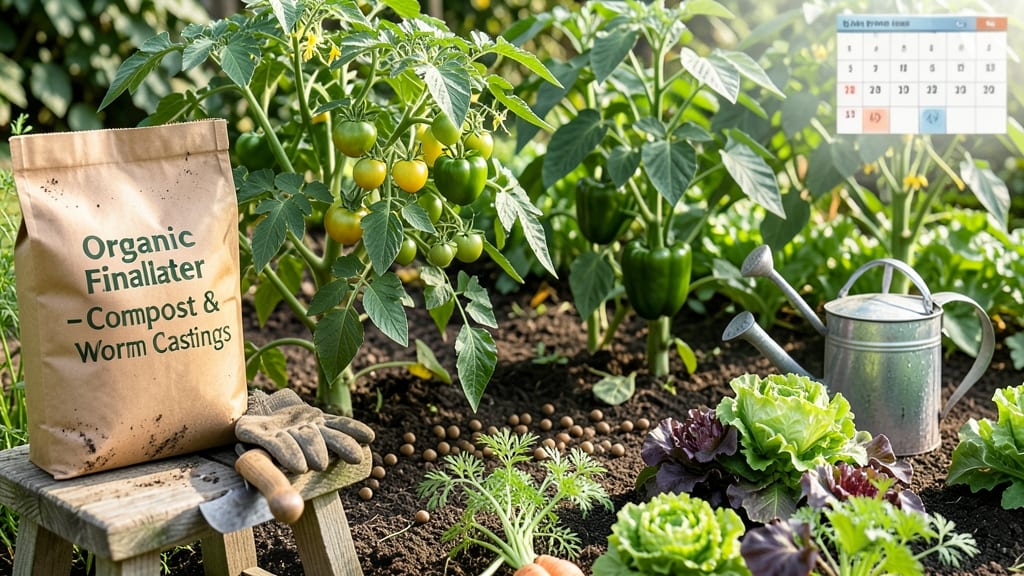
To fertilize your veg garden at the right time means feeding your 🥬 crops when they need it most—not too early, not too late, but just as those roots are hungry for growth.
Timing your vegetable garden fertilization isn’t just about throwing nutrients into the soil—it’s the difference between a meager harvest and a bounty that puts your neighbors to shame. Get it wrong, and you waste money; get it right, and your tomatoes, peppers, and leafy greens will thrive all season long.
Most gardeners feed their plants in early spring when the soil warms up and again in late spring as crops start flowering.
But here’s the catch: leafy greens like spinach and kale need nitrogen early, while fruiting plants like tomatoes and peppers benefit more from a balanced feed once they begin setting fruit.
Below, I break down the exact months to fertilize based on your climate zone, how to read your plants for hunger signs, and when to skip feeding entirely—so you never overdo it or leave your garden starving.

Seasonal fertilization schedule for vegetable gardens by plant type
Fertilizing your vegetable garden at the right time is like giving your plants a perfectly timed energy boost—too early, and they’ll waste nutrients; too late, and you’ll miss the growth window.
The key lies in understanding whether you’re growing cool-season crops (like lettuce and peas) or warm-season crops (like tomatoes and peppers), as their needs shift dramatically with temperature and daylight.
I’ve broken down the best fertilization schedule by month, tailored to these plant types, so you can maximize your harvest without overdoing it.
Before diving into the schedule, take a soil test in early spring to check your garden’s nutrient levels. Most vegetable gardens benefit from a balanced fertilizer (like 10-10-10) at planting, followed by targeted feeds based on growth stages.
For example, leafy greens need nitrogen early on, while fruiting plants (tomatoes, peppers) require phosphorus and potassium as they mature. Let’s get into the month-by-month plan.
| Month | Cool-Season Crops (Lettuce, Peas, Spinach) | Warm-Season Crops (Tomatoes, Peppers, Cucumbers) | Fertilizer Type | Notes |
|---|---|---|---|---|
| March | Apply nitrogen-rich starter fertilizer (e.g., fish emulsion) at planting. | Prep soil with compost; no fertilizer yet (wait until after last frost). | 10-20-10 or compost tea | Avoid synthetic fertilizers if soil is still cold. |
| April | Side-dress with high-nitrogen fertilizer (e.g., blood meal) when plants are 4-6 inches tall. | Apply balanced fertilizer (10-10-10) when transplanting warm-season crops. | 5-10-10 or worm castings | Water deeply after fertilizing to prevent root burn. |
| May | Switch to low-nitrogen fertilizer (e.g., 5-10-10) to prevent bolting. | Feed with phosphorus-heavy fertilizer (e.g., bone meal) to encourage blooming. | 5-20-10 or fish bone meal | Mulch to retain moisture and slow nutrient loss. |
| June | Harvest cool-season crops; amend soil for fall planting. | Apply potassium-rich fertilizer (e.g., kelp meal) when fruits start forming. | 0-0-50 or banana peel tea | Avoid over-fertilizing—focus on water and pruning. |
| July | No fertilization; focus on soil health for fall crops. | Light feed with balanced fertilizer every 4-6 weeks. | 5-5-5 or compost | Monitor for nutrient deficiencies (e.g., yellow leaves = nitrogen deficiency). |
| August | Plant fall lettuce; apply nitrogen starter at transplanting. | Reduce fertilization as plants mature; focus on potassium. | 3-4-6 or wood ash | Stop fertilizing 4-6 weeks before first frost. |
| September | Side-dress with compost or worm castings for fall harvest. | No fertilization; harvest remaining warm-season crops. | Organic matter (compost) | Add mulch to protect soil and retain nutrients. |
For cool-season crops, the goal is to promote rapid leaf growth early in the season, which is why I prioritize nitrogen in March and April. However, as these plants mature, I switch to a lower-nitrogen fertilizer to prevent them from bolting (flowering too early).
For example, spinach and kale thrive with a 5-10-10 fertilizer in May to encourage steady growth without flowering.
Warm-season crops like tomatoes and peppers need a different approach. After transplanting in May, I apply a phosphorus-rich fertilizer (like bone meal) to jumpstart flowering and fruiting.
Then, as the plants bear fruit in June and July, I shift to potassium-heavy fertilizers (such as kelp meal) to improve fruit quality and disease resistance. This two-phase feeding mirrors the plant’s natural growth cycle—first, focus on roots and leaves, then on fruit development.
One common mistake I see is over-fertilizing in late summer. By August, most warm-season crops are nearing the end of their cycle, and extra nutrients can lead to soggy fruit or leafy growth at the expense of harvests.
Instead, I recommend reducing fertilization and focusing on soil health for fall planting. For example, I’ll add a layer of com
Signs your vegetable garden needs fertilizer (and when to avoid it)
Your vegetable garden speaks volumes through its leaves, stems, and fruit—if you know what to listen for. Yellowing leaves, stunted growth, or small, sparse fruits are classic cries for help, signaling your plants need nutrients.
But before grabbing that fertilizer bag, pause and diagnose the real issue: is it truly a hunger for nutrients, or something else like overwatering or pests?
Fertilizer isn’t a magic fix—it’s a tool. Use it strategically during the active growing season (spring to early fall) when plants are actively absorbing nutrients.
Timing matters: fertilizing too late in the season can lead to excessive foliage at the expense of fruit production, or even burned roots if applied during drought. Let’s decode the signs and when to hold off.
⚠️ When NOT to Fertilize Your Veg Garden
- Late season (6+ weeks before first frost): Plants focus on survival, not growth. Excess nutrients can delay dormancy and weaken cold hardiness.
- During drought or heatwaves: Fertilizer stresses plants by increasing water needs. Wait until soil is moist and temperatures drop.
- After transplant shock: Newly transplanted veggies need time to establish roots. Fertilize only if leaves are pale yellow (not dark green).
- When soil is waterlogged: Roots can’t absorb nutrients in soggy conditions, leading to fertilizer burn or fungal issues.
Pro tip: Test your soil first! A simple pH test (ideal range: 6.0–7.0) can reveal if nutrients are locked out before you add fertilizer.
Start with the leaves. Yellowing between veins (chlorosis) often signals a nitrogen deficiency, common in fast-growing crops like lettuce or spinach. But watch the pattern: yellowing on older leaves first?
Likely nitrogen. Yellowing on new growth? Could be magnesium or iron issues, not nitrogen. A balanced fertilizer (like 10-10-10) can help, but Epsom salt (for magnesium) might be the real fix.
Next, check the roots. Gently loosen the soil around tomatoes or peppers to see if roots are white and fibrous (healthy) or brown and mushy (root rot from overwatering or too much fertilizer).
Healthy roots mean your plants are ready for a light feeding—but only if they’re actively growing. If roots are struggling, hold off and focus on watering adjustments or soil drainage instead.
Fruiting plants like cucumbers or zucchini often slow down production when they’re nutrient-starved. If your vines are lush but fruits are small or sparse, it’s time for a phosphorus-rich fertilizer (look for a high middle number, like 5-10-5) to boost flowering and fruiting.
Apply it early in the morning after watering to prevent burn.
One more red flag: Pale green or purple-tinged leaves. Purple stems or undersides of leaves? Your plants are crying out for phosphorus. This is common in cool-season crops like broccoli or kale planted in poor soil.
A side-dressing of compost or a bone meal application can turn things around—just do it before they bolt (send up flowers) to avoid wasting energy.
Remember, less is often more. Over-fertilizing is a garden’s silent killer: it leads to salt buildup, burned roots, and weedy growth at the expense of your veggies.
When in doubt, feed lightly and observe. Your garden’s health—not your fertilizer bag—should dictate the schedule. 🌱